
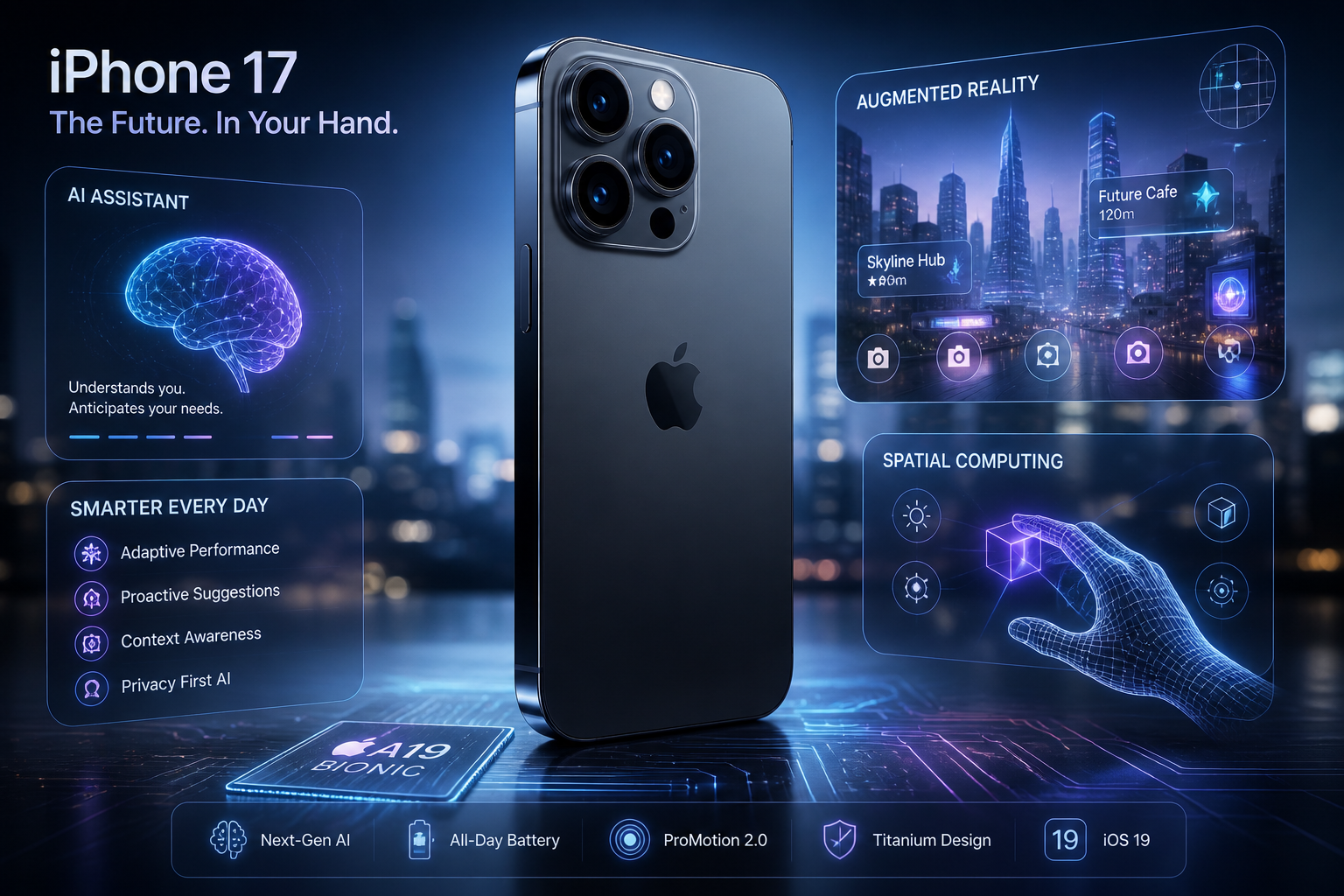
iPhone 17 Tops Charts: World’s #1 Phone in Q1 2026 — Apple’s latest base model has officially dethroned the iPhone 17 Pro Max, capturing the crown as the best-selling smartphone worldwide. With a commanding 6% share of global unit sales, the iPhone 17’s success highlights a pivotal shift in consumer preferences toward value-rich devices that balance affordability with premium features.
iPhone 17 Tops Charts: World’s #1 Phone in Q1 2026—this headline has taken the global tech industry by storm. The latest flagship from Apple Inc. has not only broken sales records but also redefined what consumers expect from a premium smartphone. From powerful hardware to seamless software integration, the iPhone 17 has emerged as the undisputed leader in the first quarter of 2026.
iPhone 17 Tops Charts: Market Performance
Apple’s iPhone 17 achieved record-breaking sales in Q1 2026, surpassing both the iPhone 17 Pro Max and iPhone 17 Pro. Together, these three models dominated the global smartphone rankings, securing the top three positions.
- iPhone 17: ~6% global share
- iPhone 17 Pro Max: ~5% global share
- iPhone 17 Pro: ~5% global share
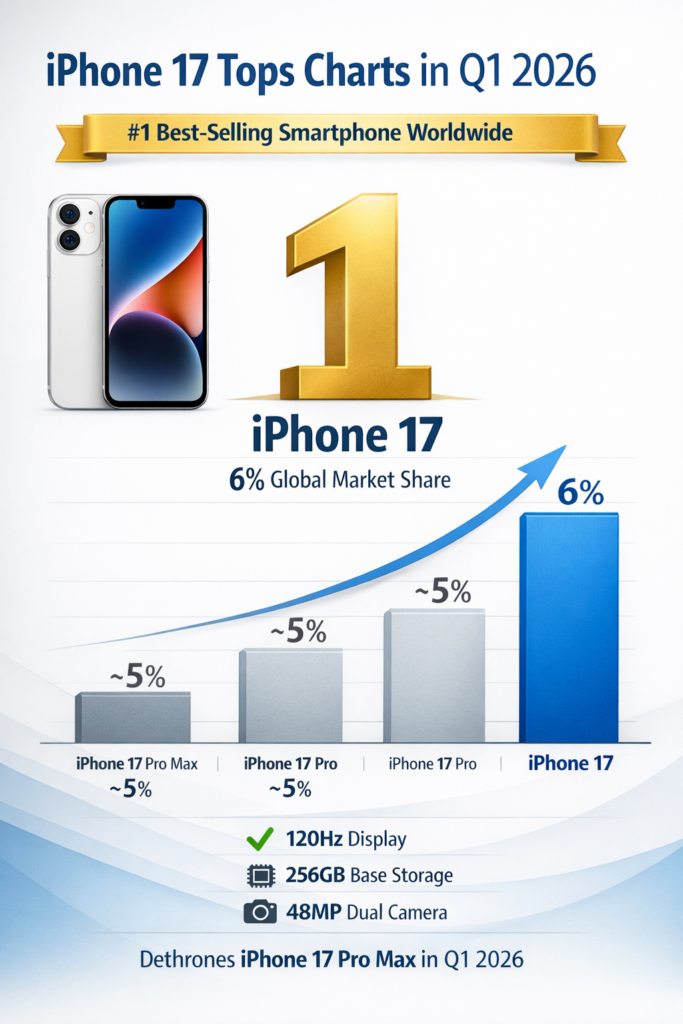
This marks the first time in recent years that Apple’s base model has outperformed its premium Pro Max variant, signaling a strong consumer appetite for balanced pricing and advanced features.
Why iPhone 17 Tops Charts Over Pro Models
Several factors explain why iPhone 17 Tops Charts: World’s #1 Phone in Q1 2026:
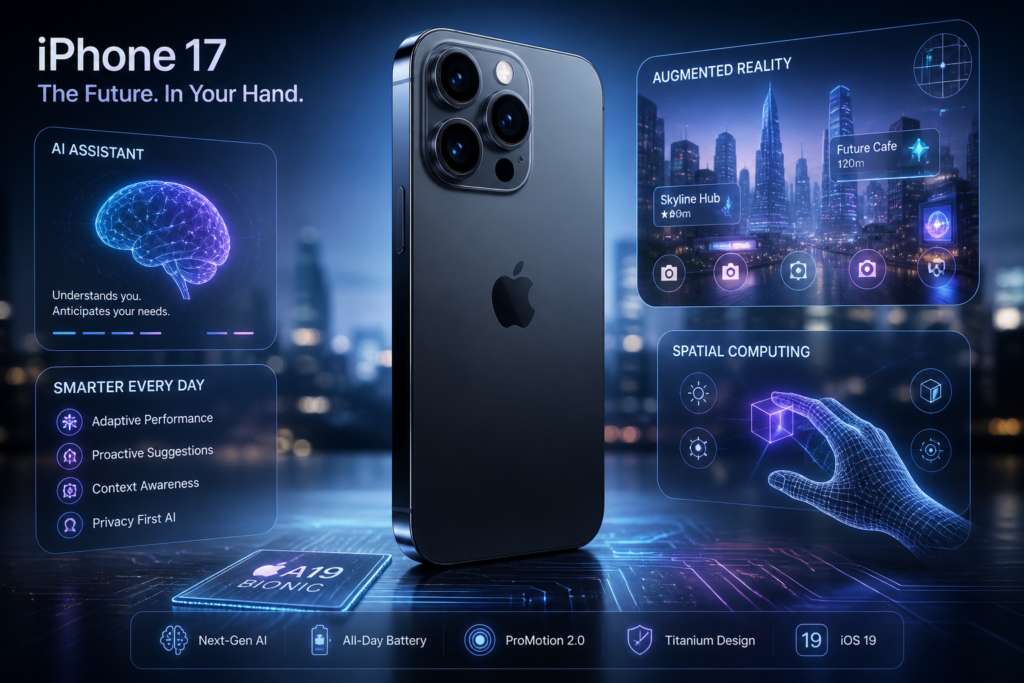
- Premium Features at Lower Cost: Apple introduced a 120Hz display, 256GB base storage, and a dual 48MP rear camera, narrowing the gap with Pro models.
- Value Proposition: Consumers saw the iPhone 17 as delivering near-Pro performance without the premium price tag.
- Regional Growth: Double-digit YoY growth in China and the US, alongside 3x growth in South Korea, boosted global numbers.
- India Discounts: Retail promotions and bank offers reduced effective prices to ₹75,890, making the device more accessible.
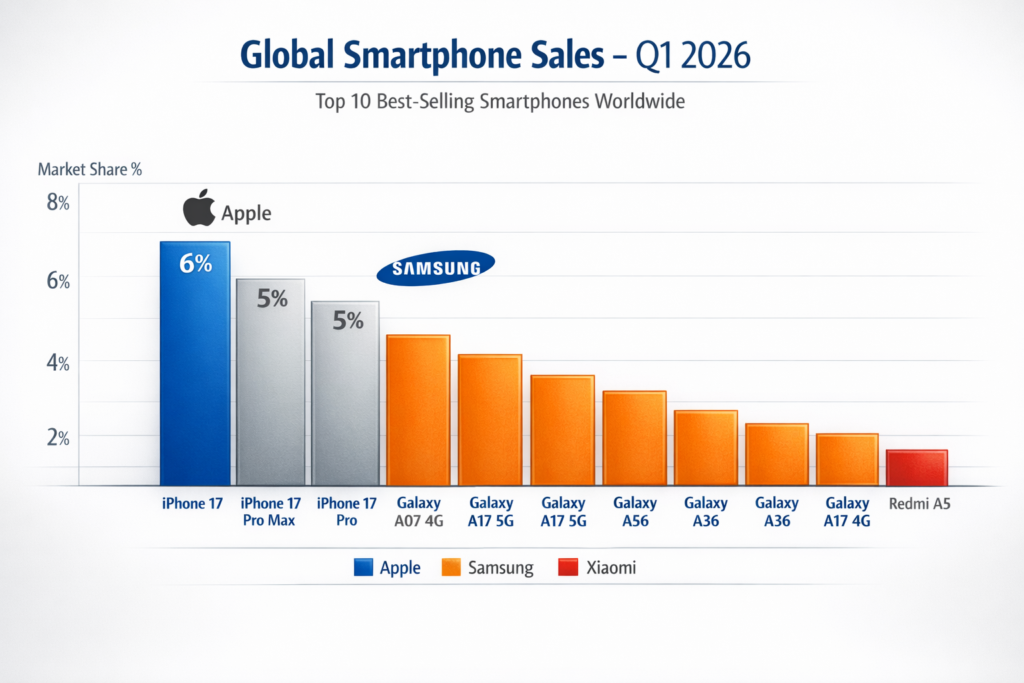
Global Smartphone Rankings Q1 2026
| Rank | Model | Market Share | Key Highlights |
|---|---|---|---|
| 1 | iPhone 17 | ~6% | Affordable premium features |
| 2 | iPhone 17 Pro Max | ~5% | Larger battery, advanced camera |
| 3 | iPhone 17 Pro | ~5% | Balanced Pro-level performance |
| 4 | Samsung Galaxy A07 4G | — | Affordable, strong emerging market demand |
| 5 | Samsung Galaxy A17 5G | — | Mid-range 5G option |
| 6 | iPhone 16 | — | Previous-gen flagship still strong |
| 7-9 | Samsung Galaxy A56, A36, A17 4G | — | Budget/mid-range dominance |
| 10 | Xiaomi Redmi A5 | — | Affordable entry-level model |
iPhone 17 Tops Charts: Consumer Sentiment
The rise of the iPhone 17 reflects a broader trend: consumers are increasingly prioritizing value-rich smartphones over ultra-premium flagships.
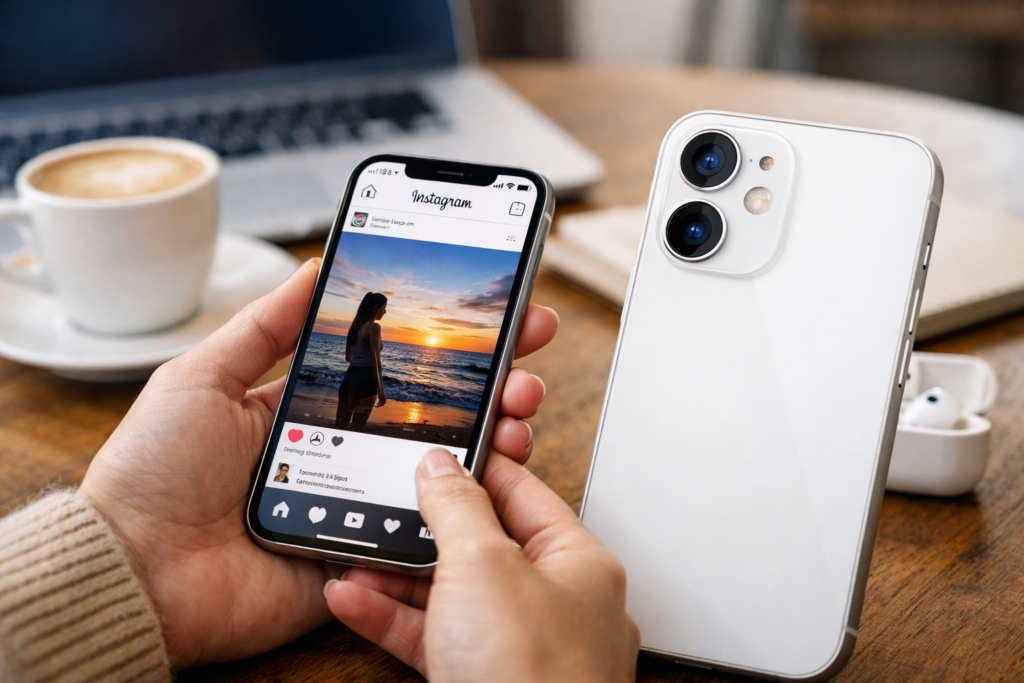
- Apple’s Strategy: By enhancing the base model, Apple ensured mass appeal without alienating Pro buyers.
- Samsung’s Position: Samsung dominated mid-range sales but struggled in the premium segment, with the Galaxy S26 Ultra failing to break into the top 10.
- Xiaomi’s Entry: Redmi A5 secured a spot in the top 10, proving affordability remains a powerful driver in emerging markets.
Implications for 2026
The fact that iPhone 17 Tops Charts: World’s #1 Phone in Q1 2026 carries several implications:
- Apple’s Base Model Triumph: The success of the iPhone 17 may push Apple to further strengthen its base models in future releases.
- Competitive Pressure: Samsung and Xiaomi must adapt strategies to counter Apple’s dominance in both premium and mid-range segments.
- Future Outlook: With the iPhone 18 Pro launch expected later this year, Apple faces the challenge of balancing innovation with affordability.
Conclusion
iPhone 17 Tops Charts: World’s #1 Phone in Q1 2026 is more than a headline — it’s a turning point in the smartphone industry. Apple’s decision to supercharge its base model has paid off, proving that consumers value a balance of affordability and premium features. As competitors scramble to respond, the iPhone 17’s success sets a new benchmark for what a flagship smartphone should deliver in 2026.
iPhone 17 Tops Charts: World’s #1 Phone in Q1 2026 is more than just a headline—it represents a significant shift in consumer behavior and market dynamics. With powerful features, strong brand loyalty, and a well-integrated ecosystem, Apple has once again proven why it leads the global smartphone industry.
As competition intensifies, the real question is not whether Apple can maintain its lead—but how competitors will respond to this dominance.