
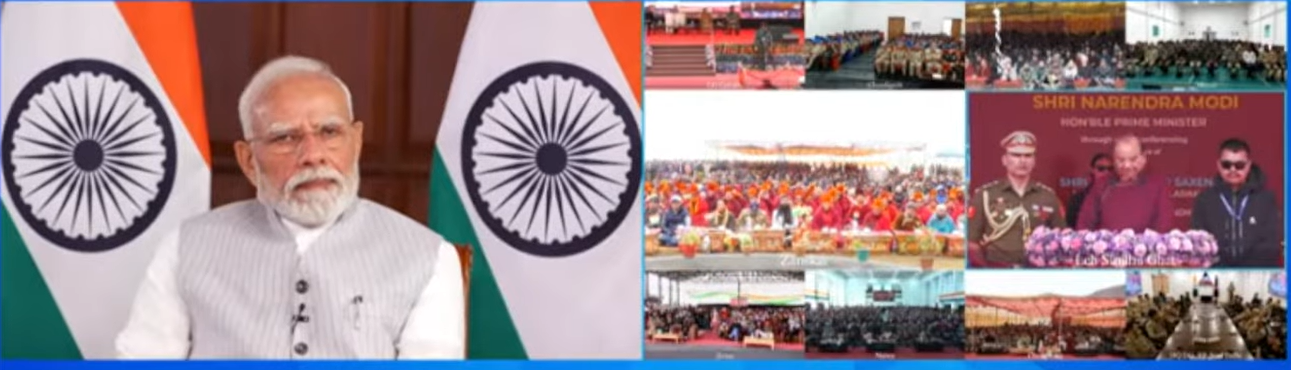
PM Modi Launches ₹3,350 Crore Ladakh Projects: 5 Major Developments
Prime Minister Narendra Modi inaugurated and dedicated five major development projects worth approximately ₹3,350 crore in Ladakh on October 15, 2026, marking an important step towards improving connectivity, strengthening energy infrastructure, conserving cultural heritage, and enhancing water security in the Himalayan region. The development package features several key initiatives, including a new passenger terminal at Leh airport, the strategic Nimmu–Padum–Darcha Road, a small hydropower project, an upgraded electricity transmission line, a park dedicated to preserving ancient petroglyphs, and water conservation facilities spanning 40 villages. Source: Prime Minister’s Office
The announcement has brought fresh attention to the region’s infrastructure priorities. Ladakh’s mountainous geography, harsh winters, fragile ecosystem, and remote settlements make transportation, electricity, and water management particularly important for residents and businesses.
PM Modi Launches ₹3,350 Crore Ladakh Projects with the objective of addressing several of these challenges through investments that connect communities, support tourism, improve access to essential services, and strengthen local economic opportunities.
The initiative also highlights an important development principle: infrastructure in a high-altitude region must deliver practical benefits while respecting the local environment and cultural identity.
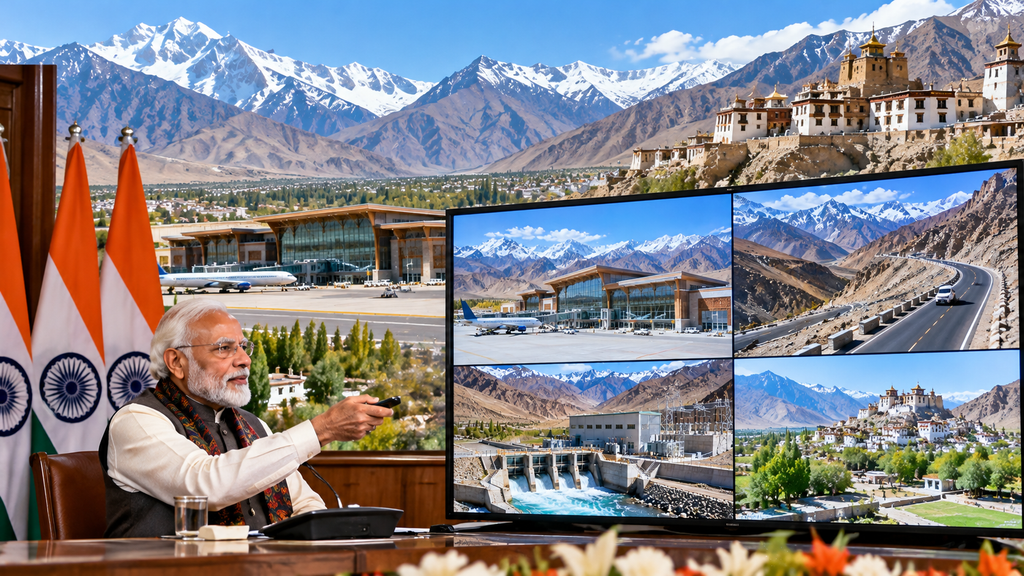
PM Modi Launches ₹3,350 Crore Ladakh Projects: Key Highlights
The projects announced on October 15 cover several important areas of regional development. Rather than focusing on one sector, the package combines transportation, electricity, water management, and heritage conservation.
The major components include:
- New Leh airport terminal: A state-of-the-art passenger terminal built at a cost of ₹640 crore, with an annual handling capacity of up to 35 lakh passengers.
- Nimmu–Padum–Darcha Road: A 298-kilometre road providing an alternative connectivity corridor between Ladakh and Himachal Pradesh.
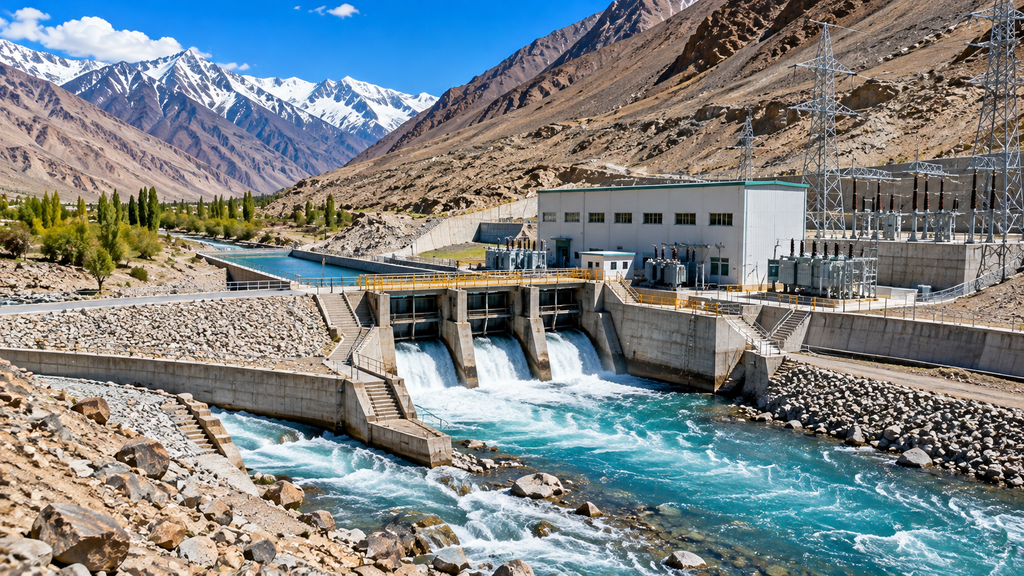
- Hanu Small Hydroelectric Project: A 9 MW project intended to strengthen the region’s electricity infrastructure.
- Dah–Hanu–Khaltsi transmission line: A 66 kV double-circuit line to improve electricity transmission and network reliability.
- Petroglyph Conservation Park: A facility at Sindhu Ghat in Leh to help protect ancient rock carvings.
- Project Him Sarovar: Forty water bodies developed across 40 villages to support water conservation and agricultural needs.
These components are described in the official government announcement. The airport and road account for major portions of the overall investment, while the energy, water, and heritage initiatives address other long-term regional requirements. Source: PIB
1. New Leh Airport Terminal to Strengthen Air Connectivity
One of the most prominent developments under PM Modi Launches ₹3,350 Crore Ladakh Projects is the inauguration of the new passenger terminal at Kushok Bakula Rimpochee Airport in Leh.
The terminal was constructed at a reported cost of ₹640 crore. Covering approximately 23,800 square metres, it is designed to accommodate up to 35 lakh passengers annually.
Benefits of the New Leh Airport Terminal for Ladakh
Air connectivity is particularly important for Ladakh because road journeys can be affected by snowfall, landslides, and extreme weather. The region’s high altitude and difficult terrain make reliable transport infrastructure essential for residents, tourists, government personnel, and businesses.
The expanded terminal is expected to improve passenger handling capacity and provide a more comfortable airport experience.
Potential benefits include:
- Improved passenger facilities and airport operations.
- Greater capacity to accommodate tourism demand.
- Better support for local hotels, homestays, restaurants, and transport operators.
- Enhanced travel convenience for both local residents and tourists.
- Additional opportunities for local employment and tourism-related businesses.
The terminal also incorporates geothermal energy for heating and energy efficiency, alongside a design that reflects elements of Ladakhi architectural heritage. These features are particularly relevant in a region where winter temperatures can fall significantly below freezing.
However, increased airport capacity does not automatically guarantee a rise in visitor numbers. Flight availability, ticket prices, tourism services, environmental management, and seasonal demand will influence the terminal’s long-term impact.
For this reason, the airport investment should be viewed as an important enabling project rather than a guarantee of immediate economic growth.
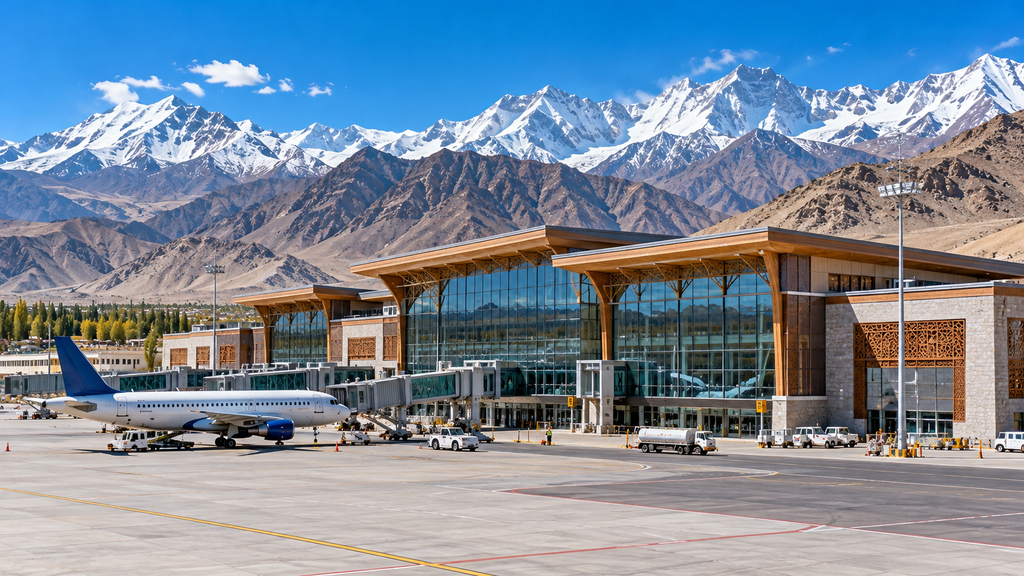
New Leh Airport Terminal
2. Nimmu–Padum–Darcha Road: A Major Connectivity Milestone
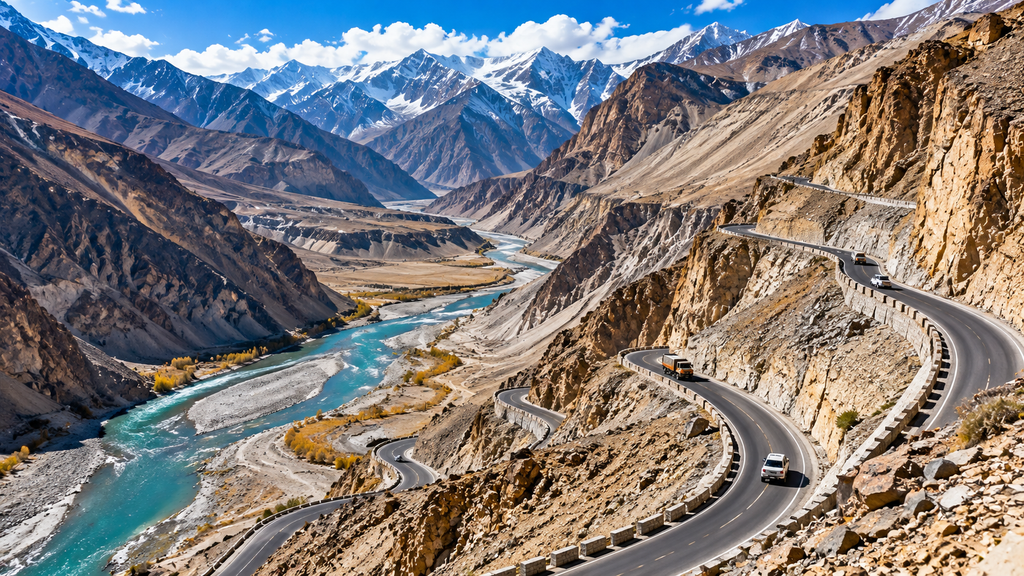
The second major highlight of PM Modi Launches ₹3,350 Crore Ladakh Projects is the dedication of the 298-kilometre Nimmu–Padum–Darcha Road.
Constructed by the Border Roads Organisation (BRO), the road links Nimmu in Leh with Darcha in Himachal Pradesh, passing through the remote and rugged Zanskar Valley. It provides an alternative route to Ladakh alongside the existing Srinagar–Leh and Manali–Leh highway corridors. Source: PIB
Why the Nimmu–Padum–Darcha Road Matters
Road connectivity in Ladakh has consequences beyond tourism. It affects the delivery of food, fuel, medicines, construction materials, and other essential supplies.
The new corridor is significant for several reasons.
Alternative access: A third road corridor can provide another option for travel and logistics, although actual availability depends on weather, road conditions, and operational restrictions.
Benefits for Zanskar: Residents may gain improved access to hospitals, educational institutions, markets, and administrative services.
Support for local commerce: Better road access can make it easier for farmers, artisans, homestay operators, and other entrepreneurs to move products and serve customers.
Strategic mobility: The route can strengthen logistical movement for the armed forces in a strategically important border region.
The government has also highlighted the reduction in travel time between Nimmu and Darcha through the new route. The Prime Minister’s Office has cited a reduction from approximately 12 hours to around three hours for the relevant journey. Actual travel time can vary according to road conditions, weather, and the starting and ending points. Source: Prime Minister’s Office
Economic Opportunities Along the New Road
Improved connectivity can help small businesses reach wider markets. For example, a homestay operator in Zanskar could find it easier to receive visitors, while a local producer may have better access to transport services for selling handicrafts or agricultural products.
These are potential benefits, not guaranteed outcomes. Their scale will depend on road maintenance, transport availability, local investment, and whether communities can participate in the economic activity generated by improved access.
Nimmu–Padum–Darcha Road
3. Hanu Hydroelectric Project and Transmission Line to Improve Power Infrastructure
Electricity reliability is another important focus of PM Modi Launches ₹3,350 Crore Ladakh Projects.
The initiative includes the 9 MW Hanu Small Hydroelectric Project and the 66 kV double-circuit Dah–Hanu–Khaltsi Transmission Line.
Ladakh has substantial renewable energy potential, but its geography creates distinctive infrastructure challenges. Remote settlements, harsh weather, and long distances between communities can complicate electricity generation, transmission, and maintenance.
How the Hanu Hydroelectric Project Can Help
Small hydropower installations can contribute to local electricity generation by using available water resources under suitable operating conditions.
The Hanu project is intended to strengthen Ladakh’s energy infrastructure. Its contribution will depend on seasonal water availability, operational performance, and the effectiveness of the connected transmission network.
The associated transmission line is important because electricity generation alone is insufficient if power cannot be transmitted reliably to the places where it is needed.
Potential benefits include:
- Better electricity network reliability.
- Additional support for households and public services.
- Improved operating conditions for small businesses.
- Support for healthcare facilities and educational institutions.
- Greater capacity to meet local electricity requirements.
Reliable power can be especially valuable during winter, when heating requirements rise and difficult weather can make infrastructure maintenance more challenging.
For businesses, stable electricity can support refrigeration, communications, online services, and other essential operations. For households, it can improve everyday convenience and help students access digital learning resources.
Nevertheless, the actual improvement in electricity supply should be assessed through operational data after the projects have been in service.
Hanu Small Hydroelectric Project
4. Petroglyph Conservation Park to Protect Ladakh’s Ancient Heritage
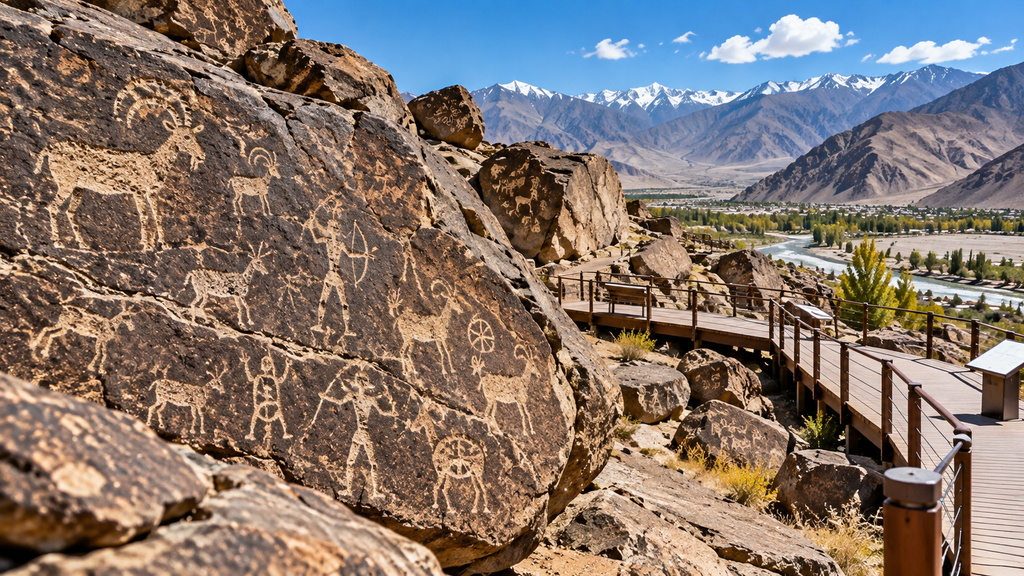
Another distinctive component of PM Modi Launches ₹3,350 Crore Ladakh Projects is the inauguration of India’s first Petroglyph Conservation Park at Sindhu Ghat in Leh.
Petroglyphs are images or symbols carved into rock. Such carvings can provide valuable evidence about ancient communities, their surroundings, artistic traditions, and ways of life.
Ladakh contains numerous rock-art sites that form an important part of its archaeological and cultural heritage.
Why Petroglyph Conservation Is Important
Ancient rock carvings can be damaged by weathering, physical contact, pollution, poorly managed tourism, and other human activities. Once significant details are lost, they may be impossible to recover.
A dedicated conservation park can help protect selected heritage material, improve public awareness, and encourage visitors to learn about Ladakh’s history.
Its potential benefits include:
- Greater awareness of the region’s archaeological heritage.
- Opportunities for educational visits and cultural interpretation.
- Support for responsible heritage tourism.
- Stronger recognition of Ladakh’s historical identity.
- New opportunities for local guides and tourism-related businesses.
However, conservation must remain the priority. Tourism development should not result in damage to archaeological sites or turn fragile cultural resources into unmanaged attractions.
The long-term success of the park will depend on conservation standards, expert oversight, visitor management, and community participation.
Petroglyph Conservation Park in Leh
5. Project Him Sarovar: Water Security for 40 Villages
Water management is central to Ladakh’s long-term development. The region’s cold desert climate, limited rainfall, seasonal snowmelt, and short agricultural growing season make water storage and distribution especially important.
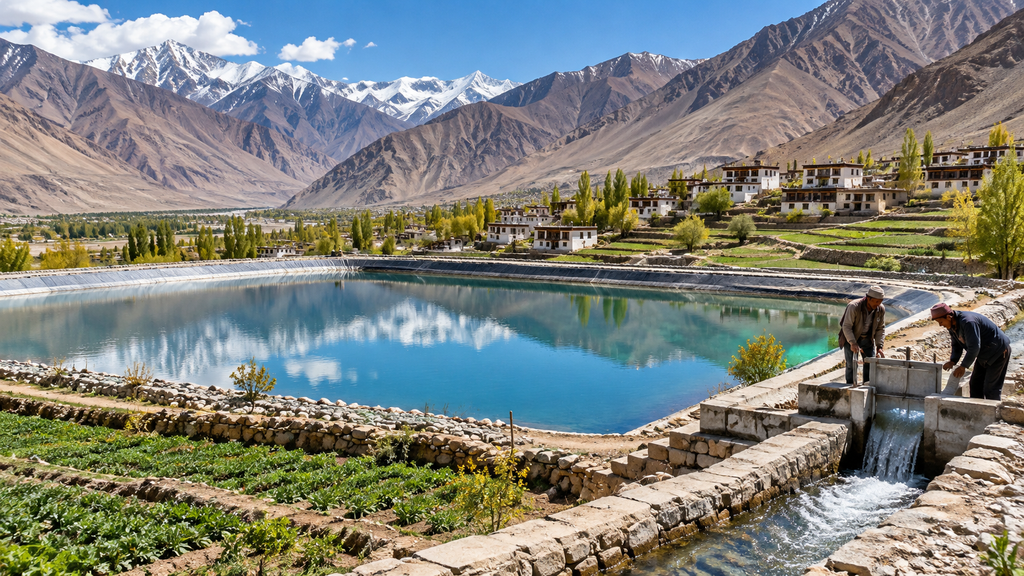
Under the development package, PM Modi Launches ₹3,350 Crore Ladakh Projects also includes 40 water bodies developed across 40 villages under Project Him Sarovar, described in the official announcement in connection with the objectives of Mission Amrit Sarovar.
How Water Conservation Can Support Farmers
Agriculture in Ladakh depends heavily on the timing and availability of water. Water may be available during snowmelt but become scarce when farmers need it for sowing, irrigation, and crop growth.
Water storage can help address this seasonal imbalance by capturing available water and making it accessible when required, subject to local hydrology and appropriate management.
The initiative could support:
- Irrigation during critical cultivation periods.
- Better management of seasonal water supplies.
- More dependable agricultural planning.
- Protection of rural livelihoods.
- Improved resilience to periods of water scarcity.
For example, a farmer who has access to a reliable local water-storage system may be better positioned to plan planting and irrigation schedules. This does not eliminate the risks associated with drought, changing snowmelt patterns, or inadequate storage capacity, but it can improve local water management.
The performance of these water bodies will depend on maintenance, storage capacity, distribution systems, water quality, and the participation of village communities.
Water conservation projects are most effective when infrastructure is combined with sustainable water-use practices and local monitoring.
Project Him Sarovar Water Bodies
PM Modi Launches ₹3,350 Crore Ladakh Projects: Expected Economic Impact
The importance of PM Modi Launches ₹3,350 Crore Ladakh Projects extends beyond the construction and inauguration of individual facilities. Infrastructure can create a foundation for economic activity by reducing barriers that prevent people and businesses from accessing markets and services.
However, long-term economic outcomes depend on how effectively the new facilities are used and maintained.
Tourism and Hospitality
The airport terminal and improved road connectivity could support tourism by making travel more convenient and increasing transport capacity.
Local hotels, homestays, restaurants, taxi operators, guides, and handicraft sellers may benefit if visitor demand grows. Winter tourism and adventure tourism could also offer opportunities to diversify activity beyond the traditional summer season.
Ladakh’s fragile environment requires careful planning. Waste management, water consumption, traffic, and pressure on sensitive landscapes must be addressed as tourism expands.
Employment and Local Enterprises
Infrastructure projects can generate construction-related employment and demand for services. Once operational, they may also create opportunities in transport, maintenance, tourism, hospitality, and local commerce.
The extent of these opportunities will depend on local recruitment, training, procurement, and business participation.
For Ladakh’s young people, the challenge is not only to create more economic activity but also to ensure that they can access the skills and opportunities associated with it.
Better Access to Essential Services
Connectivity improvements can help residents reach healthcare, education, and administrative services. More reliable electricity can support facilities and digital services, while water-storage infrastructure can assist agricultural communities.
These benefits may be particularly meaningful for remote settlements, where distance and weather can make routine activities more difficult.
Environmental Sustainability Must Remain a Priority
Development in Ladakh requires a careful balance between modern infrastructure and environmental protection. Its high-altitude landscapes, limited water resources, biodiversity, and cultural heritage are valuable but vulnerable.
The airport terminal’s use of geothermal energy is one example of an effort to adapt infrastructure to local climatic conditions.
Future implementation and maintenance should also consider:
- Efficient use of water and energy.
- Responsible management of construction waste.
- Protection of sensitive habitats and archaeological sites.
- Sustainable tourism and visitor management.
- Climate resilience in roads, power systems, and water infrastructure.
- Meaningful participation by local communities.
The success of PM Modi Launches ₹3,350 Crore Ladakh Projects should therefore be measured not only by the amount invested, but also by the quality of services delivered, the durability of infrastructure, and its long-term impact on residents and the natural environment.
Challenges That Could Influence the Projects’ Success
Even well-designed infrastructure projects face challenges in Ladakh. The region’s geography and climate make construction, transportation, and maintenance more demanding than in many lower-altitude areas.
Extreme Weather and Maintenance
Snowfall, freezing temperatures, landslides, and other severe conditions can affect roads and infrastructure. Regular maintenance and contingency planning will be essential to ensure reliable services.
Seasonal Demand
Tourism activity can vary substantially by season. Airport capacity and road access need to be supported by suitable transport services, accommodation, and local facilities.
Water and Ecological Constraints
Water resources are limited and sensitive to seasonal changes. Water bodies must be managed carefully to avoid waste, protect water quality, and ensure that benefits reach the communities that need them.
Local Economic Participation
Infrastructure can open new opportunities, but local people need access to skills, finance, markets, and business support to benefit fully.
These challenges do not diminish the significance of the investment. Instead, they demonstrate why implementation quality, community involvement, and long-term planning are essential.
What the Ladakh Development Package Means for the Future
The ₹3,350 crore package brings together several priorities that are especially relevant to a remote Himalayan region: transport access, electricity reliability, water security, and cultural conservation.
The airport terminal can increase passenger-handling capacity, while the Nimmu–Padum–Darcha Road provides an additional route connecting Ladakh with Himachal Pradesh. The hydropower and transmission projects aim to strengthen the electricity network, and Project Him Sarovar addresses seasonal water-management needs.
At the same time, the Petroglyph Conservation Park recognizes that development should protect the historical and cultural resources that make Ladakh distinctive.
For residents, the most important measure of success will be practical improvements in everyday life: more reliable services, better access to markets, stronger livelihood opportunities, and infrastructure that continues to function under difficult conditions.
Conclusion: PM Modi Launches ₹3,350 Crore Ladakh Projects
PM Modi Launches ₹3,350 Crore Ladakh Projects marks a significant development milestone for the Union Territory. Announced and inaugurated on October 15, 2026, the package combines transport infrastructure, renewable energy, electricity transmission, water conservation, and heritage protection.
The new Leh airport terminal and the Nimmu–Padum–Darcha Road are expected to improve connectivity, while the Hanu hydroelectric project and its associated transmission line aim to strengthen electricity infrastructure. The Petroglyph Conservation Park and Project Him Sarovar address cultural preservation and water security.
The long-term impact will depend on effective implementation, regular maintenance, environmental safeguards, and the ability of local communities to benefit from the infrastructure.
Ultimately, the significance of PM Modi Launches ₹3,350 Crore Ladakh Projects lies in whether these investments translate into lasting improvements in connectivity, livelihoods, essential services, and sustainable development across Ladakh.
Frequently Asked Questions (FAQs)
1. What is the PM Modi ₹3,350 crore Ladakh development project?
The PM Modi ₹3,350 crore Ladakh development package comprises major infrastructure initiatives focused on improving air and road connectivity, strengthening electricity infrastructure, conserving water, and protecting Ladakh’s cultural heritage.
2. When did PM Narendra Modi launch the ₹3,350 crore Ladakh projects?
The projects were announced as inaugurated or dedicated on October 15, 2026, according to the official government announcement.
3. What are the major projects included in the Ladakh development package?
The package includes the new Leh airport passenger terminal, the Nimmu–Padum–Darcha Road, the Hanu Small Hydroelectric Project, the Dah–Hanu–Khaltsi transmission line, a Petroglyph Conservation Park, and 40 water bodies under Project Him Sarovar.
4. How will the new Leh airport terminal benefit Ladakh?
The new terminal at Kushok Bakula Rimpochee Airport in Leh is designed to handle up to 35 lakh passengers annually. It is expected to improve passenger facilities and support tourism and regional connectivity.
5. What is the Nimmu–Padum–Darcha Road?
The Nimmu–Padum–Darcha Road is a 298-kilometre mountain road connecting the Leh region with Darcha in Himachal Pradesh through Zanskar Valley. It provides an alternative road corridor for transportation and logistics, subject to weather and road conditions.
6. How will the Ladakh hydroelectric project improve electricity supply?
The 9 MW Hanu Small Hydroelectric Project is intended to strengthen local power infrastructure. Its actual contribution will depend on water availability, operating conditions, and the performance of the connected transmission network.
7. What is Project Him Sarovar in Ladakh?
Project Him Sarovar includes the development of 40 water bodies across 40 villages. The initiative aims to improve water conservation and support local water-management and agricultural needs.
8. What is the purpose of the Petroglyph Conservation Park in Leh?
The Petroglyph Conservation Park is intended to help preserve ancient rock carvings and raise awareness of Ladakh’s archaeological heritage. It can also support education and responsible cultural tourism.
9. How could the ₹3,350 crore Ladakh projects benefit the local economy?
The projects could support tourism, improve access to markets and essential services, strengthen electricity infrastructure, and create opportunities for local businesses. The actual economic impact will depend on implementation, maintenance, and community participation.
10. Will the Ladakh development projects improve tourism?
Improved airport facilities and road connectivity could make travel more convenient and support tourism-related businesses. However, tourism growth will also depend on transport availability, visitor demand, accommodation, and sustainable environmental management.
11. Why is infrastructure development important in Ladakh?
Ladakh’s high altitude, harsh winters, remote settlements, and challenging terrain make reliable transport, electricity, and water infrastructure essential for residents, businesses, public services, and regional connectivity.
12. How can Ladakh balance infrastructure development with environmental protection?
Ladakh can balance development with conservation through responsible tourism, efficient water and energy use, careful construction planning, protection of archaeological sites, and regular maintenance of infrastructure. Local community participation is also important for long-term sustainability.