
RBI’s New Credit Rules: 5 Shocking Impacts on MSMEs
India’s MSME sector has long been called the backbone of the economy. From small manufacturers and traders to startup founders and service providers, millions of businesses depend heavily on bank credit for survival and growth. Now, the latest changes introduced by the Reserve Bank of India are creating both excitement and anxiety across the business ecosystem.
The topic “RBI’s New Credit Rules: 5 Shocking Impacts on MSMEs” is becoming increasingly important because these reforms could fundamentally change how small businesses access loans, manage cash flow, and survive during economic uncertainty.
RBI’s New Credit Rating Framework
The RBI’s New Credit Rating Framework will take effect on April 1, 2027, reshaping how banks assess risk and allocate capital.
- Borrower Credit Ratings: Under the RBI’s New Credit Rating Framework, bank capital requirements will directly depend on borrower credit ratings, making accurate assessments critical.
- Agency Default Performance: The RBI’s New Credit Rating Framework also ties capital rules to the historical default performance of credit rating agencies, pushing banks toward agencies with stronger track records.
- INC Classification: Borrowers flagged as Issuer Not Cooperating (INC) for more than six months under the RBI’s New Credit Rating Framework will face higher risk weights, raising borrowing costs and tightening credit access.
As someone who has tracked India’s banking sector and MSME financing landscape for years, I believe these new rules represent one of the most significant shifts in credit governance in the last decade. While the RBI’s intentions are focused on financial stability and responsible lending, the real-world consequences for MSMEs could be dramatic.
Introduction: Why RBI Changed the Credit Rules
India’s financial ecosystem has witnessed rapid growth in digital lending, unsecured credit, fintech partnerships, and instant business loans. While this improved financial inclusion, it also increased systemic risks.
The RBI noticed several concerns:
- Rising defaults in unsecured loans
- Over-leveraging among small businesses
- Aggressive fintech lending practices
- Weak credit monitoring systems
- Hidden stress in MSME loan portfolios
To address these issues, the central bank introduced stricter lending norms, enhanced risk-weight requirements, tighter monitoring mechanisms, and stronger compliance rules for banks and NBFCs.
The conversation around “RBI’s New Credit Rules: 5 Shocking Impacts on MSMEs” matters because these reforms affect not just lenders but millions of entrepreneurs across India.
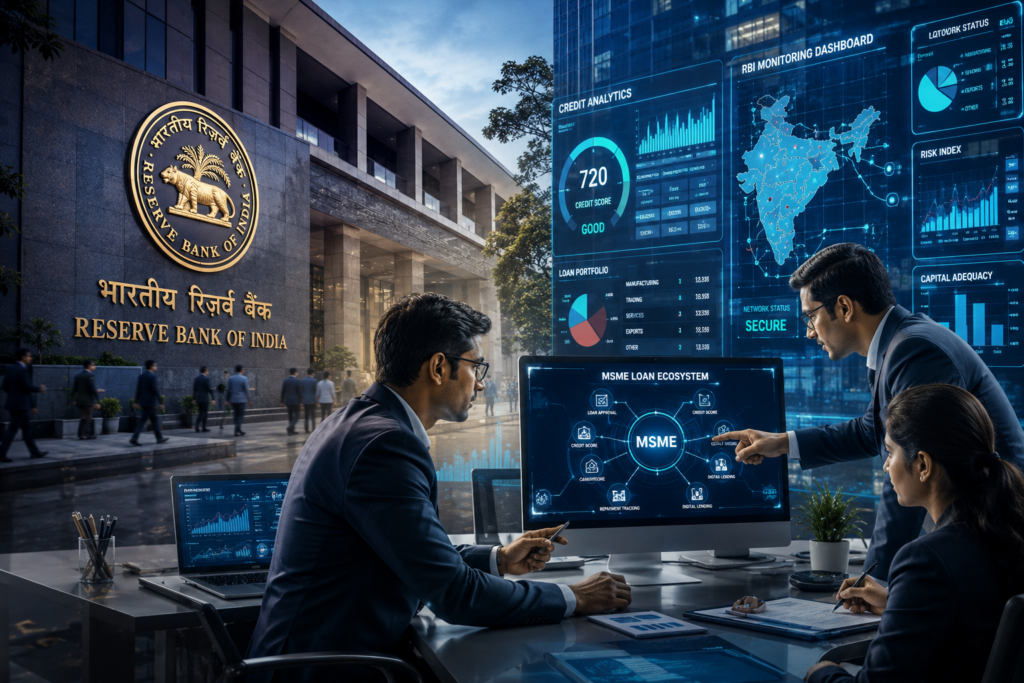
What Are RBI’s New Credit Rules?
The RBI’s revised credit framework includes several major measures:
1. Higher Risk Weights on Unsecured Lending
Banks must now maintain higher capital reserves for unsecured business loans.
2. Stricter Loan Assessment
Financial institutions are expected to conduct deeper borrower evaluations before approving loans.
3. Enhanced Monitoring of MSME Accounts
Banks now need improved tracking of repayment behavior and cash-flow patterns.
4. Tighter Rules for Digital Lending
Fintech platforms partnering with NBFCs and banks face stronger compliance obligations.
5. Greater Focus on Credit Discipline
Borrowers with delayed payments may face faster downgrades in credit eligibility.
These measures are intended to reduce systemic risk, but the effects on MSMEs could be profound.
1. MSME Loans Could Become More Expensive
One of the biggest outcomes of RBI’s reforms is the likely increase in borrowing costs.
Banks facing higher capital reserve requirements often pass the burden to customers through:
- Higher interest rates
- Increased processing fees
- Tighter collateral demands
- Reduced loan flexibility
For MSMEs already struggling with inflation, weak demand, and rising operational costs, this could create major financial pressure.
Why This Matters
Small businesses generally operate on thin margins. Even a 1–2% increase in interest rates can significantly affect profitability.
For example:
- Manufacturers may delay expansion
- Retailers may cut inventory
- Startups may postpone hiring
- Exporters may face working-capital stress
The concern highlighted in “RBI’s New Credit Rules: 5 Shocking Impacts on MSMEs” is that affordable credit may become harder to access precisely when businesses need it most.

2. Fintech Lending Boom Could Slow Down
Over the last few years, fintech companies transformed MSME lending by offering:
- Instant approvals
- Paperless onboarding
- Quick disbursement
- Alternative credit scoring
However, RBI’s tighter regulations on digital lending may slow this rapid expansion.
Potential Effects on MSMEs
Many small businesses without traditional collateral depended on fintech lenders for survival. Now:
- Approval times may increase
- Compliance checks may become stricter
- Loan eligibility criteria could tighten
- Smaller borrowers may struggle to qualify
This shift may particularly affect:
- Gig economy entrepreneurs
- First-time business owners
- Rural enterprises
- Small online sellers
While the RBI wants to prevent reckless lending, the downside is reduced accessibility for underserved borrowers.
As an observer of India’s financial evolution, I believe this is one of the most underestimated impacts discussed under “RBI’s New Credit Rules: 5 Shocking Impacts on MSMEs.”
3. Credit Discipline Will Become Critical
The days of relaxed repayment behavior are disappearing quickly.
Under the new framework, even minor delays in repayment may affect:
- Credit scores
- Future loan approvals
- Working capital limits
- Banking relationships
A New Era of Financial Transparency
Banks are increasingly using:
- GST data
- Bank transaction analytics
- AI-driven credit assessment
- Real-time repayment tracking
This means MSMEs must maintain cleaner financial records than ever before.
Businesses That May Face Problems
- Companies with irregular cash flow
- Seasonal businesses
- Informal enterprises
- Businesses with poor bookkeeping
Entrepreneurs who fail to adapt may find themselves excluded from formal credit systems.

4. Collateral-Free Loans May Become Harder to Obtain
The Indian government has strongly promoted collateral-free MSME lending through schemes like CGTMSE. However, banks may now become more cautious.
Why Banks Are Becoming Conservative
Higher risk weights mean unsecured lending becomes costlier for lenders. As a result:
- Banks may prefer secured loans
- Collateral requirements could rise
- Loan sizes may shrink
- New businesses may face tougher scrutiny
This could especially hurt:
- Women entrepreneurs
- Youth-led startups
- Small traders
- Rural MSMEs
For many entrepreneurs, access to collateral is already limited. The new environment could widen the financing gap.
This is another key concern within “RBI’s New Credit Rules: 5 Shocking Impacts on MSMEs.”
5. Strong MSMEs Could Benefit in the Long Run
While the short-term impact may seem negative, there is also a positive side.
Well-managed businesses with:
- Strong cash flow
- Proper compliance
- Good repayment history
- Transparent accounting
may actually benefit from the reforms.
RBI’s New Credit Rules: 5 Shocking Impacts on MSMEs
How Strong Businesses Gain Advantage
Banks are likely to prioritize quality borrowers.
This could lead to:
- Better loan terms for disciplined firms
- Faster approvals for compliant businesses
- Lower default-related risks
- Improved investor confidence
Over time, India’s MSME sector could become more financially stable and globally competitive.
In my view, this is the hidden opportunity behind “RBI’s New Credit Rules: 5 Shocking Impacts on MSMEs.”
How MSMEs Should Respond to the New RBI Rules
Businesses cannot afford to ignore these changes. MSMEs should immediately focus on strengthening financial systems.
Key Action Steps
1. Improve Financial Documentation
Maintain:
- GST records
- Bank statements
- Profit & loss reports
- Tax compliance records
2. Reduce Dependency on Unsecured Loans
Explore:
- Government-backed schemes
- Secured credit options
- Invoice financing
- Trade credit solutions
3. Strengthen Credit Scores
Pay:
- EMI dues on time
- GST liabilities promptly
- Vendor obligations regularly
4. Build Banking Relationships
Strong banking relationships may become more valuable than ever.
5. Adopt Financial Technology Wisely
Use digital tools for:
- Accounting
- Cash-flow tracking
- Expense management
- Financial forecasting

RBI’s New Credit Rules: 5 Shocking Impacts on MSMEs
Impact on India’s Economy
MSMEs contribute significantly to:
- Employment generation
- Manufacturing output
- Exports
- GDP growth
Therefore, any major change in credit access can impact the broader economy.
Possible Economic Outcomes
Positive Outcomes
- Lower financial instability
- Better lending quality
- Reduced bad loans
- Stronger banking system
Negative Outcomes
- Slower MSME expansion
- Reduced entrepreneurship
- Lower job creation
- Credit accessibility challenges
The ultimate impact will depend on how banks implement these regulations and how quickly MSMEs adapt.
Government’s Role Will Be Crucial
To balance financial stability with economic growth, policymakers may need to expand support mechanisms.
Possible solutions include:
- Enhanced credit guarantees
- MSME-focused refinancing schemes
- Interest subsidy programs
- Faster dispute resolution systems
- Simplified compliance norms
Without adequate support, smaller enterprises could face serious difficulties during the transition period.
RBI’s New Credit Rules: 5 Shocking Impacts on MSMEs
Expert Perspective: A Turning Point for MSMEs
Having observed India’s banking reforms over many years, I see this moment as a major transition phase.
The RBI is clearly prioritizing long-term financial stability over short-term credit expansion. While this approach is understandable, the real challenge lies in ensuring that genuine entrepreneurs do not become collateral damage.
India’s MSME ecosystem is incredibly diverse. A large urban manufacturer and a small rural trader cannot be treated identically. Policymakers and lenders must maintain flexibility while enforcing discipline.
The businesses that embrace transparency, digital accounting, and financial discipline will likely emerge stronger. Others may struggle to survive in the new lending environment.
RBI’s New Credit Rules: 5 Shocking Impacts on MSMEs
Future Outlook for MSME Financing
The future of MSME financing in India will likely include:
- AI-based credit underwriting
- Embedded finance ecosystems
- Cash-flow-based lending
- Real-time financial monitoring
- Open banking integration
Traditional collateral-based lending may gradually give way to data-driven credit evaluation systems.
However, businesses that lack digital infrastructure or financial literacy could face exclusion risks.
That is why awareness about “RBI’s New Credit Rules: 5 Shocking Impacts on MSMEs” is essential for every entrepreneur today.
Conclusion
RBI’s New Credit Rules: 5 Shocking Impacts on MSMEs
The new RBI credit rules represent a significant shift in India’s financial landscape. While the reforms aim to strengthen banking stability and reduce reckless lending, the impact on MSMEs could be dramatic.
Higher borrowing costs, tighter loan approvals, stricter compliance demands, and reduced unsecured lending may create short-term pain for millions of businesses.
At the same time, financially disciplined MSMEs could benefit from improved credibility and better long-term access to capital.
Ultimately, survival and growth in this new environment will depend on preparation, transparency, and adaptability.
Entrepreneurs who modernize their financial practices today may become tomorrow’s strongest businesses.
FAQs
1. What are RBI’s new credit rules for MSMEs?
The RBI has introduced stricter lending norms, higher risk weights for unsecured loans, tighter fintech regulations, and enhanced borrower monitoring systems.
2. Will MSME loan interest rates increase?
Yes, borrowing costs may rise because banks now need to maintain higher capital reserves for certain categories of loans.
3. How will fintech lending be affected?
Fintech lenders may face stricter compliance requirements, potentially slowing instant loan approvals and tightening eligibility criteria.
4. Are collateral-free MSME loans becoming difficult?
Banks may become more cautious with unsecured lending, making collateral-free loans harder to obtain for some borrowers.
5. Can disciplined MSMEs benefit from the new rules?
Yes, businesses with strong financial records, timely repayments, and transparent operations may receive better credit opportunities.