
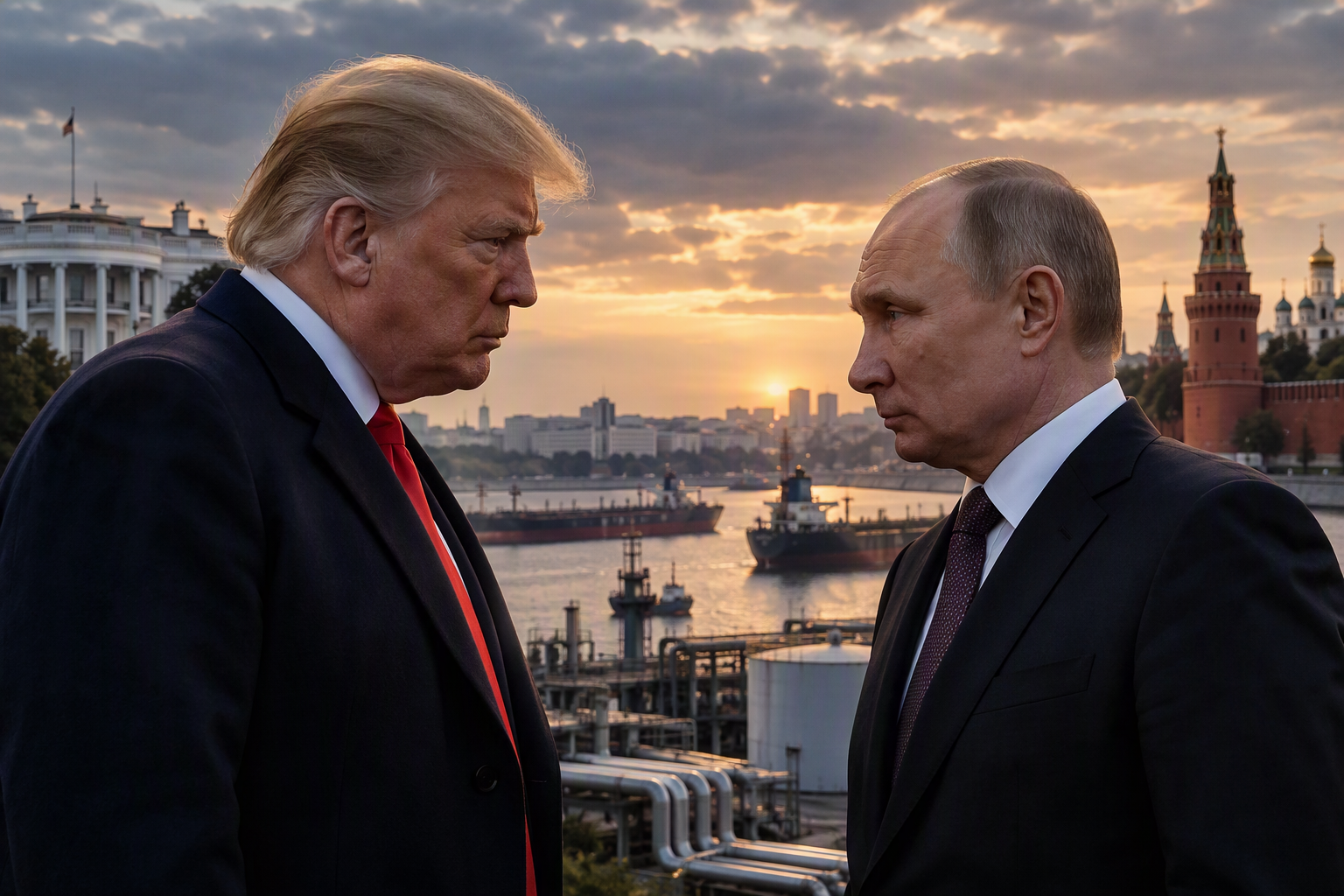
Russia’s Dramatic Move Leaves Trump Facing New Challenges after US President Donald Trump announced a new diesel supply arrangement with Russian President Vladimir Putin on October 9, 2026. The announcement marks a significant development in US–Russia relations, particularly because Washington has previously used sanctions to pressure Moscow over its war against Ukraine.
The announcement comes at a difficult time for the United States. Fuel prices have surged amid disruptions to international energy supplies, the conflict involving Iran and continuing geopolitical tensions. Trump has presented the reported arrangement as a way to increase diesel availability and reduce prices for American consumers, farmers, truckers and businesses.
However, the decision has raised questions about the consistency of US sanctions policy, the future of American support for Ukraine and Russia’s position in global energy markets. Ukrainian President Volodymyr Zelenskyy has criticised the move, arguing that additional Russian energy revenue could help Moscow continue its war.
The development therefore goes beyond a commercial fuel agreement. It highlights the difficult balance between domestic economic priorities and international political commitments.
What Is Russia’s Dramatic Move That Leaves Trump Facing New Challenges?
The immediate trigger is Trump’s announcement that Russia would supply diesel to American and international markets following a telephone conversation with Putin.
On October 9, Trump announced that Russia would begin supplying more than 300,000 metric tonnes of diesel to meet growing fuel demand. He also outlined plans for additional supplies, including 500,000 tonnes in November and another 1 million tonnes thereafter, with a further 3 million tonnes mentioned in his announcement. The precise timing and delivery arrangements have not been fully established in the reporting available so far.
The announcement attracted attention because the United States had previously restricted Russian energy transactions as part of its response to the invasion of Ukraine.
According to reports, the US Treasury granted temporary permission for certain transactions involving Russian diesel under the agreement. This represents a limited easing of restrictions rather than a general removal of sanctions against Russia.
The development raises three central questions:
- Could Russian diesel imports help lower fuel prices across the United States?
- Will the arrangement provide Moscow with additional revenue and diplomatic leverage?
- How will the decision affect Washington’s relationship with Ukraine and its European allies?
The answers will depend on the actual volume of fuel delivered, the duration of the authorisation and the wider direction of the conflict.
Why Russia’s Dramatic Move Leaves Trump Facing New Challenges in Energy Policy
The reported agreement highlights a major challenge for the Trump administration: managing energy prices while maintaining pressure on Russia.
Diesel plays a vital role in the US economy, powering freight transportation, agricultural equipment, construction machinery and a wide range of industrial activities. When diesel prices increase, businesses face higher operating costs, which can eventually contribute to higher prices for goods and services.
Reuters reported that the agreement was announced amid exceptionally high US diesel prices and ahead of the November 3 congressional midterm elections. The political consequences of rising fuel costs have therefore become an important consideration for the administration.
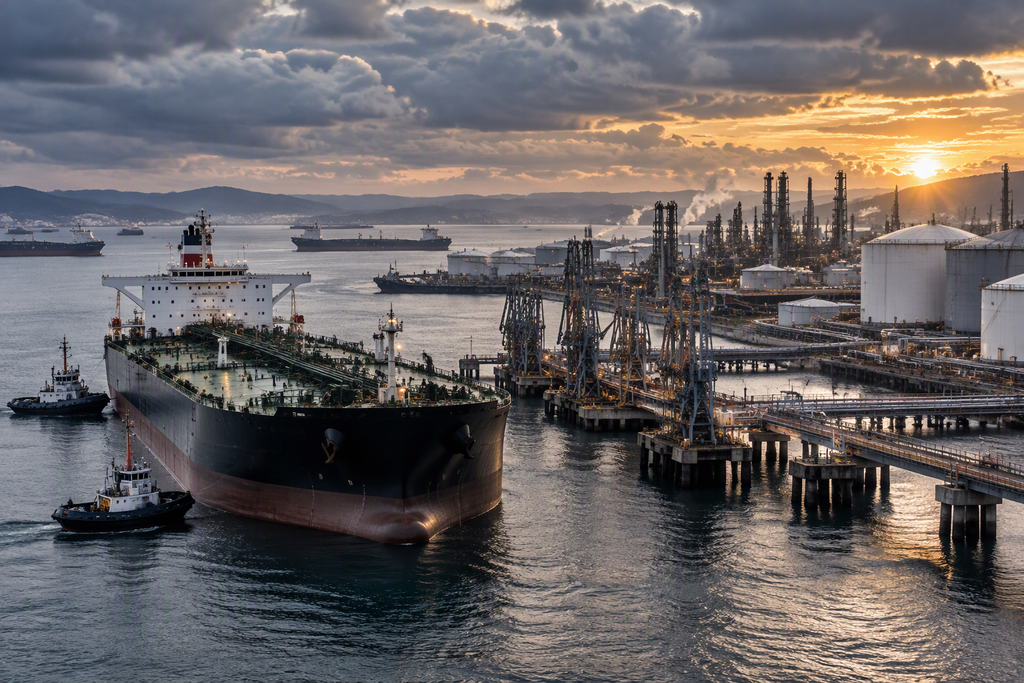
1. Rising diesel prices are creating economic pressure
American farmers need diesel to operate agricultural machinery, while trucking companies depend on it to transport food, fuel and manufactured products.
When fuel becomes more expensive, businesses may pass some of those costs to customers.
As a result, household expenses may rise, making it more challenging to control inflation.
Trump has presented the Russian supply arrangement as a way to ease this pressure. However, an announced agreement does not automatically translate into immediate price reductions.
The effect will depend on the quantity delivered, the timing of shipments, refining and distribution capacity, and conditions in international energy markets.
2. The administration faces a sanctions dilemma
The United States has used economic restrictions to reduce Russia’s access to revenue and technology following its invasion of Ukraine.
Seeking Russian diesel while maintaining pressure on Moscow creates an apparent contradiction in that policy.
Supporters of the arrangement may argue that securing essential supplies is a practical economic decision. Critics may counter that buying Russian fuel creates additional commercial opportunities for a government Washington has been trying to pressure.
The main concern is whether this temporary exemption will remain restricted to specific transactions or lead to a wider shift in US energy policy.
3. The agreement could influence political debate
With midterm elections approaching, fuel prices are likely to remain an important political issue.
If the arrangement produces measurable savings, the administration may present it as evidence that negotiations with Russia can deliver economic benefits.
If prices remain high, critics may question whether the agreement was sufficient to address the underlying supply problems.
Russia’s Dramatic Move Leaves Trump Facing New Challenges because the administration must now demonstrate that its energy decision can deliver practical benefits without undermining its wider diplomatic objectives.
How Vladimir Putin Could Benefit From the Diesel Agreement
The arrangement could offer Russia economic and diplomatic opportunities, although the scale of those benefits remains uncertain.
Additional revenue from energy exports
Russia ranks among the world’s leading suppliers of crude oil and refined petroleum products. Access to additional buyers can support its energy sector and generate export revenue.
The United States’ temporary easing of certain restrictions creates a potential route for specific Russian diesel transactions that would otherwise have faced sanctions barriers. However, the actual economic gains will depend on the volume of fuel delivered, market prices, payment terms and the conditions of the authorisation.
The publicly reported details do not establish the full commercial terms of the agreement.
Greater diplomatic engagement with Washington
The telephone conversation between Trump and Putin also demonstrates that energy security remains an important subject in bilateral relations.
According to Reuters, the October 9 call lasted around 90 minutes and covered the war in Ukraine, bilateral relations and other international issues. Kremlin foreign policy aide Yuri Ushakov subsequently described the conversation as friendly and substantive.
For Moscow, direct engagement with Washington offers an opportunity to discuss energy trade alongside security and diplomatic concerns.
However, negotiations do not necessarily mean that the United States has accepted Russia’s position on Ukraine. Both countries retain competing interests, and major disagreements remain unresolved.
A possible increase in bargaining power
Energy suppliers can gain leverage when buyers face shortages and have limited alternatives.
Russia’s importance as an energy producer means that decisions about exports can influence market expectations. Nevertheless, its leverage is constrained by competing suppliers, sanctions, transport infrastructure and the ability of buyers to source fuel elsewhere.
The agreement therefore creates a potential diplomatic advantage for Moscow, but it does not establish that Russia has achieved a decisive victory over the United States.
Russia’s Dramatic Move Leaves Trump Facing New Challenges Over Ukraine
The most immediate diplomatic controversy concerns Ukraine.
The US has supported Ukraine through military assistance, financial support and diplomatic engagement since Russia launched its full-scale invasion in February 2022. Washington has also used sanctions to impose economic costs on Moscow.
The new diesel arrangement has raised questions about how these objectives fit together.
Zelenskyy criticises the decision
Ukrainian President Volodymyr Zelenskyy strongly criticised the agreement, describing it as a weak decision and arguing that it could help Russia continue its military campaign.
He also warned that additional Russian revenue could prolong the conflict and increase the damage inflicted on Ukraine.
Ukraine’s concern is that energy revenue can support the wider Russian economy, including government expenditure during wartime.
From Kyiv’s perspective, easing restrictions on Russian petroleum products while peace negotiations remain unresolved risks weakening the economic pressure intended to influence Moscow.
Washington faces competing priorities
The Trump administration must balance several objectives:
- Reducing domestic fuel costs.
- Maintaining economic pressure on Russia.
- Supporting negotiations aimed at ending the war.
- Preserving confidence among Ukraine and European allies.
These priorities may not always align.
A short-term energy arrangement could improve supply availability while simultaneously creating diplomatic friction with Ukraine. Conversely, refusing additional supplies might preserve a tougher sanctions position but leave the administration with fewer options for addressing immediate fuel-market pressures.
The challenge is not simply choosing between Russia and Ukraine. It is determining whether the United States can pursue its economic and security objectives without making one policy undermine another.
Will the agreement change peace negotiations?
The diesel announcement came as American, Ukrainian and European representatives were meeting in Miami to discuss proposals for ending the war.
Reporting indicates that disagreements over territorial issues and Russia’s demands remain major obstacles to a settlement.
The fuel agreement does not, by itself, resolve those disputes.
It remains uncertain whether energy cooperation will encourage further diplomatic engagement or complicate efforts to build a common position among Washington, Kyiv and European governments.
For now, the most important indicators will be whether negotiations continue, whether sanctions policy changes further and whether the parties make progress on a credible peace proposal.
What the Russia–US Diesel Deal Means for Global Energy Markets
The agreement comes during a period of serious disruption to international energy supplies.
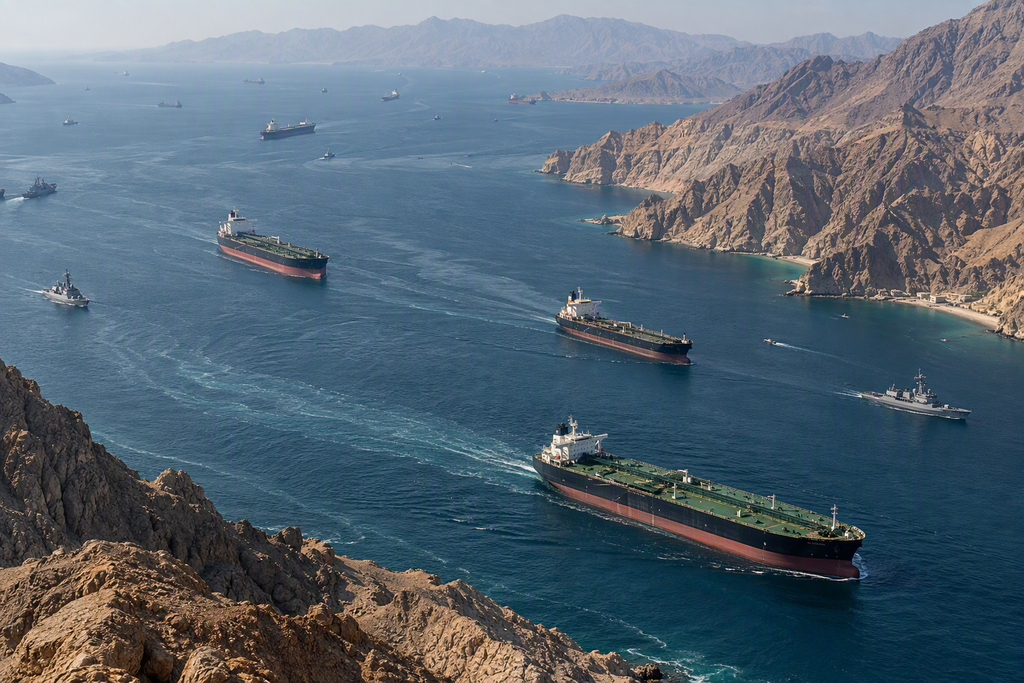
The conflict involving Iran has affected shipping through the Strait of Hormuz, a strategically important route for global oil and gas trade. Attacks on energy infrastructure and shipping routes have added to market uncertainty. Meanwhile, the Russia–Ukraine war has continued to affect energy production, exports and diplomatic relations.
The Strait of Hormuz and supply disruptions
The Strait of Hormuz connects the Persian Gulf with the Gulf of Oman and the wider Indian Ocean. Before the current disruption, approximately one-fifth of global oil and petroleum-liquid consumption moved through the strait, making it one of the world’s most important energy chokepoints.
When shipping through this route is disrupted, oil and petroleum-product markets can experience increased transport costs, supply uncertainty and price volatility.
Alternative export routes can help, but they cannot always replace the volumes normally transported through the strait.
Can Russian diesel bring prices down?
The Russian supply arrangement may add fuel to international markets, but analysts have questioned whether the announced volumes will be sufficient to resolve the broader energy shortage.
Al Jazeera reported that analysts viewed the arrangement as a limited solution that was unlikely to end the global energy crisis by itself.
Several factors will determine the final impact:
- Actual deliveries: Announced volumes must be delivered before they can contribute to physical supply.
- Market demand: Higher demand can absorb additional supplies without producing substantial price declines.
- Shipping conditions: Disruptions to maritime routes can limit the movement of petroleum products.
- Refining capacity: Diesel availability depends on the ability to produce, store and distribute the fuel.
- Geopolitical developments: Any escalation or de-escalation in regional conflicts can change market expectations.
Consequently, it would be premature to assume that the agreement will automatically bring diesel prices down sharply.
India and China: How Major Energy Importers Could Be Affected
India and China are important participants in international energy markets, and developments involving Russian exports can affect their commercial options.
India has purchased Russian crude oil in recent years, while China has maintained extensive energy-trading relationships with Russia and other producers.
However, the US–Russia diesel arrangement does not automatically change India’s domestic fuel prices or guarantee additional Russian supplies to Indian buyers.
Potential implications for India
For India, the most important considerations are the availability and cost of crude oil, refinery economics, shipping expenses and the stability of international energy markets.
If global diesel supplies increase and prices ease, Indian businesses could potentially benefit from lower international fuel costs. If supply disruptions persist, import expenses and transport costs could remain under pressure.
The actual effect would depend on market movements rather than the announcement alone.
Potential implications for China
China’s large energy market gives it a significant role in international trade. Its ability to source supplies from multiple producers can provide flexibility during periods of disruption.
Nevertheless, the country remains exposed to changes in international oil prices, shipping costs and regional security conditions.
For both countries, the central lesson is that diversified supply arrangements and reliable shipping routes are important elements of energy security.
What Happens Next in US–Russia Relations?
The immediate outcome will depend on whether the announced diesel shipments materialise and how the two governments handle the broader diplomatic issues surrounding the agreement.
Three developments deserve particular attention.
First, implementation of the fuel arrangement. The delivery schedule, payment terms and scope of the temporary sanctions authorisation will help determine whether the announcement produces lasting economic effects.
Second, the future of sanctions. Washington will need to clarify whether the exception remains temporary and limited to specified transactions or signals a wider change in policy.
Third, progress on Ukraine. Any movement towards a ceasefire or peace agreement would have consequences for sanctions, energy trade and the wider relationship between Russia and Western governments.
These developments will reveal whether the arrangement is a narrow response to an immediate fuel shortage or the beginning of a broader adjustment in US–Russia relations.

Russia’s Dramatic Move Leaves Trump Facing New Challenges: What to Watch
The announcement has created several questions that cannot yet be answered conclusively.
- Will Russia deliver the announced quantities on the proposed schedule?
- Will US diesel prices fall significantly after the initial shipments?
- Will Washington retain its wider sanctions framework?
- How will Ukraine and European governments respond to further energy cooperation?
- Will the arrangement influence negotiations over the Russia–Ukraine war?
- Could additional disruptions to global shipping offset any benefit from new supplies?
The answers will depend on developments over the coming weeks.
For now, the agreement demonstrates how quickly energy security can become a central diplomatic issue when prices rise and supplies become uncertain.
Frequently Asked Questions (FAQs)
1. What is Russia’s dramatic move that leaves Trump facing new challenges?
The development is Trump’s October 9, 2026, announcement of an arrangement for Russia to supply diesel to the United States and global markets. It has raised questions about energy prices, sanctions and US support for Ukraine.
2. Why did Trump agree to buy diesel from Russia?
Trump presented the arrangement as a way to increase fuel supplies and reduce high diesel prices in the United States. The decision came amid disruptions to international energy markets and ahead of the November midterm elections.
3. How much diesel is Russia expected to supply?
Trump announced an initial supply of more than 300,000 metric tonnes, followed by additional quantities in November and thereafter. His announcement also referred to a further 3 million tonnes. The precise delivery schedule and commercial terms remain important details to clarify.
4. Why is Ukraine unhappy with the agreement?
President Volodymyr Zelenskyy criticised the decision because additional Russian energy revenue could help Moscow sustain its war effort. Ukraine is concerned that easing restrictions could weaken economic pressure on Russia before a peace settlement is reached.
5. Will the Russia–US diesel deal lower global oil prices?
The agreement could add supplies to the market, but it is not guaranteed to produce a substantial or lasting price decline. Shipping disruptions, refining capacity, demand and geopolitical developments will continue to influence energy prices.
The US administration temporarily eased certain restrictions to permit specified Russian diesel transactions. This does not mean that all American sanctions against Russia have been lifted. The scope and duration of the authorisation remain important.
6. What does the agreement mean for US sanctions on Russia?
7. Could India benefit from the agreement?
India could benefit indirectly if additional global fuel supplies contribute to lower international prices. However, the effect on Indian fuel costs will depend on crude oil prices, refining economics, exchange rates and domestic pricing policies.
8. Does the agreement mean Putin has defeated Trump diplomatically?
Not necessarily. The agreement may provide Russia with additional commercial opportunities and diplomatic leverage, but it does not establish a decisive diplomatic victory. Its significance will depend on implementation, market outcomes and progress in negotiations over Ukraine.
Conclusion: A New Test for Trump’s Energy and Foreign Policy
Russia’s Dramatic Move Leaves Trump Facing New Challenges because the reported diesel arrangement places energy security, economic policy and international diplomacy in direct competition.
For Trump, the immediate objective is to secure fuel supplies and ease the pressure of rising diesel prices. For Putin, the agreement offers an opportunity to expand energy sales and maintain direct engagement with Washington. For Ukraine, the concern is that renewed Russian energy revenue could weaken efforts to pressure Moscow into ending the war.
The arrangement could provide short-term relief if the promised supplies arrive, but it cannot independently resolve the wider energy crisis or settle the conflict in Ukraine.
The coming weeks will be important in determining whether the agreement delivers measurable economic benefits, changes US sanctions policy or creates further diplomatic tensions.
Ultimately, the episode illustrates a central reality of international relations: economic interests, energy security and geopolitical commitments do not always point in the same direction. The outcome will depend on how Washington and Moscow manage those competing priorities.