The THAAD Deals: Gulf’s $142B Leaky Umbrella story is becoming one of the most debated defense and geopolitical topics in the Middle East. Over the past decade, Gulf nations have spent an estimated $142 billion on advanced missile defense systems, with the U.S.-made Terminal High Altitude Area Defense (THAAD) platform standing at the center of these deals.
Promoted as a powerful shield against ballistic missile threats, THAAD was expected to secure Gulf skies against regional tensions, particularly amid missile and drone attacks linked to conflicts in Yemen, Iran, and wider regional rivalries. Yet recent events have sparked difficult questions: can even the world’s most advanced missile defense systems guarantee protection?
THAAD Deals: Gulf’s $142B Leaky Umbrella Exposed in Recent Conflicts
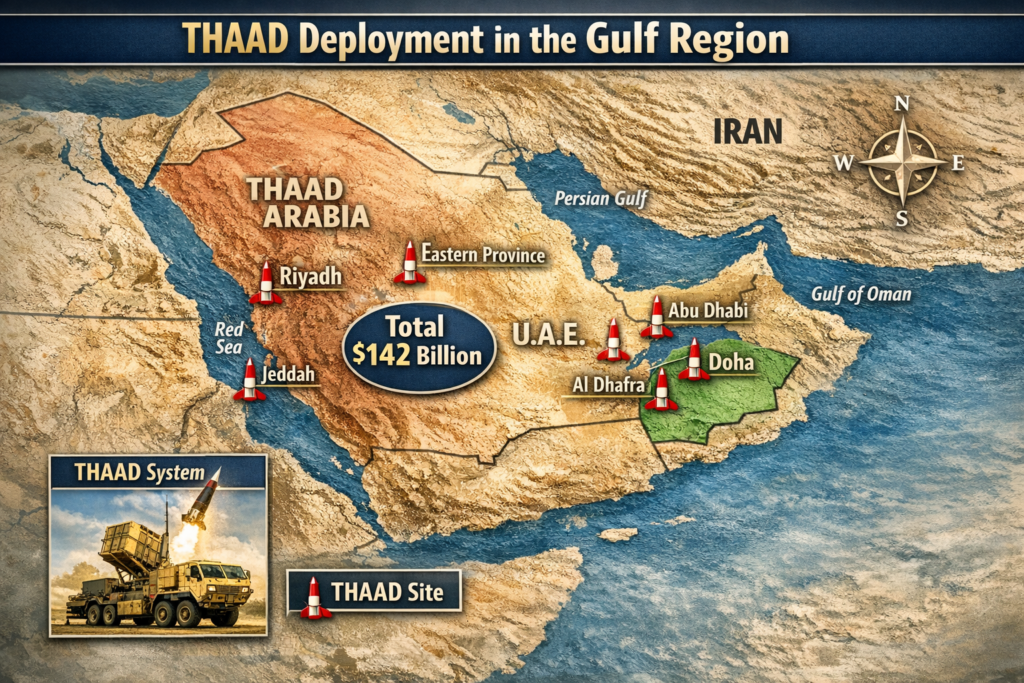
As billions continue flowing into defense procurement, critics increasingly describe these contracts as a “leaky umbrella”—costly, politically sensitive, and unable to stop every incoming threat.
What Is THAAD and Why the Gulf Bought It?
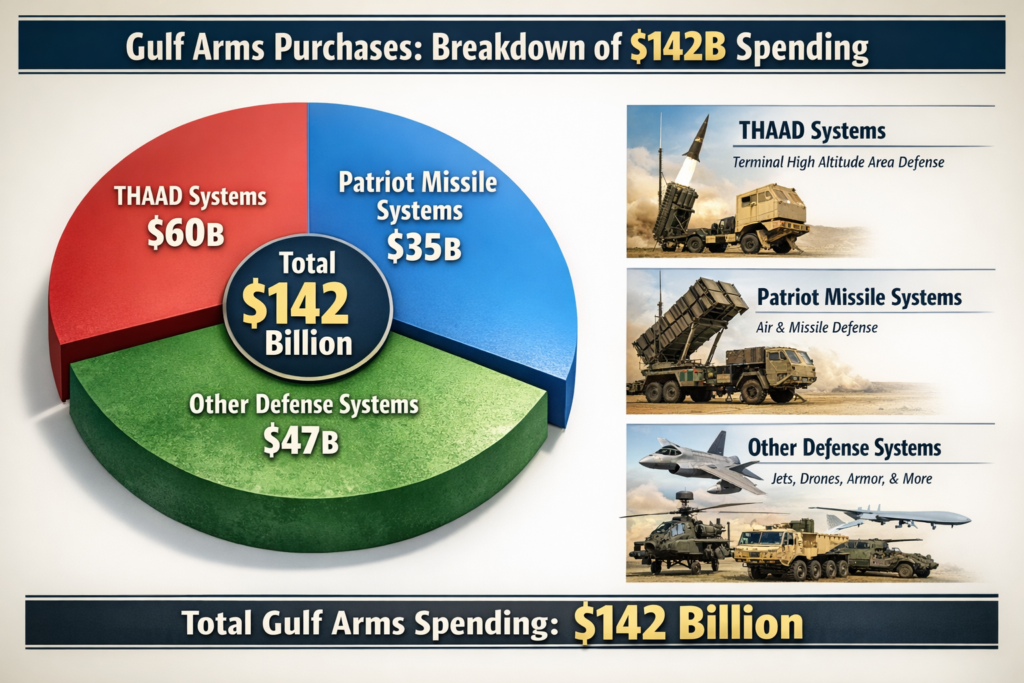
THAAD, developed by Lockheed Martin, is a missile defense system designed to intercept short, medium, and intermediate-range ballistic missiles during their terminal phase of flight. It uses hit-to-kill technology rather than explosives, destroying targets through direct impact.
Key Features of THAAD:
- Intercepts missiles at high altitude
- Mobile launcher systems
- Powerful AN/TPY-2 radar
- Integrated with Patriot defense systems
- Designed for layered air defense networks
For Gulf states such as Saudi Arabia, the United Arab Emirates, and others, THAAD became a strategic necessity due to growing missile threats across the region.
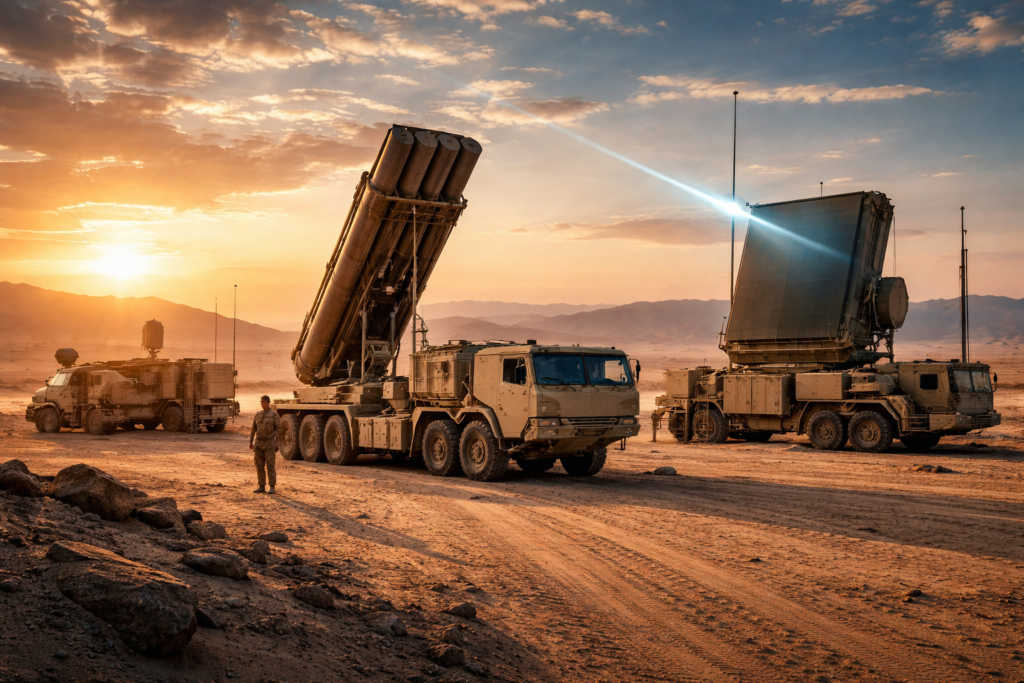
THAAD Deals: Gulf’s $142B Leaky Umbrella and Massive Spending
The phrase THAAD Deals: Gulf’s $142B Leaky Umbrella reflects the extraordinary scale of military purchases made by Gulf monarchies.
Major Reported Defense Purchases Include:
- Saudi Arabia’s multi-billion-dollar THAAD acquisition package
- UAE’s earlier THAAD deployment contracts
- Integrated missile shield cooperation with the U.S.
- Radar, maintenance, training, and interceptor replenishment programs
These deals form part of broader Gulf military modernization strategies aimed at reducing vulnerability to missile barrages and strategic coercion.
However, defense spending has not guaranteed airtight security.
Why Critics Call It a “Leaky Umbrella”
Despite technological sophistication, no missile defense system offers 100% interception success. That is why analysts increasingly use the phrase THAAD Deals: Gulf’s $142B Leaky Umbrella to describe the gap between expectations and battlefield realities.
Key Reasons:
1. Drone and Low-Cost Swarm Threats
THAAD was built mainly for ballistic missiles, not cheap drones or cruise missiles flying low and unpredictably.
2. Saturation Attacks
Large missile salvos can overwhelm defenses by forcing expensive interceptors to engage multiple targets quickly.
3. Cost Imbalance
A low-cost drone may cost thousands of dollars, while intercepting it can require missiles worth millions.
4. Human and Command Limitations
Detection, coordination, and split-second decisions remain vulnerable under real combat pressure.

THAAD Deals: Gulf’s $142B Leaky Umbrella in Real-World Context
Several attacks in the Gulf region over recent years exposed vulnerabilities in high-end air defense systems.
The most cited example remains the 2019 strikes on Saudi oil infrastructure, where drones and cruise missiles disrupted critical energy facilities despite extensive defense investments. While THAAD was not solely responsible for that sector’s protection, the event highlighted a broader truth: expensive systems do not equal total invulnerability.
This has led defense planners to rethink strategy.
New Priorities Include:
- Multi-layered defense networks
- Counter-drone systems
- Electronic warfare
- AI-assisted detection systems
- Regional intelligence sharing
Why Gulf Nations Still Buy THAAD
Even with criticism, Gulf governments continue investing in THAAD and related systems because they still offer strategic advantages.
1. Deterrence Value
Possessing THAAD signals military readiness and raises the cost of hostile missile attacks.
2. U.S. Strategic Partnership
THAAD deals strengthen defense ties with Washington and ensure ongoing security cooperation.
3. Ballistic Missile Protection
Against traditional ballistic threats, THAAD remains one of the most capable systems available.
4. Prestige and Modernization
Owning elite systems reinforces national image and technological modernization goals.
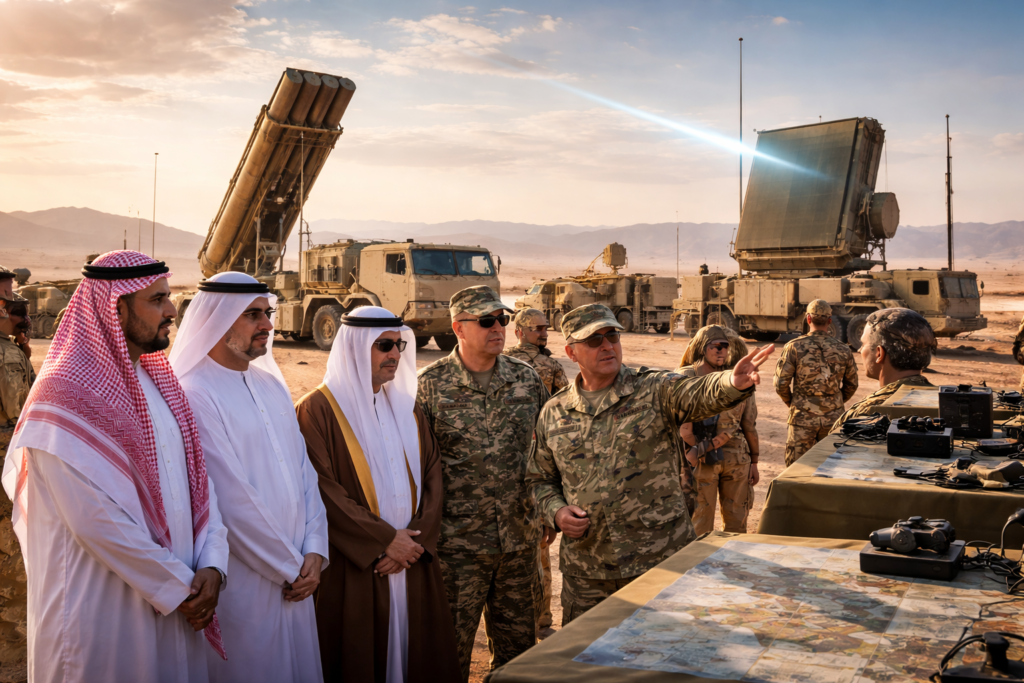
THAAD Deals: Gulf’s $142B Leaky Umbrella and the Economics of Defense
The economics behind THAAD Deals: Gulf’s $142B Leaky Umbrella are equally significant.
Massive defense spending competes with priorities such as:
- Economic diversification
- Infrastructure
- Renewable energy projects
- Education reform
- Job creation for young populations
Critics argue that even a fraction of these defense budgets could transform domestic sectors. Supporters counter that national security is the foundation upon which all economic growth depends.
This debate is likely to intensify as oil revenues fluctuate and regional threats evolve.
Future of Missile Defense in the Gulf
The next generation of Gulf air defense strategy will likely move beyond dependence on a single platform.
Expected Trends:
Integrated Systems
THAAD + Patriot + counter-drone + cyber defense networks.
AI Tracking
Artificial intelligence may improve faster detection and engagement decisions.
Domestic Defense Production
Several Gulf states are investing in local arms manufacturing and maintenance capabilities.
Space-Based Surveillance
Satellite warning systems could become increasingly important.

Strategic Lessons from THAAD Deals: Gulf’s $142B Leaky Umbrella
The biggest lesson from THAAD Deals: Gulf’s $142B Leaky Umbrella is that no nation can simply buy perfect security. Modern warfare increasingly favors speed, asymmetry, and cheaper attack tools that challenge expensive defense systems.
Military procurement alone cannot replace:
- Diplomacy
- Regional de-escalation
- Intelligence cooperation
- Cyber resilience
- Diversified security planning
Even the strongest umbrella may leak in a storm.
Conclusion
The THAAD Deals: Gulf’s $142B Leaky Umbrella narrative captures the contradiction of modern defense spending: record-breaking investment paired with persistent vulnerability. Gulf nations face legitimate security threats, and THAAD remains a serious strategic asset. But real-world conflicts show that advanced missile shields are only part of the answer.
For Gulf policymakers, the path forward is clear—combine technology with smarter strategy, stronger alliances, and adaptive defense models. Because in today’s battlefield, security cannot be purchased through hardware alone.