
India Trade Deficit Falls: 5 Key Export Trends Driving Economic Growth
Introduction
India’s trade performance has become one of the most closely watched indicators of economic strength in 2026. Recent trade data suggests a significant improvement in the country’s external sector, with the trade deficit narrowing compared to previous periods. This development has sparked optimism among economists, policymakers, exporters, and investors alike.
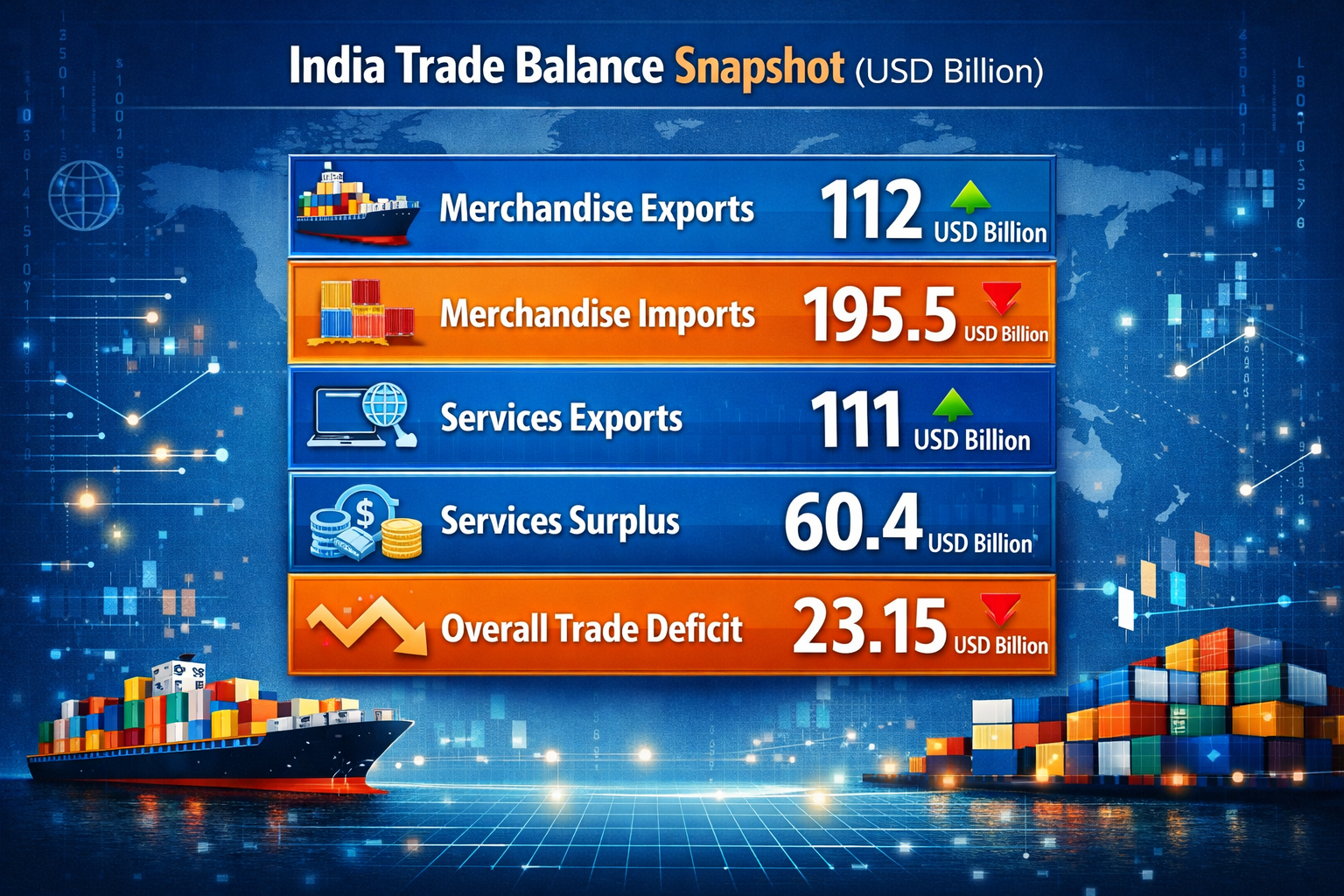
According to recent estimates, India’s combined trade deficit in goods and services stood at USD 23.15 billion, making it the second-lowest deficit level of the year. The improvement was largely driven by the resilience of the services sector, which continues to offset weaknesses in merchandise trade.
The phrase “India Trade Deficit Falls: 5 Key Export Trends” perfectly captures the transformation currently underway in India’s trade landscape. Understanding these trends is crucial for businesses, investors, policymakers, and anyone interested in India’s economic trajectory.
In this comprehensive analysis, we explore why India’s trade deficit is shrinking, the major export trends driving growth, the sectors leading the charge, and what these developments mean for the future of the Indian economy.
Understanding India’s Trade Deficit
Before examining the key export trends, it is important to understand what a trade deficit means.
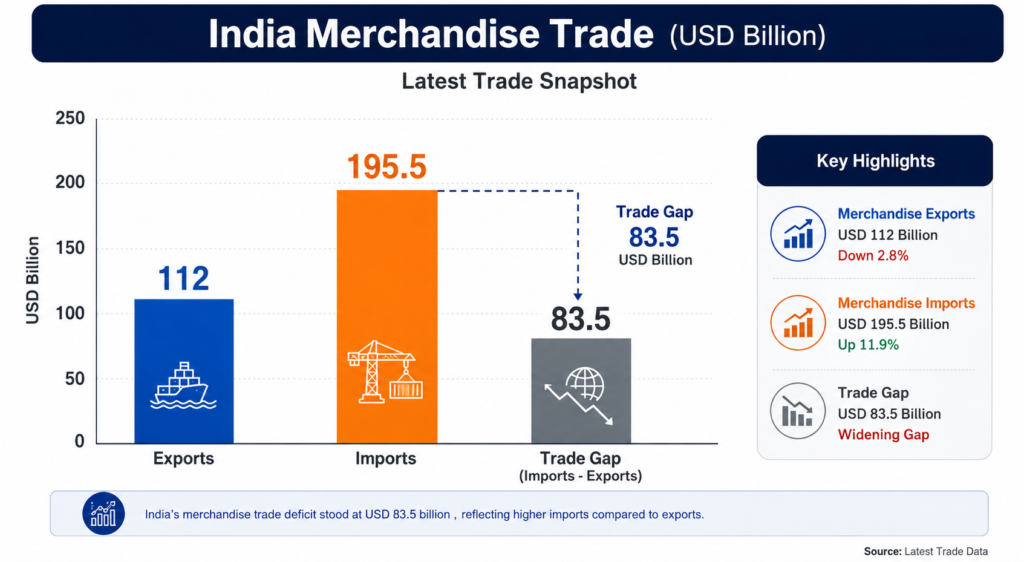
A trade deficit occurs when a country’s imports exceed its exports during a specific period. While a moderate trade deficit is common for developing economies, a widening deficit can put pressure on currency reserves and economic stability.
India traditionally imports:
- Crude oil
- Gold
- Electronics
- Machinery
- Industrial inputs
At the same time, India exports:
- Engineering goods
- Pharmaceuticals
- Petroleum products
- Electronics
- Textiles
- Agricultural products
- IT services
When exports grow faster than imports, the trade deficit narrows. Recent data indicates exactly this trend, making the headline India Trade Deficit Falls: 5 Key Export Trends highly relevant for understanding India’s economic direction.
Why India’s Trade Deficit Is Falling
Several factors have contributed to the reduction in the trade gap:
Strong Export Growth
Indian exporters have successfully expanded their presence in global markets despite economic uncertainty in several regions.
Diversification of Markets
India is reducing dependence on traditional markets by increasing exports to:
- Africa
- Latin America
- Southeast Asia
- Middle East
Rising Manufacturing Output
Production-linked incentive (PLI) schemes are boosting domestic manufacturing and export competitiveness.
Higher Value Exports
India is increasingly exporting sophisticated products rather than relying solely on traditional sectors.
Growth in Services Exports
Services Sector Emerges as the Stabilizer
While merchandise trade remains under pressure, the services sector continues to be India’s strongest economic buffer.
This represents one of the most important developments behind India Trade Deficit Falls: 5 Key Export Trends.
Services Exports Rise 9%
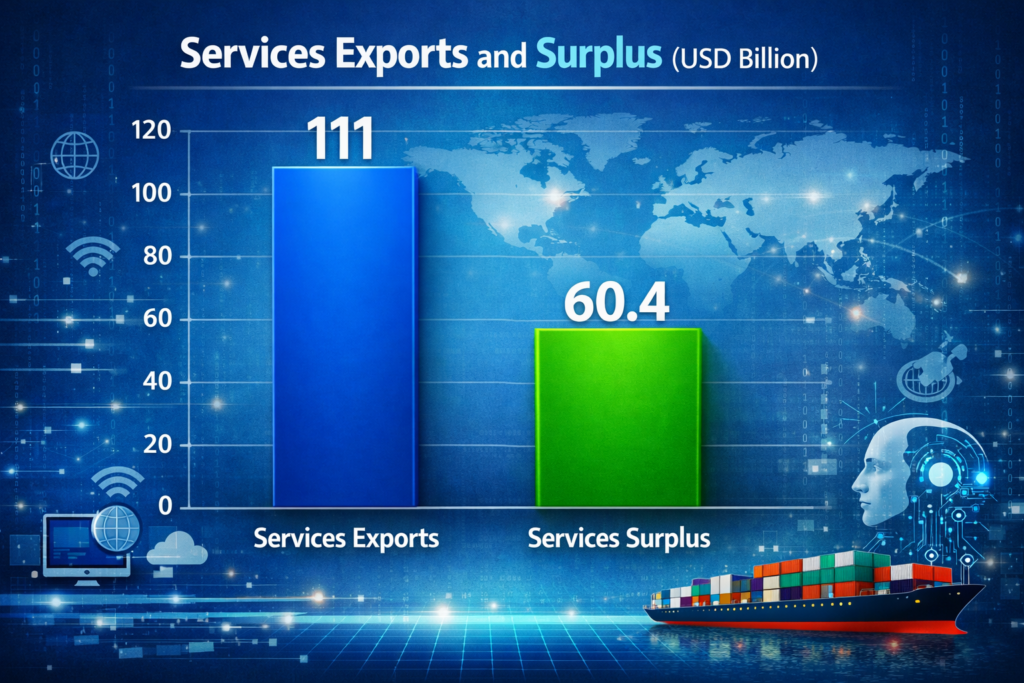
Services exports increased by 9% to USD 111 billion, demonstrating remarkable resilience amid global uncertainty.
Key Growth Areas
Information Technology Services
India remains a global leader in:
- Software development
- Cloud computing
- Artificial intelligence solutions
- Cybersecurity services
Digital Services
Demand for digital transformation services remains strong across advanced economies.
Business Services
Consulting, outsourcing, and professional services continue to generate significant export earnings.
Services Surplus Reaches USD 60.4 Billion
The services sector generated a substantial USD 60.4 billion surplus, helping offset the merchandise deficit.
Without this contribution, India’s overall trade imbalance would have been considerably larger.
These developments provide the foundation for the India Trade Deficit Falls: 5 Key Export Trends narrative.
Trend 1: Engineering Goods Continue to Lead Exports
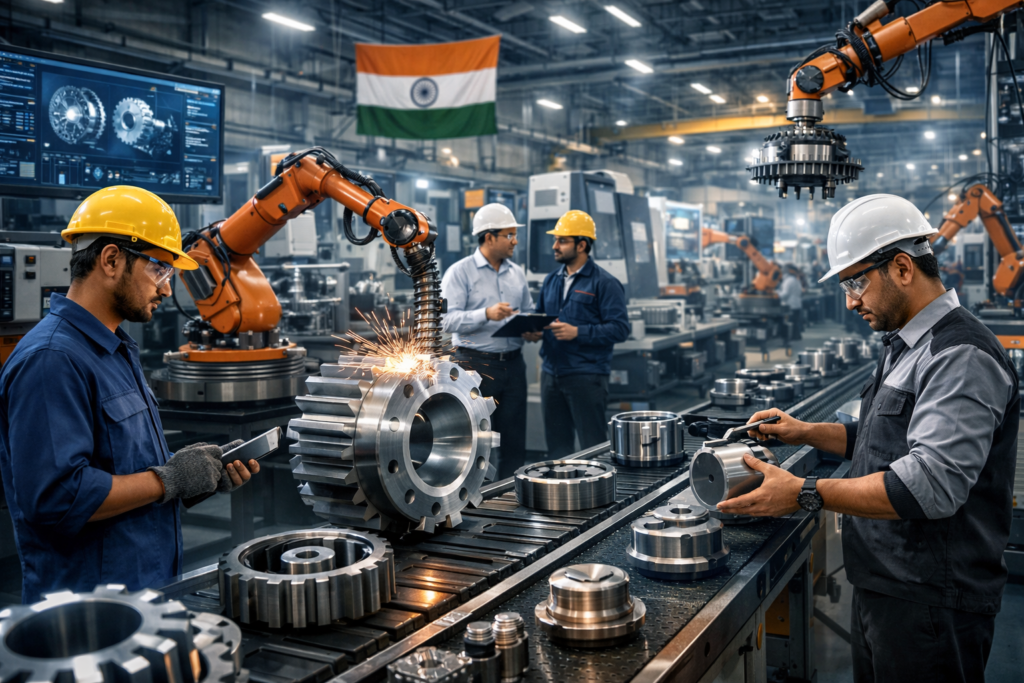
Engineering goods remain India’s largest export category and a major reason the trade deficit is narrowing.
What Are Engineering Goods?
This category includes:
- Industrial machinery
- Auto components
- Iron and steel products
- Electrical equipment
- Industrial tools
Why Demand Is Rising
Several global factors are supporting demand:
- Supply chain diversification
- Infrastructure investments worldwide
- Growing industrial activity
- Competitive Indian manufacturing costs
Impact on Trade Balance
Engineering exports generate significant foreign exchange earnings, helping offset large import bills.
As engineering exports expand, they directly contribute to the story behind India Trade Deficit Falls: 5 Key Export Trends.
Trend 2: Electronics Exports Witness Remarkable Growth
India’s electronics sector has emerged as one of the fastest-growing export industries.
Smartphone Manufacturing Boom
Global technology companies are increasingly using India as a manufacturing hub.
Key drivers include:
- Production-linked incentives
- Improved infrastructure
- Competitive labor costs
- Expanding domestic supply chains
Major Export Categories
- Smartphones
- Consumer electronics
- Semiconductor-related components
- Telecommunications equipment
Strategic Importance
Electronics were once among India’s largest import categories. Today, rising domestic production is reducing import dependence while increasing exports.
This shift represents one of the most transformative aspects of India Trade Deficit Falls: 5 Key Export Trends.
Trend 3: Pharmaceutical Exports Strengthen Global Presence
India continues to be known as the “Pharmacy of the World.”
Global Demand for Indian Medicines
Indian pharmaceutical companies supply affordable medicines to more than 200 countries.
Key export products include:
- Generic drugs
- Vaccines
- Active pharmaceutical ingredients (APIs)
- Specialty medicines
Competitive Advantages
India benefits from:
- Strong manufacturing capacity
- Regulatory expertise
- Cost-efficient production
- Skilled workforce
Long-Term Export Potential
Healthcare spending is increasing globally, creating sustained demand for Indian pharmaceutical products.
As a result, pharma exports remain a critical pillar supporting the trend where India Trade Deficit Falls: 5 Key Export Trends.

Trend 4: Agricultural Exports Reach New Markets
India’s agricultural sector continues to play a major role in export earnings.
Key Agricultural Exports
- Rice
- Spices
- Tea
- Coffee
- Sugar
- Fruits
- Marine products
Growing International Demand
Global consumers increasingly seek:
- Organic products
- Specialty foods
- Ethnic food products
- Sustainable agricultural goods
Export Diversification
Indian agricultural exporters are expanding beyond traditional destinations and accessing emerging markets.
Economic Benefits
Agricultural exports:
- Support rural incomes
- Generate foreign exchange
- Improve farmer earnings
- Strengthen trade performance
This agricultural expansion contributes significantly to India Trade Deficit Falls: 5 Key Export Trends.
Trend 5: Services Exports Continue to Dominate
While merchandise exports often receive the most attention, services exports remain one of India’s greatest strengths.
Leading Services Export Segments
Information Technology
India remains a global leader in:
- Software development
- Cloud services
- Cybersecurity
- AI solutions
Financial Services
Indian firms increasingly provide:
- Digital banking solutions
- Fintech services
- Consulting
Professional Services
Growing exports include:
- Engineering design
- Research services
- Legal support
- Business process outsourcing
Why Services Matter
Services exports generate billions of dollars annually and help offset merchandise trade deficits.
This makes services a central element in the broader theme of India Trade Deficit Falls: 5 Key Export Trends.

Government Initiatives Supporting Export Growth
Several policy measures are helping exporters expand globally.
Production-Linked Incentive (PLI) Schemes
These schemes encourage manufacturing in sectors such as:
- Electronics
- Pharmaceuticals
- Renewable energy
- Automobiles
Logistics Improvements
India is investing heavily in:
- Ports
- Freight corridors
- Airports
- Warehousing
Free Trade Agreements
Recent trade agreements improve market access and reduce barriers for Indian exporters.
Digital Trade Facilitation
Technology-driven customs procedures are reducing delays and improving efficiency.
Together, these initiatives strengthen the foundation behind India Trade Deficit Falls: 5 Key Export Trends.
Challenges That Still Remain
Despite positive developments, India faces several challenges.
Global Economic Slowdown
Weak growth in major economies can affect export demand.
Geopolitical Risks
International conflicts can disrupt supply chains and trade routes.
Energy Import Dependence
India continues to rely heavily on imported crude oil.
Logistics Costs
While improving, logistics expenses remain higher than some competing economies.
Competition
Exporters face strong competition from:
- China
- Vietnam
- Bangladesh
- Mexico
Addressing these challenges will be essential for sustaining the momentum highlighted in India Trade Deficit Falls: 5 Key Export Trends.
Future Outlook for India’s Trade Sector
The medium- and long-term outlook remains positive.
Several structural factors support future export growth:
Manufacturing Expansion
New factories and industrial parks are boosting production capacity.
Technology Adoption
Digital transformation is increasing productivity and competitiveness.
Global Supply Chain Realignment
Many multinational corporations are diversifying manufacturing locations.
Rising Export Competitiveness
Indian companies are moving toward higher-value products.
Services Sector Leadership
India’s dominance in digital services continues to expand globally.
These trends suggest that the narrowing trade deficit may become part of a broader transformation in India’s external sector.
Economic Impact of a Lower Trade Deficit
A reduced trade deficit delivers several benefits:
Stronger Currency Stability
Lower external imbalances can support the rupee.
Higher Investor Confidence
Investors often view improving trade metrics positively.
Better Foreign Exchange Reserves
Export earnings strengthen reserve accumulation.
Increased Employment
Export-oriented sectors create jobs across industries.
Stronger Economic Growth
Trade expansion contributes directly to GDP growth.
Therefore, the developments described in India Trade Deficit Falls: 5 Key Export Trends have implications that extend far beyond trade statistics.
Conclusion
India’s improving trade performance reflects much more than temporary economic fluctuations. The narrowing trade deficit is being driven by structural changes across manufacturing, technology, pharmaceuticals, agriculture, and services.
The theme India Trade Deficit Falls: 5 Key Export Trends highlights the five powerful forces reshaping India’s trade landscape:
- Strong engineering goods exports
- Rapid electronics growth
- Expanding pharmaceutical leadership
- Rising agricultural exports
- Continued dominance in services exports
Together, these sectors are strengthening India’s position in global trade while supporting economic growth, employment, and foreign exchange earnings.
If current trends continue, India could emerge as one of the world’s most influential export-driven economies over the coming decade.
Frequently Asked Questions (FAQs)
1. What does it mean when India’s trade deficit falls?
A falling trade deficit means the gap between imports and exports is shrinking, often because exports are growing faster than imports.
2. Why is India’s trade deficit improving?
The improvement is driven by stronger exports, manufacturing growth, market diversification, and rising services exports.
3. Which sector contributes most to India’s exports?
Engineering goods remain one of India’s largest merchandise export categories.
4. How important are services exports to India?
Services exports, especially IT and digital services, generate substantial foreign exchange and help offset merchandise trade deficits.
5. Can India become a major global export hub?
Yes. With manufacturing expansion, policy reforms, infrastructure development, and supply chain diversification, India has strong potential to become a leading global export hub.
6. What are the biggest risks to export growth?
Global economic slowdowns, geopolitical tensions, energy prices, and competition from other exporting nations remain key risks.
7. How do exports help the economy?
Exports generate foreign exchange, create jobs, increase industrial production, attract investment, and support GDP growth.