
India’s 1st Hydrogen Train Trial Hits 120 kmph Success: A Historic Leap Towards Green Rail Transport
Introduction
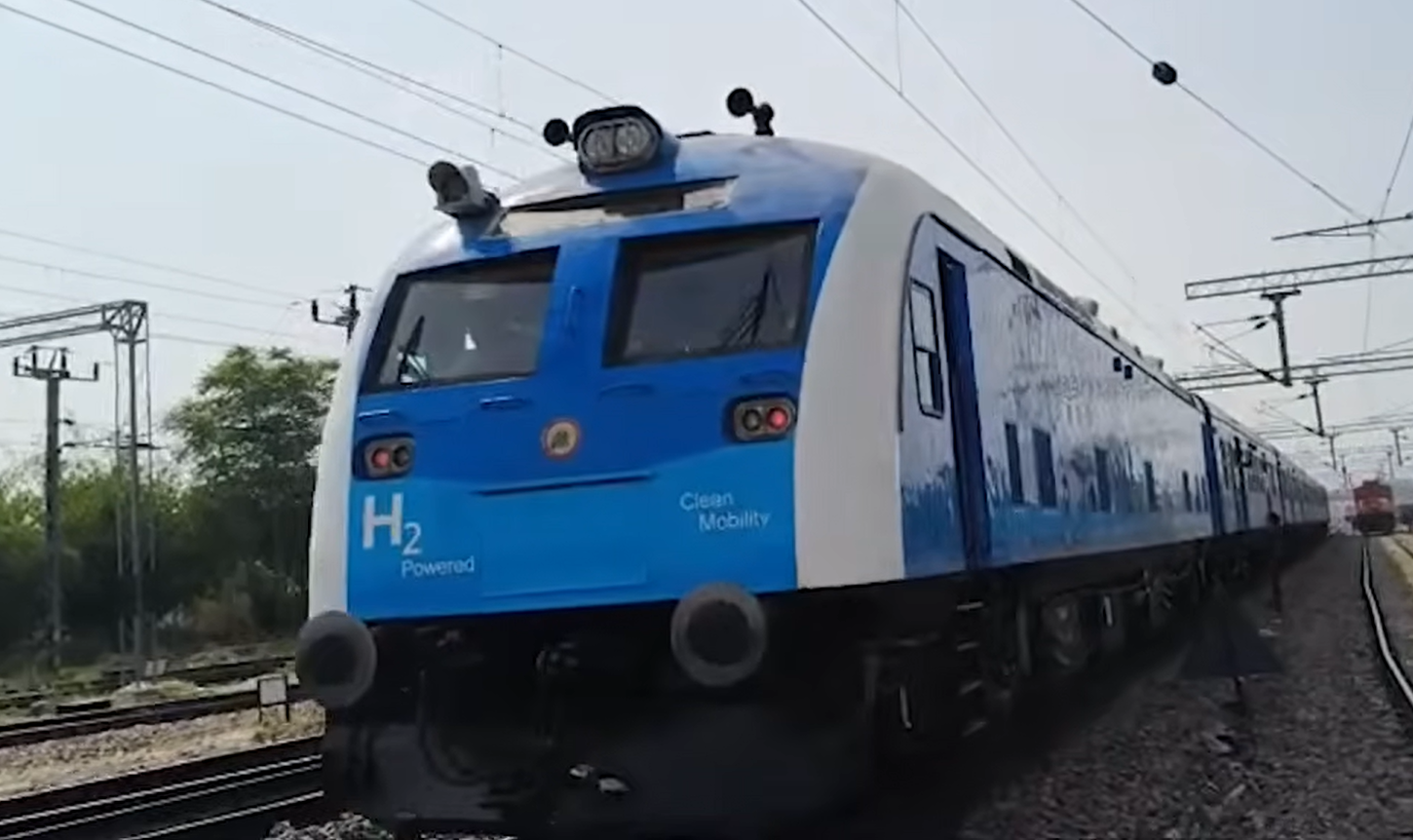
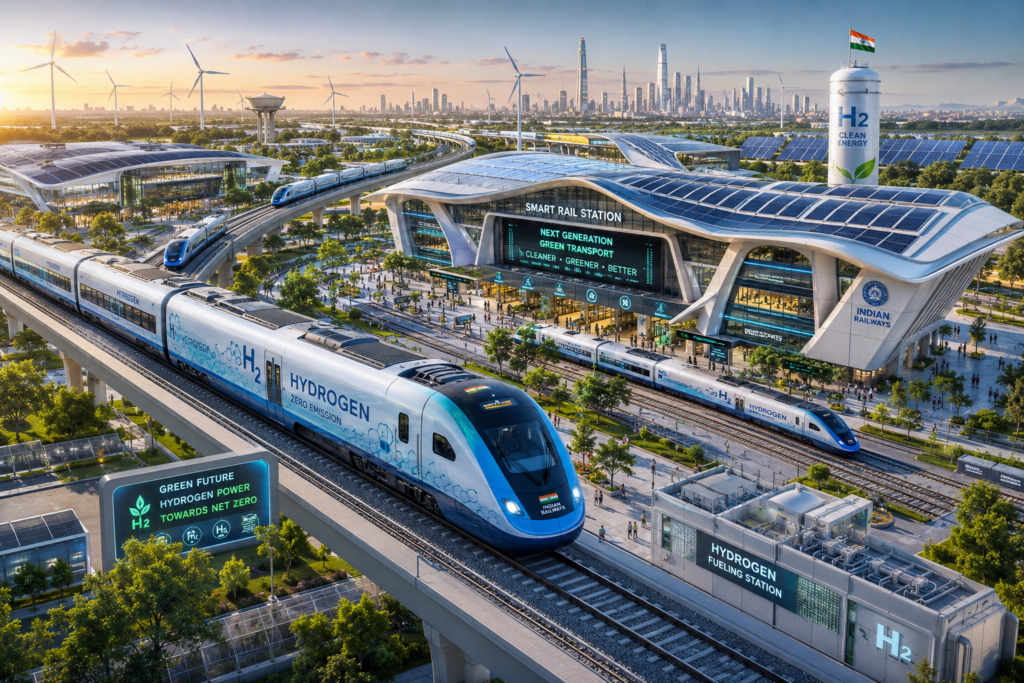
India’s 1st Hydrogen Train Trial Hits 120 kmph Success marks a revolutionary milestone in the country’s railway modernization journey. As nations across the world race toward carbon neutrality, India has demonstrated that clean transportation is no longer a distant dream but an achievable reality.
Key Highlights of the Hydrogen Train Trial
- Trial Route: The hydrogen-powered train was tested on the Delhi–Jind railway section, following earlier successful trial runs between Sonipat and Jind.
- Performance: During the trials, the train achieved a top speed of 120 kmph. For the initial pilot phase, it has been approved to operate at a maximum speed of 75 kmph on the Jind–Sonipat route.
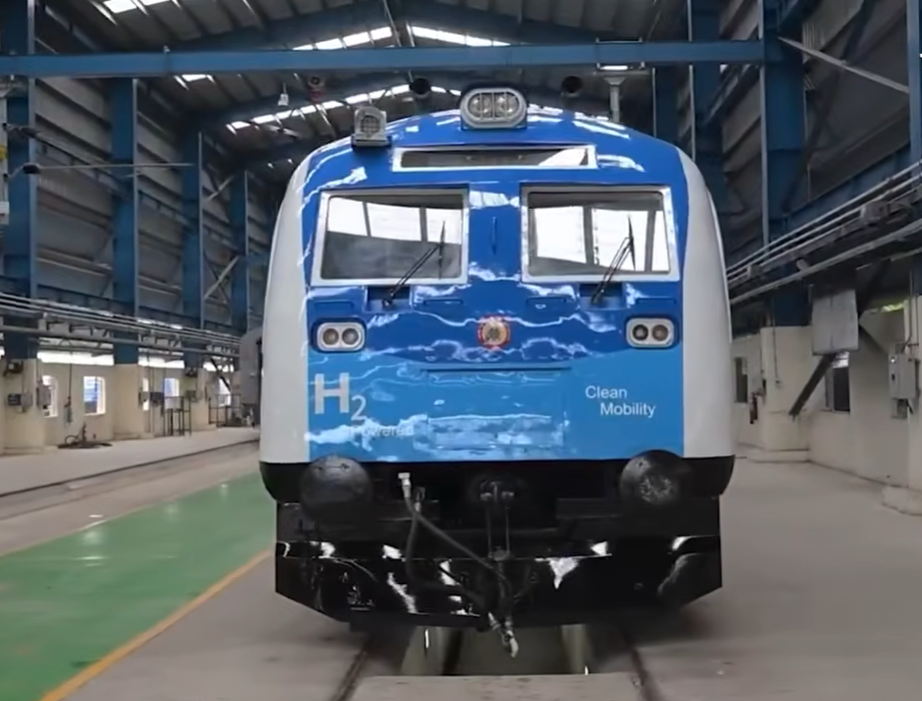
- Train Configuration: The train consists of 10 coaches powered by two 1,200 kW Driving Power Cars, delivering a combined output of 2,400 kW, making it one of the most powerful hydrogen-powered passenger trains.
- Clean Energy Technology: The train uses hydrogen fuel cell technology to generate electricity for propulsion. Its only operational emissions are water vapor and warm air, making it an environmentally friendly alternative to diesel-powered trains.
- Safety Validation: Comprehensive safety assessments were successfully completed, including emergency braking tests, oscillation and stability evaluations, hydrogen leak detection, and flame monitoring systems, confirming the train’s readiness for pilot operations.
The successful trial of India’s first hydrogen-powered train reaching 120 kmph showcases the nation’s engineering capabilities, commitment to sustainable mobility, and determination to reduce carbon emissions from one of the world’s largest railway networks.
Indian Railways, which transports over 23 million passengers daily, has long relied on diesel and electric locomotives. While electrification has significantly reduced emissions, hydrogen-powered trains represent the next frontier in zero-emission transportation.
This achievement aligns perfectly with India’s ambitious climate goals, including achieving Net Zero by 2070, expanding renewable energy, and promoting green hydrogen under the National Green Hydrogen Mission.
India’s 1st Hydrogen Train Trial Hits 120 kmph Success
What Makes India’s Hydrogen Train Special?
Unlike traditional diesel trains that emit carbon dioxide, hydrogen-powered trains use fuel cell technology to generate electricity.
| Feature | Specification |
|---|---|
| Train Configuration | 10-coach hydrogen-powered passenger train, recognized as the world’s longest hydrogen train on a broad-gauge railway network. |
| Installed Power | 2,400 kW total output, delivered by two 1,200 kW Driving Power Cars for high-performance operation. |
| Top Trial Speed | Successfully reached 120 kmph during trial runs, demonstrating the efficiency of the hydrogen propulsion system. |
| Operational Pilot Speed | Approved to operate at 75 kmph during the initial pilot phase to ensure safe and reliable performance evaluation. |
| Propulsion Technology | Powered by advanced hydrogen fuel cells integrated with Distributed Power Rolling Stock (DPRS) technology for clean, zero-emission transportation. |
| Safety Features | Includes hydrogen leak detection sensors, flame detection systems, automated safety controls, and continuous real-time monitoring for secure operation. |
| Maintenance Facility | Dedicated maintenance, inspection, and refueling operations will be carried out at the Shakurbasti Depot in Delhi. |
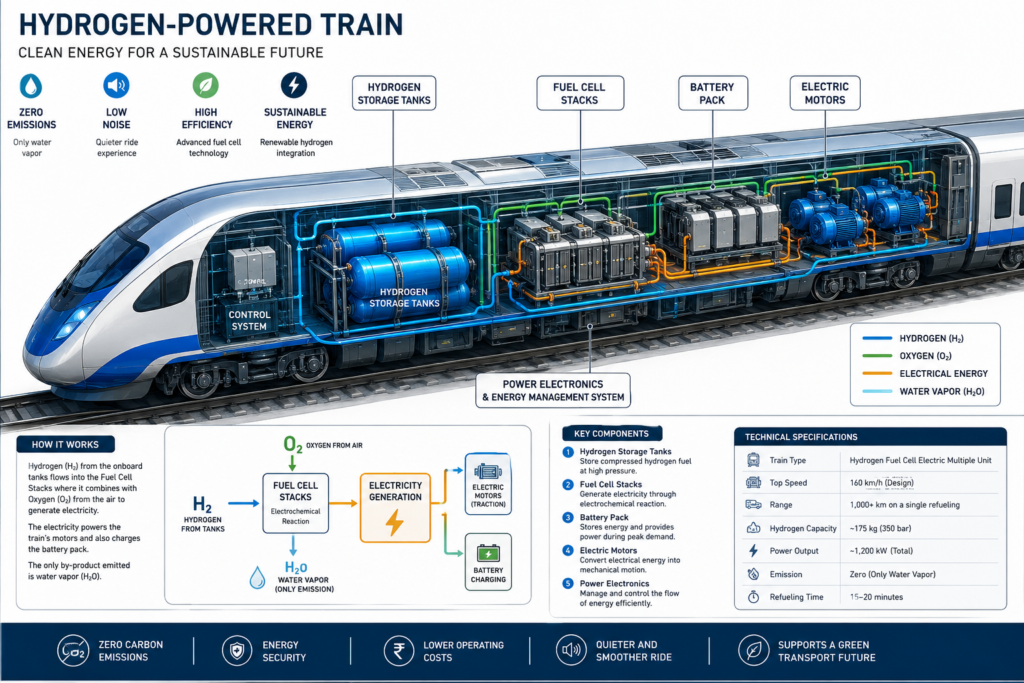
The process is remarkably clean:
- Hydrogen is stored in onboard tanks.
- Fuel cells combine hydrogen with oxygen.
- Electricity powers the train.
- The only by-product is water vapor.
This means zero greenhouse gas emissions during operation, making hydrogen trains one of the cleanest modes of rail transportation.
Understanding Hydrogen Fuel Cell Technology
A hydrogen fuel cell acts like a power plant inside the train.
Instead of burning fuel, it creates electricity through an electrochemical reaction.
Main Components
Hydrogen Storage Tanks
High-pressure tanks safely store compressed hydrogen.
Fuel Cell Stack
Converts hydrogen into electricity.
Battery Pack
Stores surplus energy generated during operation.
Electric Motors
Drive the train using electricity.
Water Exhaust
Only water vapor exits the system.
Because no combustion occurs, hydrogen trains operate quietly and efficiently.
India’s 1st Hydrogen Train Trial Hits 120 kmph Success
India’s Journey Towards Hydrogen Railways
India has aggressively invested in clean transportation over the last decade.
Major initiatives include:
- Railway electrification
- Solar-powered railway stations
- Energy-efficient locomotives
- Biofuel blending
- Green hydrogen production
The hydrogen train project is the latest addition to this ambitious transformation.
The successful trial proves Indian engineers can develop advanced rail technologies comparable to Europe and other global leaders.
Why 120 kmph Is a Major Achievement
The headline India’s 1st Hydrogen Train Trial Hits 120 kmph Success is more significant than just reaching a speed milestone.
The trial validates several critical engineering parameters:
- Fuel cell efficiency
- Hydrogen storage safety
- Power delivery stability
- Battery management
- Braking performance
- Thermal management
- Operational reliability
Maintaining 120 kmph demonstrates that hydrogen technology can support mainstream passenger operations rather than limited experimental services.
India’s 1st Hydrogen Train Trial Hits 120 kmph Success
Benefits of Hydrogen Trains
Zero Carbon Emissions
Hydrogen trains emit only water vapor, dramatically reducing pollution.
Reduced Noise
Electric motors produce significantly less noise than diesel engines.
Lower Air Pollution
Hydrogen trains eliminate:
- Carbon dioxide
- Nitrogen oxides
- Sulfur emissions
- Particulate matter
Energy Security
Hydrogen can be produced domestically using renewable energy, reducing dependence on imported fossil fuels.
Lower Operating Costs
Although initial investment is high, long-term operational expenses may decrease as hydrogen production scales up.
India’s Green Hydrogen Mission
The hydrogen train project supports India’s broader Green Hydrogen Mission.
Key objectives include:
- Domestic hydrogen production
- Renewable energy integration
- Clean transportation
- Industrial decarbonization
- Export opportunities
- Job creation
Hydrogen trains become one of the earliest large-scale transportation applications of this national mission.
Environmental Impact
Indian Railways already ranks among the world’s most energy-efficient railway systems.
Hydrogen trains could further reduce:
- Carbon emissions
- Diesel consumption
- Fossil fuel imports
- Urban pollution
- Railway operating emissions
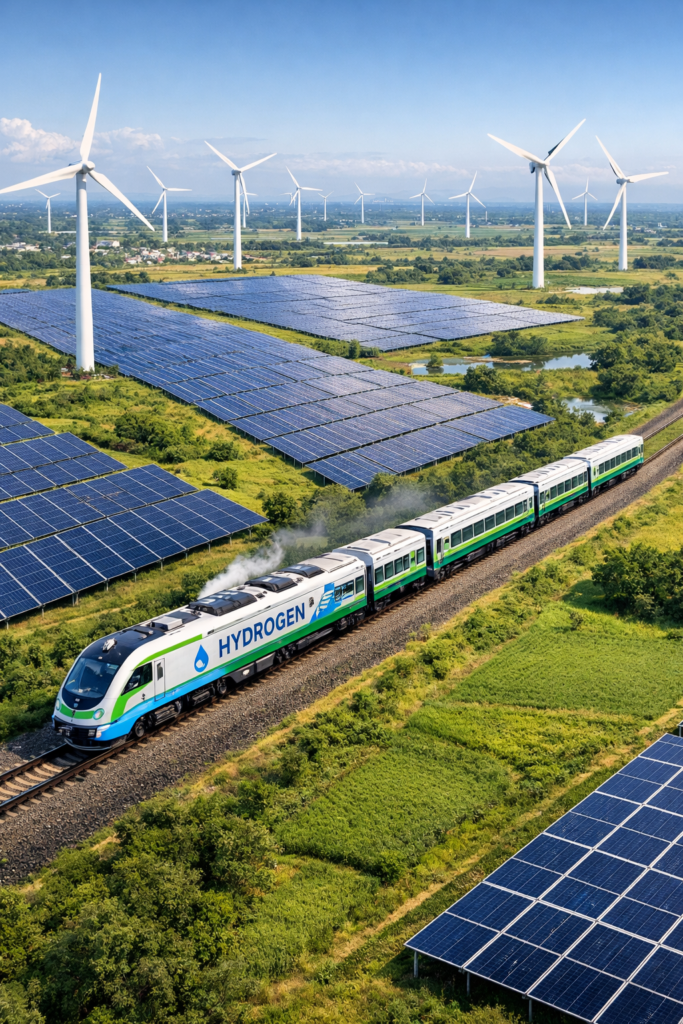
As hydrogen production increasingly relies on solar and wind energy, the environmental benefits become even greater.
How Hydrogen Trains Compare With Diesel Trains
| Feature | Hydrogen Train | Diesel Train |
|---|---|---|
| Emissions | Water Vapor | CO₂, NOx |
| Fuel | Hydrogen | Diesel |
| Noise | Low | High |
| Maintenance | Lower | Higher |
| Environmental Impact | Excellent | Poor |
| Carbon Footprint | Near Zero | High |
Global Leaders in Hydrogen Rail Technology
Several countries have pioneered hydrogen-powered trains.
Germany
Germany launched the world’s first commercial hydrogen passenger trains.
France
France is developing regional hydrogen rail systems.
Japan
Japan is integrating hydrogen into multiple transportation sectors.
China
China has demonstrated hydrogen-powered urban rail systems.
With India’s 1st Hydrogen Train Trial Hits 120 kmph Success, India joins this elite group of nations.
Economic Benefits
Hydrogen railways could generate substantial economic value.
New Manufacturing Opportunities
Domestic production of:
- Fuel cells
- Hydrogen tanks
- Electric propulsion systems
- Railway components
Employment Generation
Thousands of jobs across:
- Manufacturing
- Engineering
- Infrastructure
- Maintenance
- Research
Technology Exports
India could eventually export hydrogen railway technologies to developing nations.
Challenges Ahead
Despite impressive progress, several challenges remain.
Hydrogen Infrastructure
Large-scale hydrogen production facilities must be established.
Refueling Stations
Dedicated hydrogen refueling depots are needed.
Production Costs
Green hydrogen remains relatively expensive.
Safety Standards
Comprehensive hydrogen handling protocols are essential.
Skilled Workforce
Specialized technicians and engineers must be trained.
India’s 1st Hydrogen Train Trial Hits 120 kmph Success
Future of Hydrogen Railways in India
The successful trial opens numerous possibilities.
Future developments may include:
- Intercity passenger trains
- Tourist trains
- Regional services
- Mountain railways
- Freight locomotives
- Metro applications
Hydrogen could complement railway electrification in regions where overhead electrification is economically challenging.
Government Support
The hydrogen railway initiative reflects strong governmental support for sustainable transportation.
Key policy priorities include:
- Clean mobility
- Make in India
- Atmanirbhar Bharat
- Green manufacturing
- Renewable energy
- Climate commitments
Such initiatives strengthen India’s global leadership in sustainable infrastructure.
Impact on Passengers
Passengers may benefit from:
- Cleaner journeys
- Reduced noise
- Improved comfort
- Better air quality
- Modern train technology
- Sustainable travel options
Although ticket prices may not immediately change, long-term operational savings could improve railway efficiency.
Hydrogen vs Battery-Electric Trains
Hydrogen trains and battery-electric trains each have advantages.
Hydrogen trains excel in:
- Longer distances
- Faster refueling
- Heavy-duty operations
Battery-electric trains perform well on:
- Short routes
- Urban transit
- Frequent charging environments
Both technologies are expected to coexist depending on operational requirements.
India’s Clean Transportation Revolution
The success of India’s 1st Hydrogen Train Trial Hits 120 kmph Success complements several national initiatives:
- Electric buses
- Electric vehicles
- Metro rail expansion
- Solar-powered infrastructure
- Renewable energy growth
- Green hydrogen production
Together, these initiatives accelerate India’s transition toward sustainable transportation.
Expert Perspective
India’s 1st Hydrogen Train Trial Hits 120 kmph Success
From decades of observing transportation innovation, it is evident that hydrogen technology represents one of the most promising alternatives to fossil fuels. While electrification transformed railways over the last century, hydrogen fuel cells offer a practical solution for routes where full electrification is difficult or costly.
India’s achievement demonstrates not only technological progress but also strategic planning. By combining indigenous engineering, renewable energy ambitions, and modern rail infrastructure, the country is positioning itself for the next generation of mobility. If hydrogen production costs continue to decline and supporting infrastructure expands, hydrogen-powered trains could become a regular feature of India’s railway landscape within the coming decade.
India’s 1st Hydrogen Train Trial Hits 120 kmph Success
Conclusion
India’s 1st Hydrogen Train Trial Hits 120 kmph Success is far more than a technical milestone—it symbolizes India’s commitment to innovation, sustainability, and energy independence. The achievement validates hydrogen fuel cell technology for high-speed rail operations and strengthens the nation’s vision of cleaner, greener transportation.
As investments in green hydrogen, renewable energy, and railway modernization continue, this successful trial could become the foundation for a nationwide transformation. With reduced emissions, quieter operations, and the potential for long-term cost savings, hydrogen trains are poised to play a crucial role in India’s journey toward a sustainable future.
India’s 1st Hydrogen Train Trial Hits 120 kmph Success
Frequently Asked Questions (FAQs)
1. What is India’s first hydrogen train?
India’s first hydrogen train is a fuel-cell-powered railway that generates electricity from hydrogen and oxygen, producing only water vapor as its emission.
2. What speed did the hydrogen train achieve?
The successful trial demonstrated a top operational speed of 120 kmph, marking a significant engineering milestone.
3. Why are hydrogen trains important?
Hydrogen trains reduce greenhouse gas emissions, lower air pollution, operate quietly, and support sustainable transportation goals.
4. What fuel do hydrogen trains use?
They use compressed hydrogen stored in onboard tanks, which is converted into electricity using fuel cells.
5. Do hydrogen trains emit pollution?
No. During operation, hydrogen fuel-cell trains emit only water vapor, making them virtually zero-emission.
6. Will hydrogen trains replace diesel trains?
Over time, hydrogen trains are expected to supplement and gradually replace diesel trains on suitable routes, especially where electrification is challenging.