
India’s Green Energy Boom: 20% Power in July
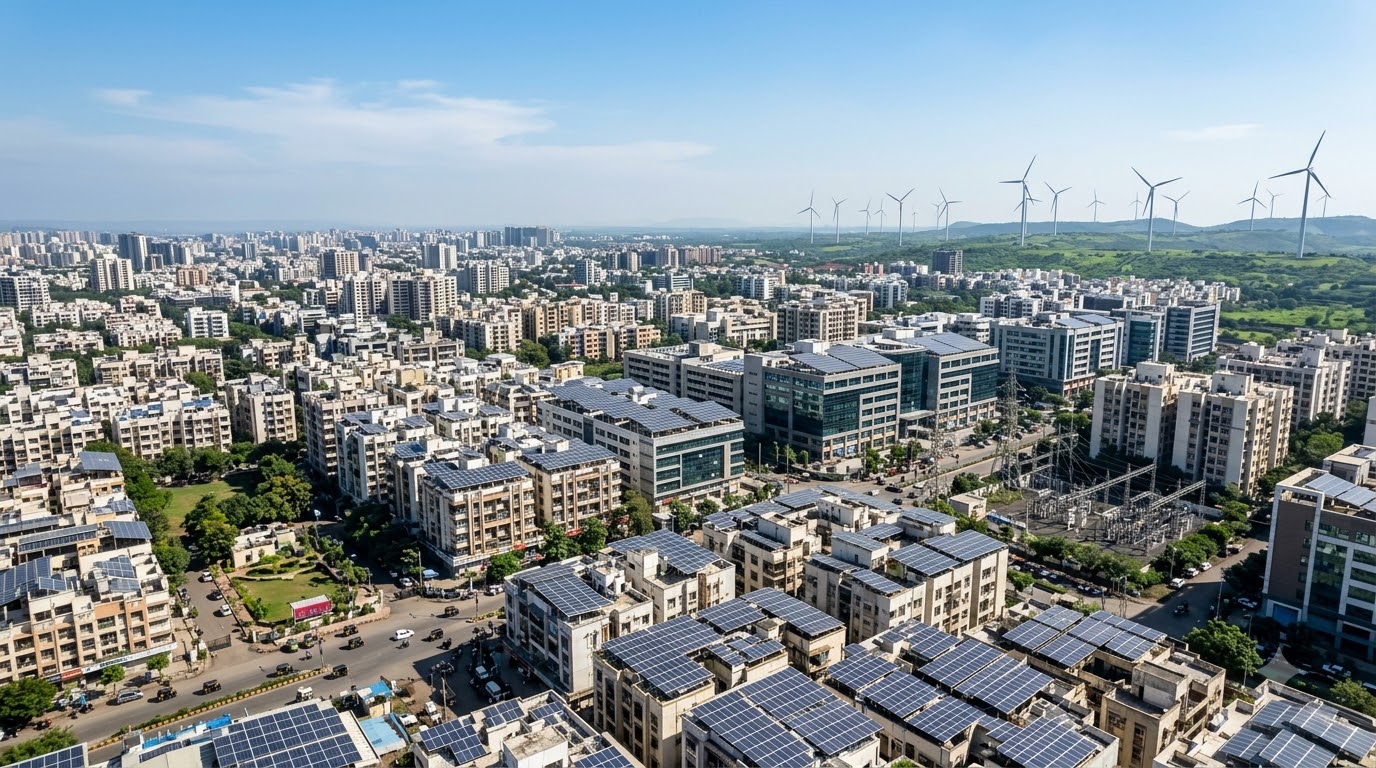
India’s Green Energy Boom: 20% Power in July makes a significant turning point in the country’s electricity story. Renewable energy contributed nearly one-fifth of India’s total power generation in July 2026, highlighting how rapidly solar, wind and biomass are becoming important parts of the national power mix.
According to Grid-India data reported on August 31, renewable sources accounted for 19.9% of India’s electricity generation in July, compared with 16.9% in July 2025. Renewable generation from solar, wind and biomass rose to around 36,355 MW, compared with 27,835 MW a year earlier. The increase represents growth of more than 30% year-on-year.
The development is particularly important because India’s electricity demand is rising rapidly. The country is adding factories, data centers, homes, transport infrastructure, and digital services, all of which require more electricity.
At the same time, India is trying to reduce the carbon intensity of its economy and move toward its long-term climate objective of reaching net-zero emissions by 2070.
The July figures suggest that renewable energy is no longer merely an alternative source of electricity. It is becoming a major contributor to the India’s growing power requirements.
What India’s Green Energy Boom: 20% Power in July Really Means
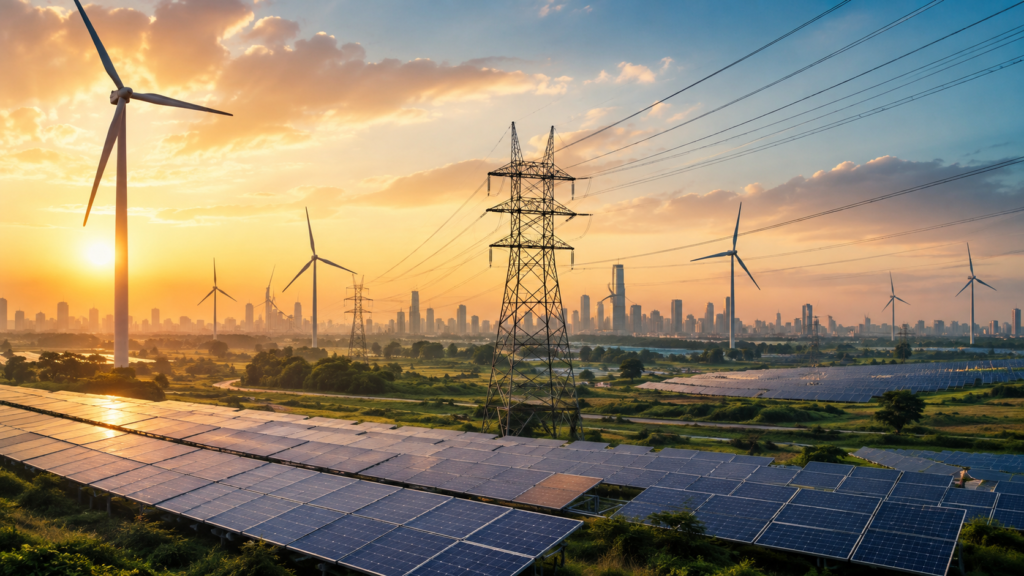
The headline number is simple: renewable sources supplied almost 20% of India’s power generation during July.
But the significance goes much deeper.
A rising renewable share means India is increasingly able to meet additional electricity demand without depending entirely on coal and other fossil-fuel sources.
The July data also demonstrates that renewable generation is growing while the country’s overall electricity requirement remains strong.
This is important because India’s energy transition is different from that of many mature economies.
India is not simply replacing an existing power system with a renewable one. It is building a much larger electricity system to support a rapidly growing economy.
That means the country needs more electricity from virtually every source.
Coal remains essential for reliable, dispatchable generation. But solar, wind, hydro and other non-fossil sources are expanding rapidly.
Recent Reuters analysis described this as a major shift in India’s power system: clean-energy capacity has moved ahead of fossil-fuel capacity in some measures, even though coal continues to dominate actual electricity generation.
This distinction between installed capacity and actual generation is critical.
A solar plant can have a large installed capacity but cannot produce electricity at full output around the clock. Coal plants, by contrast, can operate for long periods when fuel is available.
Therefore, India’s renewable-energy achievement should be judged through both capacity expansion and actual generation.
The July generation milestone shows that the second part of the transition is also progressing.
Renewable Generation Jumps More Than 30%
One of the strongest signals behind India’s clean-energy expansion is the year-on-year increase in renewable generation.
Grid-India data shows that renewable sources generated around 36,355 MW in July 2026, compared with approximately 27,835 MW in July 2025. Their share of total generation increased from 16.9% to 19.9%.
That represents a substantial increase in renewable output.
The increase is being supported by India’s enormous expansion of solar and wind capacity.
Solar power has become the central pillar of the country’s renewable strategy, while wind power provides another major source of clean electricity.
Biomass and other renewable technologies add further diversity to the energy mix.
This combination is important because no single renewable technology can reliably meet all electricity demand.
Solar generation is strongest during daylight hours.
Wind generation depends on weather conditions.
Hydropower is influenced by rainfall, reservoir levels and seasonal conditions.
Biomass can provide a more controllable renewable source but remains smaller in scale.
Together, however, these technologies can create a more balanced renewable electricity system.
India’s Green Energy Boom Is Being Led by Solar Power
Solar energy is at the heart of India’s renewable transformation.
Government data released in August showed that as of July 31, 2026, India had approximately 164.59 GW of installed solar capacity. Wind capacity stood at 58.14 GW, while large and small hydropower together accounted for about 57.24 GW. Bio-power contributed approximately 11.75 GW.
The numbers show how dramatically India’s energy landscape has changed.
Solar power has moved from being a relatively small part of the country’s electricity system to becoming its largest renewable technology.
The expansion has been supported by large solar parks, rooftop solar projects, utility-scale developments, domestic manufacturing initiatives and policy support.
India’s geographic conditions also provide a major advantage.
Large parts of the country receive strong solar radiation for much of the year, creating favourable conditions for photovoltaic power generation.
As solar-module costs and technology improve, solar projects can increasingly compete with conventional generation on economics.
Why Solar Matters for India’s Power Demand
Solar generation has another important advantage.
Electricity demand often rises during daylight hours because of commercial activity, industrial production and cooling requirements.
That creates a natural match between solar generation and a portion of peak daytime demand.
During very hot periods, air-conditioning demand can rise sharply. Solar power can help meet some of that additional daytime requirement.
However, the evening period presents a challenge.
As the sun sets, solar generation falls while electricity consumption can remain high.
This is why India’s next phase of renewable growth will increasingly depend on batteries, pumped-storage hydropower, flexible generation and stronger transmission networks.
Wind Energy Strengthens India’s Green Energy Boom
Wind power is another major component of India’s renewable-energy strategy.
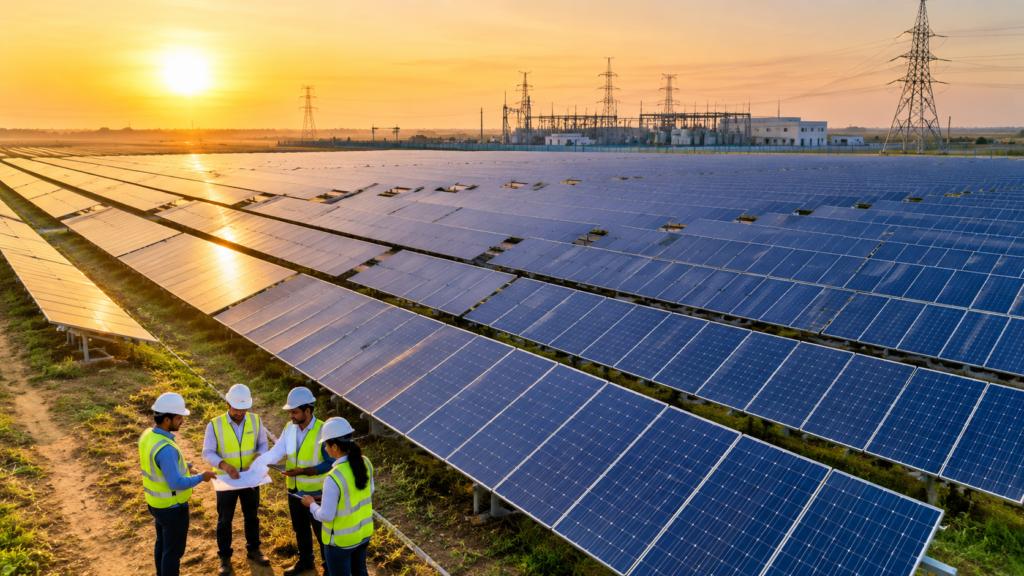
India’s installed wind capacity reached approximately 58.14 GW by July 31, 2026, according to government data.
Wind projects are concentrated in resource-rich states including Gujarat, Tamil Nadu, Karnataka, Maharashtra and Rajasthan.
Gujarat, in particular, has become an important renewable-energy hub because of its strong combination of solar and wind potential.
Wind can complement solar generation because its production profile is different from solar.
That makes solar-wind hybrid projects increasingly attractive.
A hybrid project can use the same transmission infrastructure more efficiently and potentially produce electricity across a broader range of hours.
For India’s grid operators, that diversity is valuable.
The greater the mix of renewable resources, the easier it can become to manage fluctuations in individual sources.
India Crosses 300 GW of Non-Fossil Power Capacity
Another major milestone arrived alongside the July generation numbers.
India crossed 300 GW of installed non-fossil fuel electricity capacity as of July 31, 2026, according to the Ministry of New and Renewable Energy and the Press Information Bureau.
The official figure was 300.50 GW.
The breakdown included:
- Solar power: 164.59 GW
- Wind power: 58.14 GW
- Hydropower: 57.24 GW
- Bio-power: 11.75 GW
- Nuclear power: 8.78 GW
The government said the 300.50 GW milestone represents more than 60% of India’s target of achieving 500 GW of non-fossil capacity by 2030.
This provides important context for the July generation milestone.
India is not only adding renewable projects; it is building an increasingly large non-fossil electricity infrastructure.
However, capacity is only one part of the equation.
The country must also make sure that renewable electricity can actually reach consumers.
That brings India’s transmission network into focus.
The Biggest Challenge: Grid and Transmission Infrastructure
India’s renewable expansion has created a new infrastructure challenge.
Solar and wind projects are often built in areas with strong renewable resources, while major electricity-consuming centres can be located hundreds of kilometres away.
This requires large transmission investments.
Recent Reuters reporting highlighted the problem. Renewable developers have faced curtailment because transmission infrastructure has not always expanded as quickly as clean-energy capacity. Reuters reported that India curtailed about 14% of solar output, equivalent to 8,133 GWh, between April and June 2026.
The issue is particularly important in renewable-rich states.
If a solar or wind project produces electricity but the grid cannot transport it, the generation potential is effectively lost.
Reuters also reported that renewable developers had faced losses of about ₹45 billion since February 2025 because transmission constraints limited their ability to deliver electricity to the national grid.
This is one of the most important lessons from India’s clean-energy expansion.
Building solar panels and wind turbines is not enough.
India also needs:
- New transmission corridors
- High-capacity substations
- Smart-grid systems
- Energy-storage facilities
- Better renewable forecasting
- Flexible power generation
- Stronger interstate electricity connections
Without these investments, renewable capacity could grow faster than the grid’s ability to absorb it.
India’s Green Energy Boom Must Solve the Storage Challenge
Energy storage could become the defining technology of India’s next renewable-energy phase.
Solar power produces electricity during daylight hours, but electricity demand does not stop when the sun goes down.
Batteries can solve part of this problem.
Electricity generated during periods of strong solar output can be stored and released later.
Pumped-storage hydropower can provide another large-scale solution.
In a pumped-storage system, electricity can be used to move water to an elevated reservoir when power is abundant. The stored water can later flow through turbines to generate electricity when demand rises.
India’s growing renewable fleet therefore needs a growing storage ecosystem.
The combination of:
Solar + Wind + Storage + Transmission
could become the foundation of India’s next-generation power system.
Peak Electricity Demand Shows Why Renewables Matter
India’s clean-energy expansion is occurring while electricity demand is rising rapidly.
Peak power demand crossed 270 GW in July 2026 for only the second time, according to reporting based on power-sector data. Hot and humid conditions and the El Niño phenomenon contributed to high electricity requirements.
This creates both an opportunity and a challenge.
The opportunity is that renewable generation can increasingly contribute during high-demand periods.
The challenge is that renewable output is variable.
During periods of strong sunshine and favourable wind, renewable generation can make a significant contribution.
But during cloudy conditions, weak winds or after sunset, conventional and stored power may be required.
This means India’s energy transition cannot be based solely on the question:
How much renewable capacity can India build?
The more important question is:
How reliably can India deliver renewable electricity when consumers need it?
That is where storage, transmission and flexible generation become critical.
Hydropower Highlights the Weather Challenge
India’s renewable story also contains an important warning.
Hydropower generation declined as a share of the electricity mix in July.
According to Times of India, hydropower accounted for around 10.2% of total generation in July 2026, compared with 14.5% in July 2025.
The decline illustrates how weather conditions can affect renewable generation.
Solar and wind are also weather-dependent, although their geographic diversification can reduce the impact of local weather variations.
This is why India needs a broad renewable portfolio.
A diversified energy system can reduce reliance on any single source.
The long-term goal should not simply be more solar panels.
It should be a flexible electricity system in which solar, wind, hydro, nuclear, storage and other sources work together.
India’s Green Energy Boom Is Changing the Investment Landscape
The renewable transition is also creating a major investment opportunity.
India needs billions of dollars in new generation, transmission, storage and manufacturing capacity.
This creates opportunities for:
- Solar manufacturers
- Wind-turbine companies
- Battery producers
- Power-equipment manufacturers
- Transmission companies
- Renewable developers
- Green-hydrogen businesses
- Energy-storage operators
- Smart-grid technology providers
The clean-energy transition is therefore becoming an industrial policy opportunity as well as an environmental programme.
Domestic manufacturing could become particularly important.
If India can produce more solar cells, modules, batteries, power electronics and grid equipment domestically, it could reduce supply-chain vulnerabilities while creating jobs and export opportunities.
Green Energy and India’s Manufacturing Ambition
Renewable energy is closely connected to India’s broader manufacturing strategy.
Solar-module manufacturing, battery production and electrical equipment can create new industrial ecosystems.
The expansion of renewable electricity can also support other emerging industries.
Electric vehicles require additional electricity.
Data centres require reliable, large-scale power.
Green hydrogen production requires substantial quantities of renewable electricity.
Industrial decarbonisation will increasingly depend on clean electricity.
This creates a multiplier effect.
More renewable generation can support more electrification.
More electrification can create additional demand for clean power.
That additional demand can encourage further renewable investment.
The result could be a reinforcing cycle of clean-energy growth.
India’s Green Energy Boom and the 2030 Target
India has set an ambitious target of reaching 500 GW of non-fossil fuel-based installed electricity capacity by 2030.
The July 2026 milestone of 300.50 GW puts the country more than 60% of the way toward that target.
However, reaching 500 GW will require continued rapid deployment.
India must also ensure that new capacity is connected to the grid.
This means renewable-energy development and transmission planning must increasingly happen together.
A solar project without adequate transmission can face curtailment.
A battery without appropriate market structures may not be used efficiently.
A wind project without reliable evacuation infrastructure can face delays.
Therefore, the next phase of India’s energy transition must focus on the entire electricity ecosystem.
What Does 20% Renewable Generation Mean for Consumers?
For ordinary electricity consumers, the immediate impact of renewable energy reaching nearly 20% of generation may not be visible on monthly electricity bills.
Power tariffs depend on several factors, including fuel costs, distribution expenses, transmission charges, taxes, regulatory decisions and system losses.
However, a growing domestic renewable fleet can provide long-term benefits.
Renewable electricity reduces dependence on imported fossil fuels and can help diversify India’s energy supply.
Solar and wind also have low fuel costs because sunlight and wind are naturally available resources.
Over time, a stronger renewable system combined with storage and transmission could improve energy security and potentially reduce exposure to international fossil-fuel price volatility.
Consumers may also increasingly participate directly through rooftop solar, battery systems and electric vehicles.
Rooftop Solar Could Deliver the Next Big Push
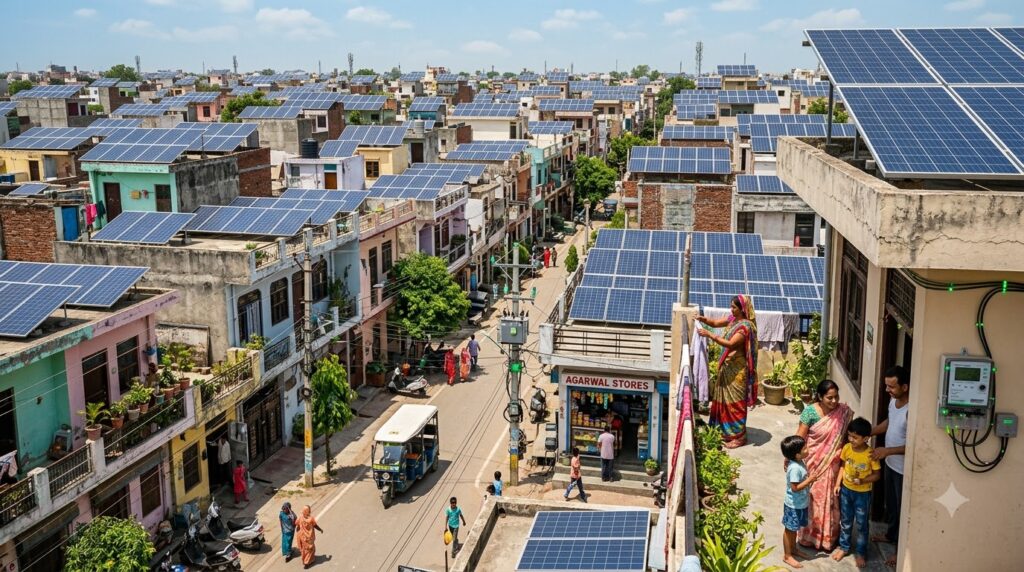
Utility-scale solar projects dominate much of India’s renewable expansion, but rooftop solar could become increasingly important.
Millions of homes, offices, schools and commercial buildings have unused rooftop space that could potentially host solar systems.
Rooftop generation has a major advantage: electricity can be produced close to where it is consumed.
This reduces some transmission requirements and can help consumers generate part of their own electricity.
Government programmes supporting rooftop solar are therefore an important component of India’s clean-energy strategy.
As adoption grows, households could become both electricity consumers and electricity producers.
That could fundamentally change the traditional relationship between utilities and customers.
India’s Green Energy Boom Could Support Energy Security
Energy security is one of the strongest economic arguments for renewable power.
India imports substantial quantities of fossil fuels.
International oil, gas and coal prices can fluctuate because of geopolitical conflicts, supply disruptions, currency movements and global demand.
Solar and wind resources, by contrast, are domestic.
Once renewable projects are constructed, they do not require continuous imports of fuel to produce electricity.
This does not mean renewable energy eliminates all energy-security risks.
India still needs imported components, minerals, technology and manufacturing inputs for parts of the clean-energy supply chain.
But increasing domestic generation from renewable resources can diversify the country’s overall energy system.
For one of the world’s fastest-growing major economies, that diversification has strategic importance.
Green Energy Boom Also Supports Climate Goals
India’s renewable expansion is closely connected to its climate commitments.
The country has set a long-term objective of achieving net-zero emissions by 2070.
Increasing renewable electricity is one of the major tools available to reduce the emissions intensity of the power sector.
However, climate policy must also consider India’s development needs.
India’s electricity demand is expected to continue growing as incomes rise, industrialisation accelerates and millions of people gain greater access to appliances, cooling and digital services.
That means India cannot simply reduce electricity consumption.
It needs to produce much more electricity while gradually reducing the carbon intensity of that electricity.
Renewable energy provides one of the most important pathways for achieving that balance.
Coal Is Still Dominant Despite the Green Energy Boom
The July renewable milestone should not be interpreted as the end of coal.
Thermal power, particularly coal and lignite, continued to provide the majority of India’s electricity in July.
Times of India reported that thermal sources accounted for approximately 66% of total generation during the month.
This is a critical point for understanding India’s energy transition.
Renewables are growing quickly, but India’s electricity demand is also increasing.
Coal remains a major source of dependable generation.
Replacing coal entirely would require not just enormous renewable capacity but also large-scale storage, flexible generation and extensive grid upgrades.
Therefore, India’s transition is likely to be gradual.
The key change is that renewable capacity and generation are growing faster, gradually reducing the relative dominance of fossil fuels.
India’s Green Energy Boom: The Road Ahead
The July 2026 milestone offers an encouraging picture of India’s energy transformation.
Renewables reached nearly 20% of electricity generation.
Renewable output grew by more than 30% year-on-year.
Solar capacity reached 164.59 GW.
Wind capacity reached 58.14 GW.
Non-fossil installed capacity crossed 300 GW.
These numbers show that India’s clean-energy transition has entered a new stage.
But the next stage will be harder.
The country must transform renewable capacity into dependable electricity.
That means building transmission lines, storage systems, smart grids and flexible generation.
It also means improving forecasting and electricity-market mechanisms.
India’s renewable future will ultimately depend not only on how many solar panels and wind turbines are installed, but on how efficiently their electricity can be delivered to homes, factories and businesses.
5 Major Takeaways From India’s Green Energy Boom
1. Renewable generation is approaching a fifth of the power mix
Renewables accounted for 19.9% of India’s power generation in July 2026, up from 16.9% a year earlier.
2. Renewable output is growing rapidly
Renewable generation increased by more than 30% year-on-year, demonstrating that new clean-energy capacity is translating into higher electricity production.
3. Solar is becoming the backbone of the transition
With approximately 164.59 GW installed by July 2026, solar is now India’s largest renewable-energy technology by capacity.
4. India has crossed 300 GW of non-fossil capacity
The official non-fossil capacity figure reached 300.50 GW by July 31, 2026, putting India more than 60% of the way toward its 500 GW 2030 target.
5. Infrastructure will decide the next phase
Transmission constraints and renewable curtailment show that generation capacity must be accompanied by adequate grid infrastructure and storage.
India’s Green Energy Boom: What Happens Next?
The next few years could determine whether India’s renewable-energy expansion becomes a genuine transformation of the power sector.
The foundation is already substantial.
India has a huge and growing solar fleet, a major wind industry, significant hydropower resources and an expanding battery-storage market.
The government is targeting 500 GW of non-fossil capacity by 2030.
Private companies are investing in solar parks, wind farms, battery projects and green-hydrogen facilities.
Manufacturers are expanding production of clean-energy equipment.
At the same time, India’s electricity demand continues to rise.
That combination creates a unique opportunity.
India does not have to choose between economic growth and clean energy.
It can use clean energy to support economic growth.
Factories can operate on increasingly renewable electricity.
Electric vehicles can gradually replace petrol and diesel consumption.
Green hydrogen can help decarbonise difficult industrial sectors.
Data centres can source renewable electricity.
Homes can install rooftop solar and batteries.
The electricity grid can become smarter and more flexible.
The July 2026 generation milestone therefore represents more than a percentage.
It is evidence that the structure of India’s electricity system is changing.
Conclusion: A Powerful New Chapter for India’s Energy Future
India’s Green Energy Boom: 20% Power in July is a major milestone in the country’s transition toward a cleaner and more diversified electricity system.
Renewable sources supplied nearly one-fifth of India’s electricity generation during July 2026, while renewable output grew by more than 30% compared with the same month a year earlier.
At the same time, India crossed 300 GW of installed non-fossil electricity capacity, with solar alone reaching 164.59 GW.
These achievements demonstrate the scale of India’s renewable-energy expansion.
Yet the journey is far from complete.
Coal remains the backbone of electricity generation, peak demand continues to rise and transmission constraints are already limiting the amount of renewable electricity that can reach the grid in some areas.
The next challenge is therefore clear: turn renewable capacity into reliable, affordable and accessible electricity.
If India can successfully combine solar and wind growth with storage, transmission upgrades, flexible generation and smart-grid technology, the nearly 20% renewable share recorded in July could become the beginning of a much larger transformation.
India’s clean-energy story is no longer only about future plans.
The numbers show that the transformation is already happening.
Frequently Asked Questions (FAQ)
What is India’s Green Energy Boom: 20% Power in July?
India’s Green Energy Boom: 20% Power in July refers to renewable sources accounting for approximately 19.9% of India’s total electricity generation in July 2026, up from 16.9% in July 2025.
How much renewable energy did India generate in July 2026?
Grid-India data reported by Times of India shows that approximately 36,355 MW of July’s generation came from solar, wind and biomass, representing 19.9% of the reported total generation.
Which renewable energy source is growing fastest in India?
Solar power is the leading renewable technology by installed capacity. India had approximately 164.59 GW of solar capacity as of July 31, 2026.
How much wind power capacity does India have?
India had approximately 58.14 GW of installed wind capacity as of July 31, 2026, according to government data.
Has India crossed 300 GW of non-fossil capacity?
Yes. India crossed 300 GW of installed non-fossil electricity capacity, reaching approximately 300.50 GW by July 31, 2026.
What is India’s renewable-energy target for 2030?
India is targeting 500 GW of non-fossil fuel-based installed electricity capacity by 2030. The 300.50 GW milestone achieved by July 2026 represents more than 60% of that target.
Does the 20% renewable share mean India has stopped using coal?
No. Coal and other thermal sources continue to supply the majority of India’s electricity. Renewable energy is expanding rapidly, but coal remains important for reliable and dispatchable power.
Why does India need battery storage?
Solar and wind generation varies with weather and time of day. Battery storage can store excess renewable electricity and release it when renewable output falls or electricity demand increases.
What is the biggest challenge for India’s renewable-energy expansion?
One of the biggest challenges is transmission infrastructure. Renewable projects can produce electricity faster than the grid can sometimes transport it, leading to curtailment. Reuters reported significant solar curtailment during April-June 2026.
What does the renewable milestone mean for India’s future?
The milestone suggests that renewable energy is becoming a central part of India’s growing electricity system. Continued investment in solar, wind, storage, transmission and smart-grid infrastructure could accelerate the country’s clean-energy transition.