
Ather Energy’s ₹500 Cr Bet: 5 Konarc EV Highlights
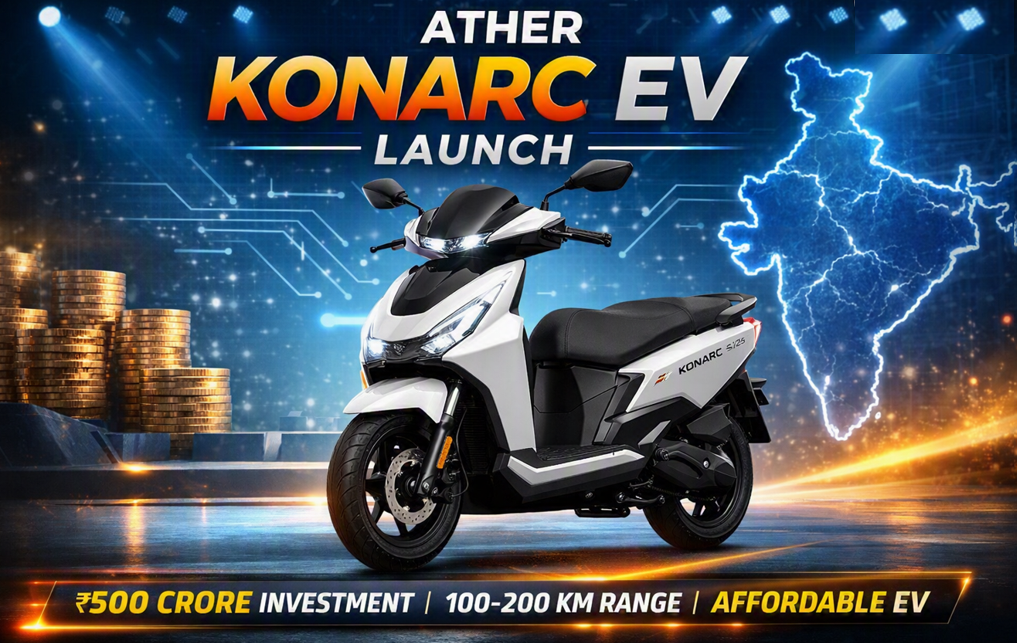
Ather Energy’s ₹500 Cr Bet: 5 Konarc EV Highlights is emerging as one of the biggest developments in India’s electric two-wheeler market in 2026. Ather Energy has invested more than ₹400-500 crore in developing its new EL scooter platform and the Konarc, its first production model based on the architecture. The company says the investment covers product development, research, development and testing, while go-to-market and marketing costs are seperate.
This move is more important because Ather is attempting to expand beyond its established premium positioning and enter a much larger section of India’s electric scooter market. The Konarc starts at ₹99,999 ex-showroom Bengaluru and has been designed around everyday usability, simpler servicing, easier charging and cost efficiency.
The new electric scooter is being offered through Ather’s S and Z product lines, with configurations offering claimed Indian Driving Cycle ranges from 100 km to as much as 200 km. The company has announced prices for three S variants, while additional versions are planned.
Why Ather Energy’s ₹500 Cr Bet: 5 Konarc EV Highlights Matters
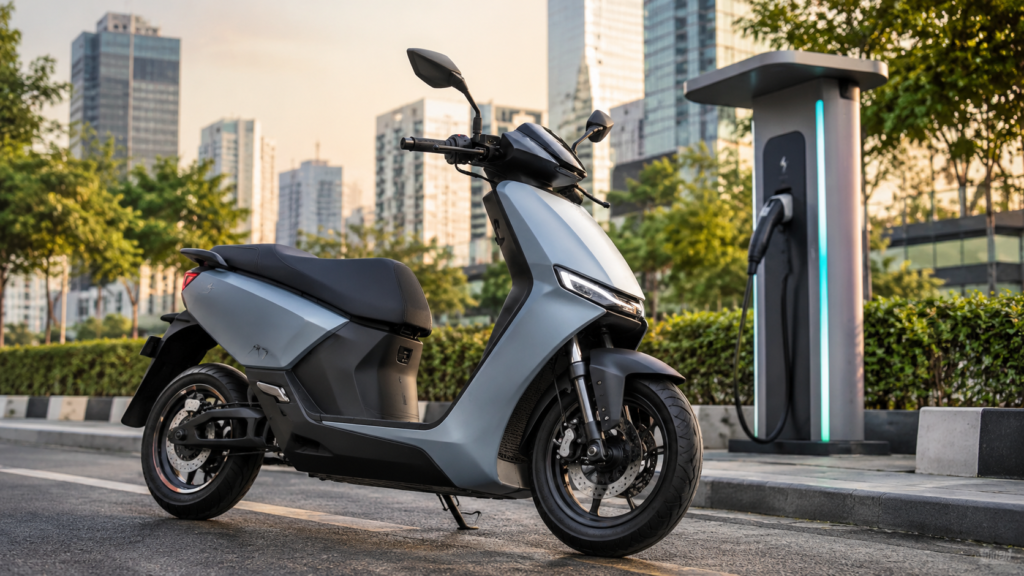
The investment is not simply about launching another electric scooter. It represents a major product and platform strategy for Ather Energy.
The company has historically built its reputation around technology-focused scooters, performance and connected features. The new EL platform takes a different approach. Ather has designed it around lower costs, easier servicing, simpler charging and practical everyday transportation.
That shift could be particularly important in India, where the largest opportunity in electric two-wheelers increasingly lies beyond the premium segment.
In a May 2026 investor call transcript, Ather described the ₹1 lakh–₹1.25 lakh price band as a major part of the electric two-wheeler market and said the EL platform was being developed specifically to enter that space. The company also said the architecture could reduce dependence on expensive materials and improve margins.
In other words, the Konarc is designed not only to attract new customers but also to establish a platform from which Ather can build a larger product family.
Ather Energy’s ₹500 Cr Bet: 5 Konarc EV Highlights at a Glance
Here are the five biggest highlights that make the new scooter strategically important:
- New EL platform focused on affordability and scale
- Starting price of ₹99,999
- Multiple range options, extending up to 200 km IDC
- New technology and convenience features
- Ather’s push toward the mass-market EV segment
Each of these factors could influence Ather’s growth trajectory over the next several years.
1. Ather Energy’s ₹500 Cr Bet Builds a New EL Platform
The first major highlight is the EL platform itself.
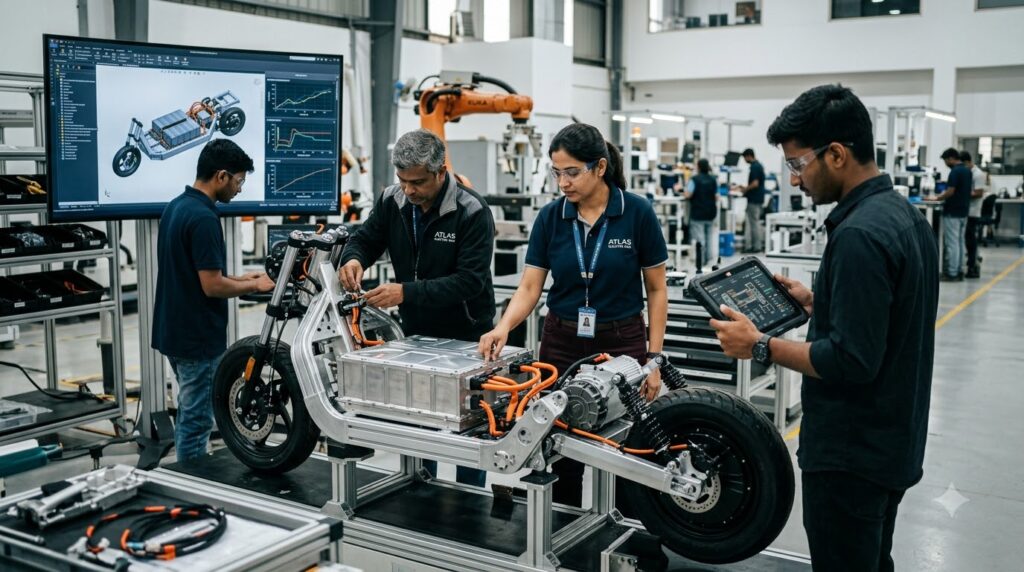
Instead of developing the Konarc as an isolated product, Ather has created a new underlying architecture that can support multiple scooters. This is important because platform sharing can help an automotive company spread engineering and development costs across several products.
Ather says the EL platform has been developed with lower costs, simpler servicing and easier charging in mind. It also incorporates technologies such as onboard charging and Ather’s Advanced Electronic Braking System.
The platform is also expected to support different configurations.
That gives Ather the flexibility to build scooters aimed at different customer groups without developing an entirely new architecture for every model.
Why the EL Platform Could Be a Game-Changer
A scalable platform can potentially provide several advantages:
- Common components across different models
- Lower engineering costs
- Faster development of new variants
- Greater manufacturing efficiency
- Easier servicing
- Better economies of scale
- More competitive pricing
This strategy is particularly relevant to electric two-wheelers because battery, electronics, motor, software and charging systems account for a significant portion of vehicle development and manufacturing costs.
Ather’s decision to invest hundreds of crores in the architecture therefore suggests that the company is thinking beyond the initial Konarc launch.
2. ₹99,999 Starting Price Targets a Bigger EV Market
The second major highlight is pricing.
The Ather Konarc starts at ₹99,999 ex-showroom Bengaluru, placing it directly in a more accessible part of India’s electric scooter market.
This price point is strategically significant.
Ather’s earlier products were positioned more heavily toward customers willing to pay for performance, technology and premium features. Konarc changes that equation by targeting buyers looking for practical electric transportation.
The company has announced the following prices for the currently detailed S variants:
| Variant | Claimed IDC Range | Ex-Showroom Bengaluru Price |
|---|---|---|
| Konarc S100 | 100 km | ₹99,999 |
| Konarc S125 | 125 km | ₹1,21,999 |
| Konarc S160 | 161 km | ₹1,44,999 |
| Konarc S200 | Up to 200 km | Price to be announced |
The S line is positioned around range, while the Z line is expected to provide a higher-performance configuration. Business Standard reported that Konarc will eventually span six variants across the S and Z lines.
The pricing strategy could therefore help Ather compete for customers who previously found its products too expensive.
Why ₹99,999 Is Important
India’s two-wheeler market is highly price-sensitive.
Consumers do not consider only the upfront price. They also look at:
- Running cost
- Battery warranty
- Service expenses
- Charging convenience
- Range
- Resale value
- Reliability
- Financing options
Ather is attempting to address several of these concerns simultaneously.
The company has also introduced a 10-year battery warranty on the Konarc, according to Economic Times, which could help reduce consumer anxiety around long-term battery durability.
That combination of entry pricing and long-term ownership reassurance could make the scooter more appealing to mainstream buyers.
3. Up to 200 km Range Expands the Konarc’s Appeal
The third major highlight is range.
Ather has announced four S-line range options, extending from 100 km to 200 km under the IDC testing cycle. The Z line is expected to include 125-km and 161-km configurations.
The currently announced S variants include:
- 100 km
- 125 km
- 161 km
- 200 km
The 200-km figure is based on the Indian Driving Cycle and should not be interpreted as guaranteed real-world range under every riding condition. Actual range can vary depending on speed, traffic, rider weight, road conditions, temperature, riding mode and other factors.
Nevertheless, offering multiple range configurations is a smart strategy.
Not every customer needs a long-range battery. A commuter who travels 20–30 km a day may prefer a cheaper version, while a customer with longer daily travel may choose a larger battery.
This creates a wider customer funnel.
Ather Energy’s ₹500 Cr Bet: 5 Konarc EV Highlights:
Ather Konarc Range Strategy
The entry-level version can attract price-conscious customers.
The mid-range versions can target daily commuters.
The higher-range configuration can appeal to customers who want fewer charging stops and greater flexibility.
This modular approach is one of the most important aspects of Ather’s new strategy.

4. New Konarc Features Focus on Everyday Convenience
The fourth highlight is the scooter’s technology and convenience package.
The Konarc is not being positioned purely as a low-cost electric scooter. Ather is attempting to retain its technology-focused identity while making the product more practical for families and everyday riders.
The scooter uses a steel unibody chassis and metal body, while the hardware package includes a 14-inch front wheel and a 12-inch rear wheel.
The larger front wheel is particularly relevant to Indian road conditions because wheel size can influence stability and ride comfort over uneven surfaces.
Ather has also introduced several technology features.
Ather Energy’s ₹500 Cr Bet: 5 Konarc EV Highlights.
Advanced Electronic Braking System
The company has developed its own Advanced Electronic Braking System, or AeBS, for the Konarc.
The system is designed to improve braking control and safety while contributing to the scooter’s everyday usability.
AirWalk
One of the more unusual features is AirWalk, which is intended to make manually moving the scooter easier.
This may sound like a small feature, but practical usability often becomes important when scooters are parked in tight spaces, garages or crowded apartment parking areas.
MagicKey and AutoPop
Higher versions also bring features such as MagicKey and AutoPop, while selected variants offer AutoHold and Vehicle FallSafe.
These technologies show that Ather is attempting to differentiate the Konarc through software and user experience rather than competing only on battery capacity.
Onboard Charging
The EL platform also supports onboard charging.
This can make charging more flexible because the scooter can potentially be charged using a suitable electrical outlet without depending entirely on external charging infrastructure.
The company has also highlighted longer service intervals, with the EL platform supporting intervals of up to 10,000 km.
For customers moving from petrol scooters to EVs, reducing maintenance visits could be a significant advantage.
Ather Energy’s ₹500 Cr Bet: 5 Konarc EV Highlights:
5. Ather Energy’s ₹500 Cr Bet Signals a Mass-Market Push
The fifth and perhaps biggest highlight is the strategic meaning of the Konarc.
Ather is no longer simply trying to sell premium electric scooters.
The company is attempting to reach a substantially larger pool of Indian consumers.
That makes Ather Energy’s ₹500 Cr Bet: 5 Konarc EV Highlights more than a product story. It is also a story about Ather’s changing business model.
The company has identified the ₹1 lakh–₹1.25 lakh range as a particularly important segment and has developed EL specifically to enter it.
This could help Ather increase volumes while reducing dependence on premium products.
The company’s CEO has also indicated that Konarc could become a major revenue contributor. One report said management expects the new model to account for more than 50% of total revenue within a year of launch.
If that target is achieved, the Konarc could fundamentally change Ather’s sales mix.
Ather Energy’s ₹500 Cr Bet: 5 Konarc EV Highlights and Manufacturing Scale
A new product platform is only useful if a company can manufacture it at sufficient scale.
That is why Ather’s manufacturing expansion is closely connected to the Konarc strategy.
The company is developing Factory 3.0 in Chhatrapati Sambhajinagar, Maharashtra, with a planned total capacity of up to 10 lakh vehicles. Ather previously said the first phase was planned to bring 5 lakh units of capacity online and that the facility would have greater vertical integration.
The plant is expected to support several operations, including:
- Battery pack assembly
- Transmission assembly
- Painting
- Electronics assembly
- CED coating
Higher vertical integration could help Ather improve unit economics and gain greater control over production.
This is important because mass-market EV success requires more than attractive specifications.
The company must produce vehicles consistently, control costs, maintain quality and deliver them quickly.
Ather Energy’s ₹500 Cr Bet: 5 Konarc EV Highlights:
Ather Konarc vs Ather’s Previous Product Strategy
The Konarc represents a noticeable change from Ather’s earlier product philosophy.
The 450 family helped establish Ather as a technology-focused electric scooter company.
The Rizta expanded the company’s family-oriented appeal.
The Konarc goes one step further by bringing that family-oriented strategy into a lower price bracket.
The positioning can be summarized like this:
| Area | Earlier Ather Strategy | Konarc Strategy |
|---|---|---|
| Target customer | Premium/tech-focused | Mass and family buyers |
| Platform | Existing architectures | New EL platform |
| Pricing | Relatively premium | Starts at ₹99,999 |
| Priority | Performance + technology | Practicality + affordability |
| Range | Product dependent | Multiple options |
| Service | Standard Ather ecosystem | Longer intervals |
| Expansion | Select segments | Wider market |
The company is therefore attempting to increase its addressable market without abandoning its technology-led identity.
The timing of Konarc’s launch is significant.
Ather Energy’s ₹500 Cr Bet: 5 Konarc EV Highlights:
Competition Could Become Tougher
India’s electric two-wheeler market is becoming increasingly competitive, with established manufacturers and EV specialists expanding their portfolios.
Companies such as TVS Motor, Bajaj Auto, Hero MotoCorp and Ola Electric are competing for customers across different price categories.
Ather therefore needs Konarc to succeed not only as a product but also as a volume driver.
The company has received strong backing from Hero MotoCorp. In August 2026, Hero announced plans to invest up to ₹17.58 billion, or approximately $184 million, to increase its stake in Ather from 29.88% to 32.8%.
That investment provides an additional strategic signal about the importance of Ather’s growth prospects.
For Ather, the combination of a new mass-market product, expanded manufacturing capacity and stronger shareholder support creates an opportunity to compete more aggressively.
What Makes the Konarc Different?
The Konarc’s biggest advantage may not be one individual specification.
Instead, it is the combination of several factors.
A starting price of ₹99,999 makes the scooter more accessible.
Multiple battery options allow customers to choose according to their requirements.
The EL platform is designed around lower costs and easier servicing.
The scooter adds convenience features such as AirWalk and MagicKey.
Longer service intervals can potentially reduce maintenance inconvenience.
The 10-year battery warranty provides an additional ownership reassurance.
Together, these features create a product designed around the complete ownership experience.
That is important because EV adoption is increasingly moving beyond early adopters.
The next generation of buyers may not necessarily care about having the fastest acceleration or the most advanced technical specifications.
They may simply want an electric scooter that is affordable, dependable, easy to charge and inexpensive to operate.
Konarc is clearly designed around that requirement.
Ather Energy’s ₹500 Cr Bet: 5 Konarc EV Highlights:
Potential Challenges for Ather Konarc
Despite its strong positioning, the Konarc faces several challenges.
Supply and Production
Ather needs sufficient manufacturing capacity to meet demand.
The company has previously acknowledged supply constraints and linked its EL expansion to the new manufacturing facility.
If demand rises faster than production, waiting periods could become an issue.
Real-World Range
The headline 200-km figure is based on IDC testing.
Consumers will naturally want to know the real-world range in Indian traffic.
Real-world performance will therefore matter greatly for customer satisfaction.
Competition
The ₹1 lakh–₹1.5 lakh electric scooter segment is highly competitive.
Ather will need to maintain a strong balance between price, features, quality and service.
Service Network
Mass-market expansion requires extensive service coverage.
Customers in smaller cities may be less willing to purchase an EV if they are concerned about service accessibility.
Ather’s ability to expand its retail and service network will therefore be crucial.
Ather Energy’s ₹500 Cr Bet: 5 Konarc EV Highlights — What Comes Next?
The next phase of Ather’s strategy will be closely watched.
The company is expected to expand the EL platform into additional models and variants.
The Konarc itself is planned across multiple configurations, giving Ather room to address different customer needs.
If the first product performs well, the same architecture could become the foundation for a much larger family of electric scooters.
That would make the ₹400–500 crore development investment more valuable over time.
Instead of recovering the investment through a single model, Ather can potentially spread the underlying technology and engineering costs across multiple products.
This is one reason platform investments are so important in the automotive industry.
Ather Energy’s ₹500 Cr Bet: 5 Konarc EV Highlights:
Impact on India’s Electric Scooter Market
The Konarc could also have a broader impact on India’s EV market.
If Ather succeeds with a ₹99,999 electric scooter that combines reasonable range, technology and brand value, competitors may face greater pressure to offer similar combinations.
That could lead to:
- More affordable EVs
- Better battery warranties
- Longer service intervals
- Improved charging technology
- More range options
- Stronger safety features
- Greater competition
For consumers, stronger competition is generally positive.
It can accelerate innovation while bringing more choices into the market.
The larger question is whether customers will choose EVs not merely because of environmental benefits but because the overall economics and convenience make sense.
The Konarc is clearly designed around that proposition.
Investor Perspective: Why Ather’s Strategy Matters
From an investor perspective, the Konarc is significant because it could influence Ather’s growth, margins and market share.
Ather has been working toward improving its financial performance while expanding sales.
A successful mass-market product can increase volumes, but lower pricing can also create pressure on margins.
The EL platform is therefore important because Ather expects its cost-focused architecture to help improve economics.
The company has said the architecture can reduce dependence on costly materials and improve margins across premium and mass-premium products.
If the company can achieve both higher volumes and healthy margins, the platform could become a major business driver.
Ather Energy’s ₹500 Cr Bet: 5 Konarc EV Highlights:
Conclusion: A Major New Chapter for Ather Energy
Ather Energy’s ₹500 Cr Bet: 5 Konarc EV Highlights captures a major strategic shift for one of India’s best-known electric scooter manufacturers.
The ₹400–500 crore investment in the EL platform and Konarc demonstrates that Ather is preparing for a much broader market opportunity.
The five biggest highlights are clear:
- The new EL platform is designed around cost efficiency, easier servicing and everyday usability.
- The ₹99,999 starting price gives Ather access to a much larger customer segment.
- Multiple range options up to 200 km IDC allow the company to address different usage patterns.
- Technology and convenience features help the Konarc maintain Ather’s technology-focused identity.
- The mass-market strategy could transform Konarc into a major volume and revenue driver.
The real test, however, begins after launch.
Ather must now demonstrate that it can manufacture Konarc at scale, maintain quality, deliver competitive real-world range and support customers through a strong service network.
If the company succeeds, the Konarc could become much more than another electric scooter.
It could become the product that takes Ather from a premium EV specialist to a major mass-market electric two-wheeler manufacturer.
For India’s EV industry, that would be an important development.
Ather Energy’s ₹500 Cr Bet: 5 Konarc EV Highlights:
Frequently Asked Questions (FAQ)
1. What is Ather Energy’s ₹500 Cr Bet: 5 Konarc EV Highlights?
Ather Energy’s ₹500 Cr Bet refers to the company’s investment of more than ₹400–500 crore in developing its new EL scooter platform and Konarc electric scooter. Konarc is the first production model based on the EL architecture.
2. What is the starting price of Ather Konarc?
The Ather Konarc starts at ₹99,999 ex-showroom Bengaluru for the S100 variant. Other announced S variants include the 125-km version at ₹1,21,999 and the 161-km version at ₹1,44,999.
3. What is the maximum range of Ather Konarc?
Ather has announced a Konarc S variant with up to 200 km of claimed IDC range. The range varies depending on the selected variant.
4. What is the EL platform?
The EL platform is Ather’s new electric scooter architecture designed to reduce costs while simplifying servicing and charging. It is intended to support multiple future scooter products.
5. What are the five biggest Konarc highlights?
The five major highlights are the new EL platform, ₹99,999 starting price, multiple range options, new convenience and safety technologies, and Ather’s push into the mass-market electric scooter segment.
6. Does Ather Konarc have a metal body?
Yes. The Konarc uses a steel unibody chassis and metal body, with a 14-inch front wheel and 12-inch rear wheel.
7. Does Ather Konarc have a long battery warranty?
Ather has announced a 10-year battery warranty for the Konarc, adding a significant ownership reassurance for customers considering an electric scooter.
8. When will Ather Konarc deliveries begin?
Ather has announced a phased rollout, with deliveries and availability beginning around September 2026 for the initially announced variants, while specific timelines can vary by configuration and market.
9. Why is the Konarc important for Ather Energy?
Konarc is important because it takes Ather into a lower price segment where the company previously had limited presence. Ather expects the EL platform to help expand volumes while improving product economics.
10. Will Ather launch more EL-platform scooters?
Ather has indicated that the EL platform is intended to support multiple products and configurations. The Konarc is therefore expected to be the beginning of a broader product strategy rather than a standalone model.
My View:
Ather Energy’s ₹500 Cr Bet: 5 Konarc EV Highlights:
Ather Energy’s ₹500 crore investment in the EL platform and Konarc EV marks a decisive shift from premium performance to a mass-market accessibility. By focusing on affordability, range, and reliability, Ather is positioning itself as a catalyst for India’s electric mobility revolution. The Konarc’s entry-level pricing and advanced features could redefine consumer expectations – signaling that sustainable innovation is no longer a luxury but a mainstream necessity.