
India’s BRICS Summit Unlocks $1 Trillion Capital
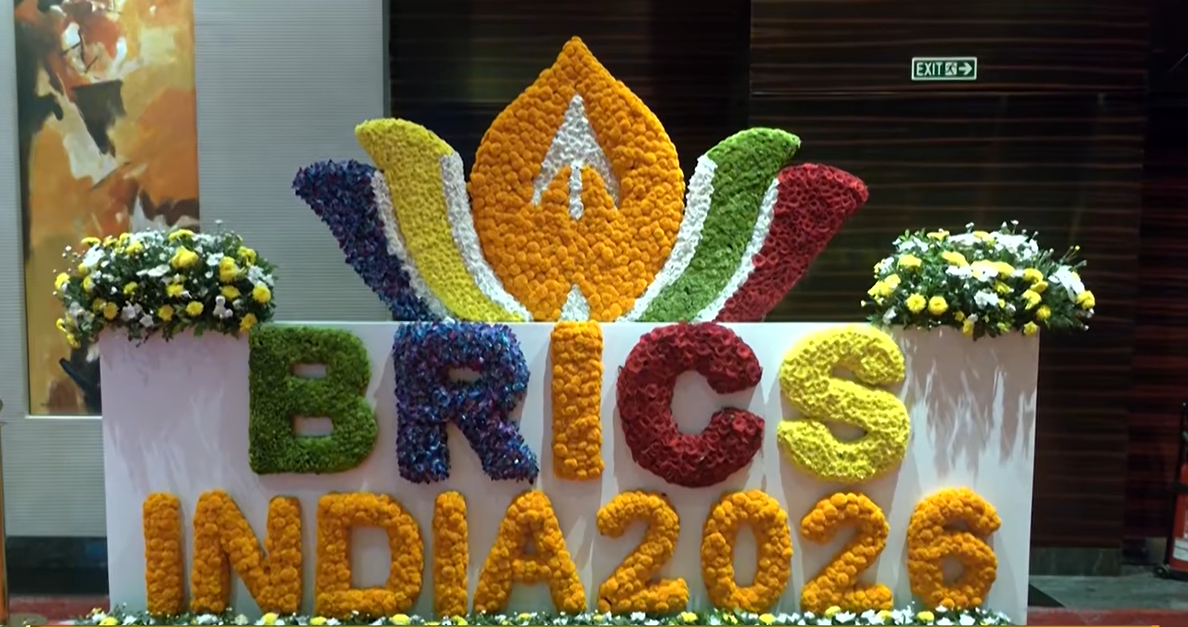
India’s BRICS Summit Unlocks $1 Trillion Capital is emerging as one of the biggest investment stories surrounding India’s 2026 BRICS chairship. New Delhi is preparing to host the 18th BRICS Leaders’ Summit on September 12-13, while a parallel iBRICS investment gathering is expected to bring together more than 500 institutional investors, finance leaders and business representatives connected to sovereign wealth funds, pension funds and family offices managing approximately $1 trillion in assets.
The development places India at the intersection of diplomacy, sovereign capital and long-term economic investment. The iBRICS Summit, organised by the Sovereign Wealth Fund Institute (SWFI), is scheduled for September 12-13 at the Oberoi in New Delhi, alongside the official BRICS Leaders’ Summit at Bharat Mandapam.

However, the $1 Trillion figure should be understood correctly. It represents the approximate assets manage by participating capital institutions; it does not mean India has secured a $1 Trillion investment commitment.
For India, the significance lies in the opportunity to connect international long-term capital with infrastructure, energy, technology, digital capacity, manufacturing and critical-mineral projects.
Key takeaway: India is using its BRICS chairship to bring governments, sovereign investors and businesses closer together at a time when global capital flows are being reshaped by geopolitical, trade and currency pressures.
India’s BRICS Summit Unlocks $1 Trillion Capital: Why It Matters
The headline surrounding India’s BRICS Summit Unlocks $1 Trillion Capital captures a broader transformation taking place within BRICS.
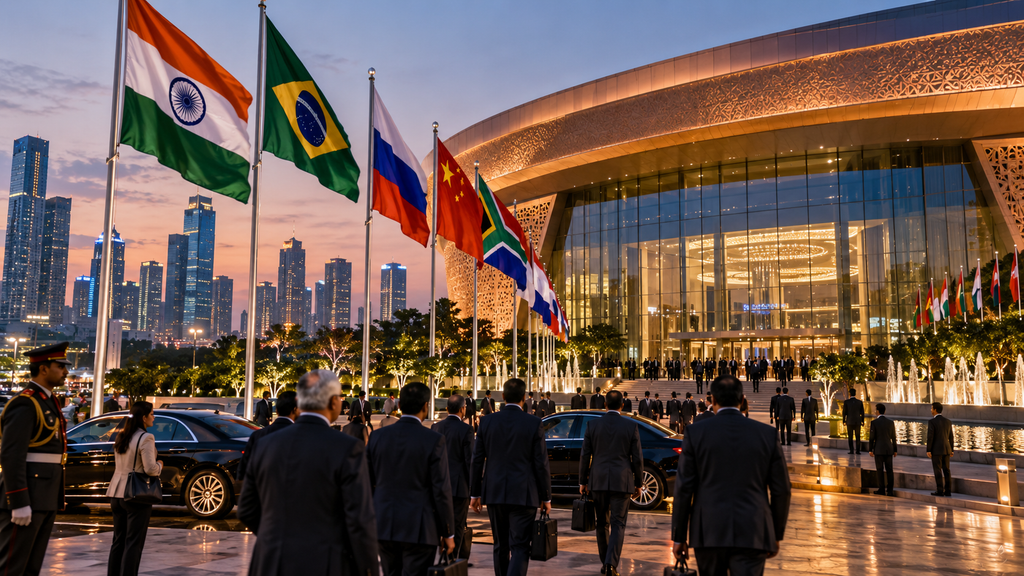
India assumed the BRICS chairship on January 1, 2026, for the fourth time. The country’s chairship is guided by the theme “Building for Resilience, Innovation, Cooperation and Sustainability.” India has also conducted more than 350 meetings and high-level engagements across more than 25 cities as part of its year-long BRICS programme.
The 2026 summit is particularly important because BRICS marks 20 years since its establishment.
Rather than limiting cooperation to political dialogue, India has emphasised practical economic and development-oriented cooperation. That approach makes investment and capital mobilisation particularly important.
The iBRICS initiative adds another layer to this strategy by creating a dedicated platform for sovereign and institutional investors.
Its stated purpose is to connect sovereign capital with bankable infrastructure, energy and digital-capacity projects across the BRICS member and partner-country ecosystem.
What Is the $1 Trillion Capital Opportunity?
The phrase $1 trillion capital opportunity can easily be misunderstood.
The participating institutions collectively manage approximately $1 trillion in assets. These institutions can include sovereign wealth funds, public pension funds and large family offices.
That does not mean:
- India will receive $1 trillion.
- BRICS governments have pledged $1 trillion.
- Every dollar of the assets will be invested in India.
- A $1 trillion investment agreement has already been signed.
Instead, the summit creates an environment where major capital owners can examine investment opportunities.
This distinction is important for investors and readers because sovereign wealth funds operate under specific mandates. They assess risk, expected returns, currency exposure, governance, liquidity and exit opportunities before committing capital.
Therefore, the real economic test will be whether discussions at the summit generate actual investment pipelines, co-investment agreements and bankable projects.
India’s BRICS Summit Unlocks $1 Trillion Capital Through Institutional Investors
One of the strongest aspects of India’s BRICS Summit Unlocks $1 Trillion Capital is the participation of long-term institutional investors.
Unlike short-term market participants, sovereign wealth funds and pension funds often have investment horizons extending over many years or even decades.
That makes them potentially suitable partners for projects such as:
- High-speed rail and transport infrastructure
- Ports and logistics networks
- Renewable energy projects
- Electricity transmission
- Battery storage
- Digital infrastructure
- Data centres
- Semiconductor manufacturing
- Critical-mineral supply chains
- Urban infrastructure
- Industrial parks
- Healthcare infrastructure
- Technology platforms
For India, attracting even a fraction of such capital could have a meaningful economic impact.
Long-term institutional capital can also help reduce dependence on shorter-duration financing for large infrastructure projects.
Why India Is Attractive to Global Capital
India’s investment story is supported by several structural factors.
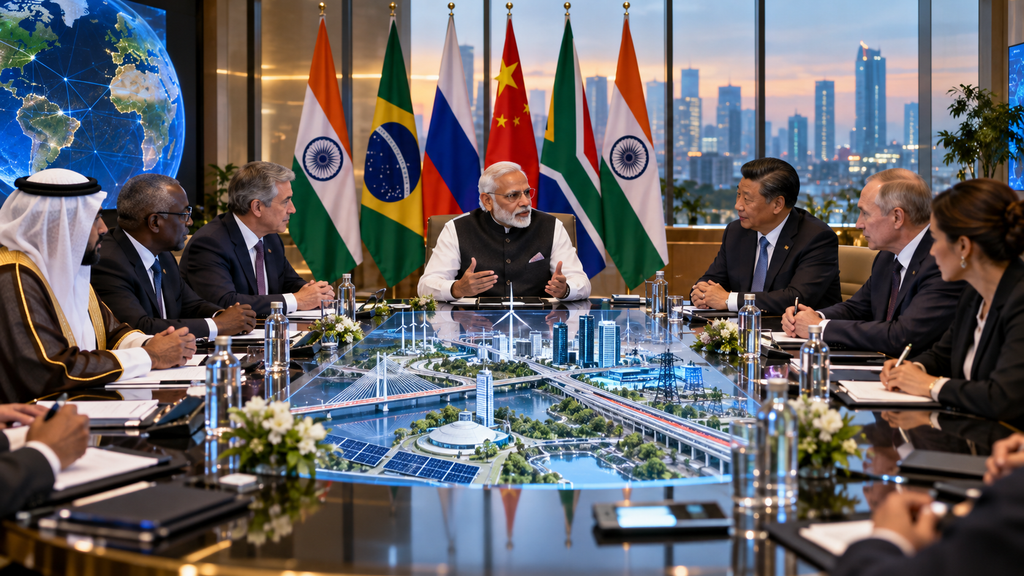
The country’s large domestic market gives investors access to a huge consumer base. At the same time, India’s infrastructure expansion, manufacturing ambitions and digital economy are creating demand for long-term financing.
The government has also promoted India as a manufacturing and technology destination.
Sectors such as electronics, renewable energy, electric vehicles, semiconductors, defence manufacturing and digital services are increasingly important to India’s economic strategy.
This makes the BRICS investment platform particularly relevant.
For sovereign investors, India can provide exposure to long-term structural growth rather than only short-term market movements.
Infrastructure Could Be a Major Beneficiary
Infrastructure could become one of the most important areas discussed during the summit.
India requires substantial capital for roads, railways, airports, ports, logistics corridors, urban transportation and power infrastructure.
Institutional investors can participate through equity, infrastructure funds, project financing, public-private partnerships and other structures.
If the iBRICS platform successfully connects these investors with credible projects, the resulting investment pipeline could extend beyond the September summit.
Energy Investment Is Another Major Opportunity
Energy is also likely to attract attention.
India is expanding renewable power while simultaneously strengthening electricity transmission and energy storage.
Solar, wind, battery storage, green hydrogen and other emerging technologies require significant capital.
Long-term investors can potentially participate in projects where revenues are generated over extended periods.
For India, such investment can support both economic growth and energy-security objectives.
Critical Minerals Could Become a Strategic Investment Theme
Critical minerals have become increasingly important to industrial policy worldwide.
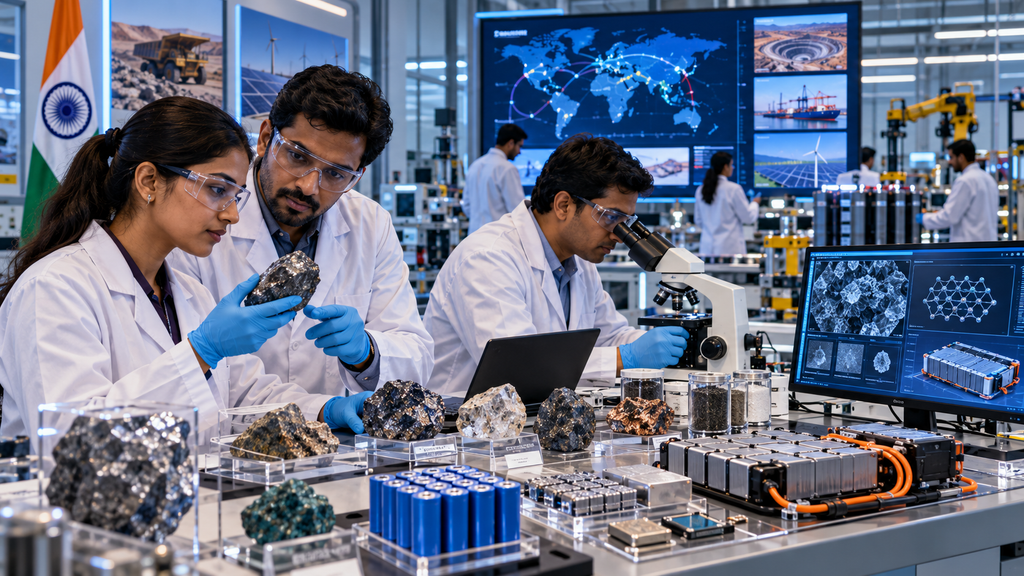
Electric vehicles, batteries, semiconductors, renewable-energy equipment and advanced electronics depend on reliable supplies of strategically important minerals.
India has therefore been seeking ways to strengthen its critical-mineral ecosystem.
The BRICS framework can potentially support cooperation in mining, processing, refining, technology and supply-chain development.
For sovereign investors, critical minerals may represent more than a commodity opportunity.
They can also become part of long-term strategic infrastructure.
A country that controls or secures access to essential mineral supply chains can strengthen its manufacturing competitiveness.
Critical Mineral
India’s BRICS Summit Unlocks $1 Trillion Capital and Digital Infrastructure
Digital infrastructure is another area where India’s BRICS Summit Unlocks $1 Trillion Capital could have a lasting impact.
India has developed large-scale digital public infrastructure, including the Unified Payments Interface.
The country’s digital ecosystem provides a potential model for improving cross-border financial connectivity.
The iBRICS agenda is expected to examine payment connectivity and non-dollar settlement mechanisms, including discussions involving systems such as India’s UPI and Brazil’s Pix. Reports have also highlighted discussions around central-bank digital-currency interoperability.
The implications could be significant.
If payment systems become more interoperable, businesses operating across emerging markets could potentially benefit from:
- Faster settlement
- Lower transaction friction
- Greater payment accessibility
- Reduced dependence on correspondent banking channels
- Better digital financial integration
However, interoperability is technically and legally complex.
Countries must address issues such as regulation, cybersecurity, data protection, foreign-exchange rules and settlement infrastructure.
Non-Dollar Payments Add Another Dimension
The discussion around non-dollar settlement corridors is one of the most strategically important elements of the investment gathering.
BRICS countries have increasingly discussed ways to make cross-border trade more resilient.
The goal does not necessarily mean eliminating the US dollar from international trade.
Instead, additional settlement options could give participating economies more flexibility.
A diversified payment ecosystem could potentially reduce certain transaction costs and make cross-border commerce more resilient to disruptions.
For India, this is particularly relevant because the country is simultaneously expanding trade relationships with emerging markets.
India’s BRICS Summit Unlocks $1 Trillion Capital Through a New Investment Network
The significance of India’s BRICS Summit Unlocks $1 Trillion Capital extends beyond the two-day event.
The iBRICS initiative is described by its organisers as an annual sovereign investment and deal-making platform held alongside the BRICS Leaders’ Summit. The inaugural edition is scheduled for September 12–13 at The Oberoi in New Delhi.
That could create a recurring investment network.
If future BRICS chair countries continue hosting similar investment gatherings, sovereign capital could gain a regular platform for examining projects across participating economies.
This would potentially transform BRICS economic cooperation from a largely government-to-government conversation into a stronger government-to-investor and investor-to-investor ecosystem.
The BRICS Investors Round Table
A major component of the iBRICS programme is the BRICS Investors Round Table.
According to the event organisers, the round table is designed for 250 institutions and focuses on capital allocation across the BRICS economies. The programme is scheduled for September 13 in New Delhi.
The emphasis on allocation is significant.
Investment conferences often generate discussions, but investors ultimately need specific opportunities.
They need answers to questions such as:
- What project is being financed?
- What is the expected return?
- Who guarantees the project?
- What are the currency risks?
- What happens if the project is delayed?
- What is the exit strategy?
- How strong is the regulatory framework?
- How will disputes be resolved?
The BRICS Investors Round Table appears designed to move discussions closer to these practical questions.
The Proposed Sovereign Capital Compact
Another important element is the proposed Sovereign Capital Compact.
The initiative is intended to provide a framework for cooperation around sovereign and institutional capital.
The concept is potentially important because large-scale investment depends not only on capital availability but also on confidence.
Investors need predictable regulations, transparent governance and credible project structures.
A framework that improves coordination could therefore help turn available capital into actual transactions.
However, it is important not to describe the compact as a confirmed $1 trillion investment agreement unless specific binding commitments are officially announced.
The distinction between assets under management and capital committed to projects remains critical.
India’s BRICS Summit Unlocks $1 Trillion Capital: 5 Major Sectors to Watch
The investment agenda can be broadly divided into five major sectors.
1. Infrastructure
Infrastructure remains one of India’s largest long-term investment opportunities.
Roads, railways, ports, airports, logistics and urban infrastructure require sustained financing.
2. Clean Energy
Renewable energy, battery storage, grid infrastructure and green hydrogen could attract institutional capital.
3. Digital Technology
Data centres, AI infrastructure, cloud computing and digital payment systems are becoming increasingly important.
4. Critical Minerals
Mineral exploration, processing and strategic supply chains could gain greater attention.
5. Manufacturing
Electronics, semiconductors, electric vehicles and advanced manufacturing could benefit from deeper investment partnerships.
Together, these sectors align closely with India’s economic priorities.
Why Sovereign Wealth Funds Matter
Sovereign wealth funds control large pools of capital accumulated by governments.
They can invest domestically or internationally depending on their mandates.
Their importance to emerging economies comes from their ability to participate in large projects that may require substantial upfront capital and long investment horizons.
Pension funds operate similarly in one important respect: they generally have long-term liabilities and therefore can invest in assets capable of generating returns over extended periods.
This makes both categories potentially important partners for infrastructure and energy projects.
Family offices add another layer.
Major family offices can often move quickly and invest across private markets, technology, real estate and alternative assets.
Bringing these groups together creates a broad capital ecosystem.
The Geopolitical Context Behind the Summit
The investment gathering is taking place at a time of significant global economic uncertainty.
Trade restrictions, tariffs, supply-chain restructuring and geopolitical tensions are changing the way companies and governments think about investment.
The iBRICS organisers have specifically highlighted shifting trade dynamics, tariff pressures and the cost of dollar clearing as part of the environment surrounding the summit.
That context makes sovereign capital particularly important.
Governments and large institutions increasingly want resilient supply chains and diversified investment relationships.
India’s position as one of the world’s major emerging economies gives it an opportunity to act as a bridge between capital and investment projects.
India’s BRICS Summit Unlocks $1 Trillion Capital: What Could Go Right?
There are several possible positive outcomes.
More Foreign Investment
The summit could increase investor awareness of Indian infrastructure and technology projects.
Stronger BRICS Economic Links
Regular interaction among investors could deepen economic relationships between BRICS economies.
New Infrastructure Financing
Projects that struggle to obtain conventional financing could potentially find institutional partners.
Greater Payment Connectivity
Cross-border payment initiatives could make trade between participating economies easier.
Strategic Supply Chains
Investment in critical minerals and manufacturing could improve economic resilience.
These outcomes would reinforce India’s broader BRICS agenda focused on practical cooperation.
What Could Go Wrong?
The $1 trillion headline should not lead to unrealistic expectations.
Several challenges remain.
Investment Is Not Automatic
Institutional investors will not commit money simply because a project is presented at a summit.
They require commercial viability.
Currency Risk
Cross-border investment can expose investors to currency volatility.
Regulatory Differences
BRICS economies have different legal and regulatory systems.
Geopolitical Risk
Political tensions can affect investment decisions and supply chains.
Project Execution
Even financially attractive projects can experience delays, cost overruns and regulatory obstacles.
These risks mean the summit’s success should ultimately be measured by actual transactions rather than headlines.
What the $1 Trillion Figure Really Means
The most important point for readers is simple:
$1 trillion in assets under management is not the same as $1 trillion in investment commitments.
The participating institutions collectively manage approximately $1 trillion, creating a potentially significant pool of capital that could be directed toward suitable opportunities.
But the amount ultimately invested will depend on individual mandates and negotiations.
This distinction makes the story more credible and prevents investors from confusing a capital gathering with a guaranteed investment package.
India’s BRICS Summit Unlocks $1 Trillion Capital: The Bigger Economic Picture
At the centre of India’s BRICS Summit Unlocks $1 Trillion Capital is a much larger question:
Can BRICS build a stronger economic and financial ecosystem that connects capital, trade and investment?
India’s 2026 chairship provides a platform for exploring that question.
The official BRICS summit is scheduled for September 12–13 at Bharat Mandapam in New Delhi. India has described the chairship as focused on resilience, innovation, cooperation and sustainability.
The iBRICS event provides a complementary private-sector and institutional-investor dimension.
Together, the two events could place New Delhi at the centre of a major discussion about the future of emerging-market capital.
New Delhi BRICS Summit
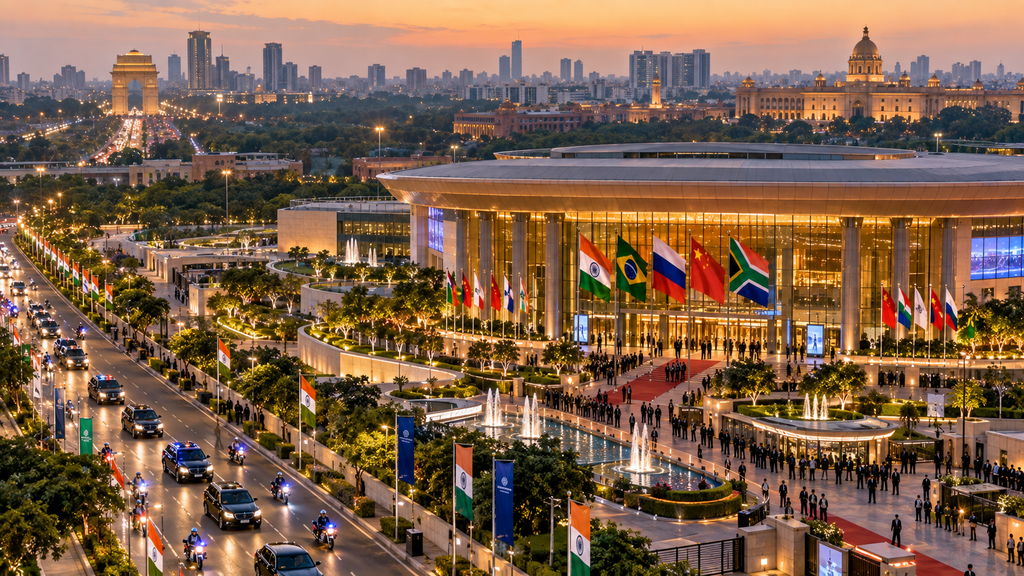
India’s Opportunity to Become a Global Capital Hub
India has increasingly sought to position itself as a major destination for global investment.
The BRICS chairship gives New Delhi another opportunity to demonstrate its economic capabilities.
Hosting hundreds of institutional investors alongside global political leaders can strengthen India’s reputation as a meeting point for capital.
The bigger opportunity is not merely attracting money for individual projects.
It is creating repeatable investment channels.
If sovereign funds, pension funds and private investors establish long-term relationships with Indian institutions during the summit, those relationships could generate investment well after the event concludes.
What Investors Should Watch After September 13
The most important developments may come after the summit.
Investors should monitor:
- Announced investment agreements
- New infrastructure funds
- Sovereign co-investment arrangements
- Energy partnerships
- Critical-mineral agreements
- Digital-payment initiatives
- Cross-border settlement projects
- Manufacturing investments
- New BRICS investment platforms
- Follow-up project announcements
The difference between a successful summit and a symbolic summit will be visible through these outcomes.
If announcements lead to actual capital deployment, the event could become an important milestone in BRICS economic cooperation.
India’s BRICS Chairship and the Future of Emerging-Market Capital
India’s BRICS chairship arrives at a time when emerging economies are seeking greater influence in global finance.
The world’s investment landscape is becoming increasingly multipolar.
Capital is no longer concentrated in a small number of traditional financial centres.
Sovereign wealth funds from the Gulf, Asia and other regions have become major global investors.
Pension funds are also expanding their international portfolios.
Emerging markets therefore have an opportunity to create stronger investment connections among themselves.
The iBRICS initiative could become one part of that broader evolution.
Frequently Asked Questions
What is India’s BRICS Summit Unlocks $1 Trillion Capital about?
India’s BRICS Summit Unlocks $1 Trillion Capital refers to the major sovereign and institutional capital gathering being held alongside India’s 2026 BRICS chairship. The associated iBRICS Summit is expected to bring together investors and financial leaders representing institutions managing approximately $1 trillion in assets.
Is India receiving $1 trillion in investment?
No. The approximately $1 trillion figure refers to the assets managed by participating sovereign wealth funds, pension funds and family offices. It is not a confirmed $1 trillion investment commitment to India.
When is the 2026 BRICS Summit?
India will host the 18th BRICS Leaders’ Summit on September 12–13, 2026, at Bharat Mandapam in New Delhi.
Where is the iBRICS investment summit being held?
The inaugural iBRICS Summit is scheduled for September 12–13, 2026, at The Oberoi in New Delhi, alongside the official BRICS Leaders’ Summit.
What sectors could attract investment?
Infrastructure, renewable energy, digital infrastructure, technology, manufacturing, critical minerals, logistics and financial technology are among the major areas that could attract investor interest.
What is the Sovereign Capital Compact?
The Sovereign Capital Compact is a proposed framework associated with the iBRICS gathering that aims to strengthen cooperation around cross-border sovereign and institutional capital.
Why are sovereign wealth funds important?
Sovereign wealth funds manage large pools of capital and often have long investment horizons. That can make them potential sources of financing for infrastructure, energy, technology and other large projects.
Will BRICS replace the US dollar?
There is no basis for assuming an immediate replacement of the US dollar. Discussions around non-dollar settlement are more accurately understood as efforts to create additional options for cross-border transactions.
Could UPI become part of BRICS financial cooperation?
Payment connectivity involving systems such as India’s UPI and Brazil’s Pix is among the areas being discussed around the investment gathering.
Why is the 2026 BRICS chairship important for India?
The chairship gives India an opportunity to shape BRICS discussions around economic, financial, technological and development priorities while strengthening relationships with member and partner countries.
Conclusion: India’s BRICS Summit Unlocks $1 Trillion Capital Could Mark a New Investment Era
India’s BRICS Summit Unlocks $1 Trillion Capital is more than a headline about a large pool of money.
It represents India’s attempt to connect diplomacy with investment, sovereign wealth with infrastructure and digital innovation with cross-border financial cooperation.
The approximately $1 trillion figure is significant because it represents the scale of assets managed by institutions expected to participate. But the ultimate impact will depend on how much of that capital translates into actual investments.
India enters the summit with several advantages: a large economy, a growing infrastructure pipeline, an expanding digital ecosystem and ambitious manufacturing and energy-transition goals.
The BRICS platform can potentially provide another channel for attracting long-term capital into those sectors.
The September meetings will therefore be closely watched not simply for political declarations, but for evidence of concrete investment activity.
If the iBRICS platform succeeds in connecting sovereign investors with credible projects, strengthening cross-border payment cooperation and creating a repeatable investment network, India’s 2026 BRICS chairship could leave a significant economic legacy.
The real measure of India’s BRICS Summit Unlocks $1 Trillion Capital will ultimately be simple: how much capital moves from the conference room into the real economy.