
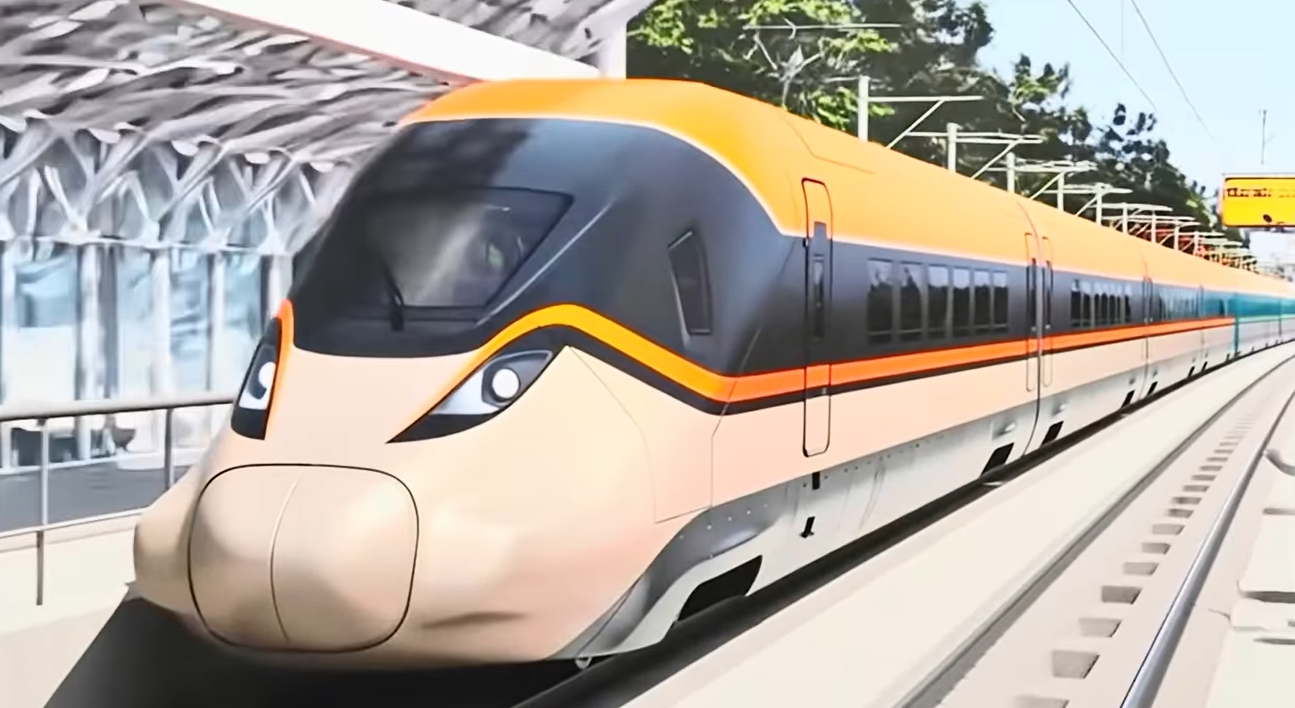
Mumbai–Ahmedabad Bullet Train: Latest Updates – Introduction
The Mumbai–Ahmedabad Bullet Train Project: Latest Updates highlight India’s ambitious effort to introduce high-speed passenger rail services between two of western India’s most important economic centres. The 508-kilometre Mumbai–Ahmedabad High-Speed Rail (MAHSR) corridor is being developed to connect Mumbai, India’s financial capital, with Ahmedabad, a major commercial and industrial hub in Gujarat.
As of October 2026, the project has achieved several significant construction milestones. An RTI-based report published on September 25 put overall physical progress at 62.16%, with all the land required for the corridor acquired. More recently, the installation of all 14 heavy portal beams over the busy Delhi–Mumbai Rajdhani railway line in Vadodara was completed, while a major bridge across the Sabarmati River in Ahmedabad also reached completion.
Mumbai–Ahmedabad Bullet Train Project: Latest Updates is designed for an operating speed of up to 320 km/h and is expected to significantly reduce travel time between Mumbai and Ahmedabad. However, civil construction is only one part of the process. Track installation, electrification, signalling, train testing and safety approvals must also be completed before passenger services can begin.
Here is a detailed look at the latest developments, construction progress, route, stations, expected launch, economic benefits and remaining challenges.
Mumbai–Ahmedabad Bullet Train Project: Latest Updates in October 2026
Several developments reported during September and October 2026 demonstrate progress across the corridor.
1. Overall physical progress reaches 62.16%
According to an RTI response reported on September 25, 2026, the project had achieved 62.16% overall physical progress. The response also confirmed that all land required for the 508-kilometre corridor had been acquired.
The report recorded the following construction milestones:
- Foundations completed along approximately 459.90 kilometres.
- Piers completed along approximately 455.10 kilometres.
- Girders cast for around 380 kilometres.
- Viaduct girders erected along approximately 366 kilometres.
These figures demonstrate the scale of construction undertaken across Maharashtra, Gujarat and the Union Territory of Dadra and Nagar Haveli.
However, overall physical progress should not be confused with operational readiness. The corridor must also complete railway systems integration, testing and the necessary safety clearances.
2. Major Vadodara construction milestone completed
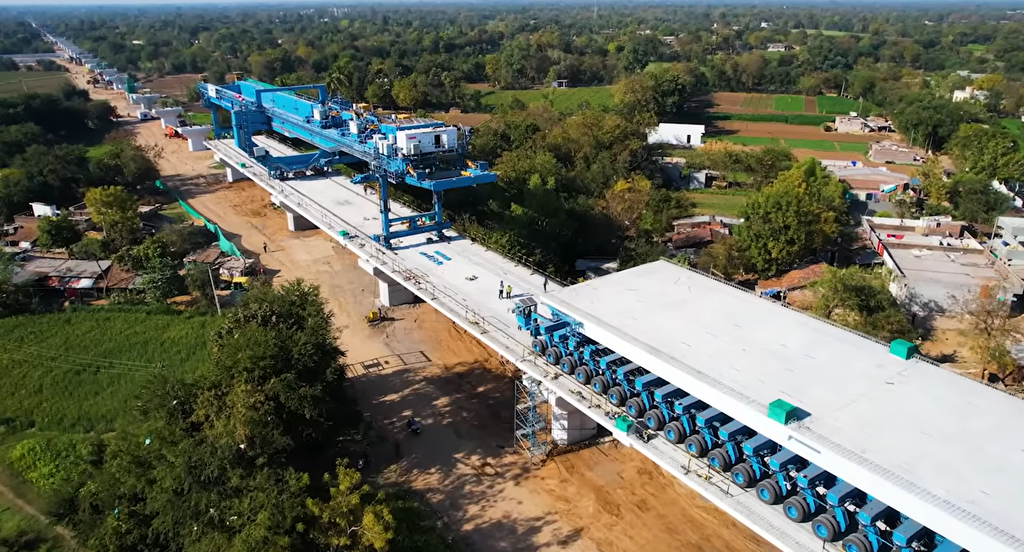
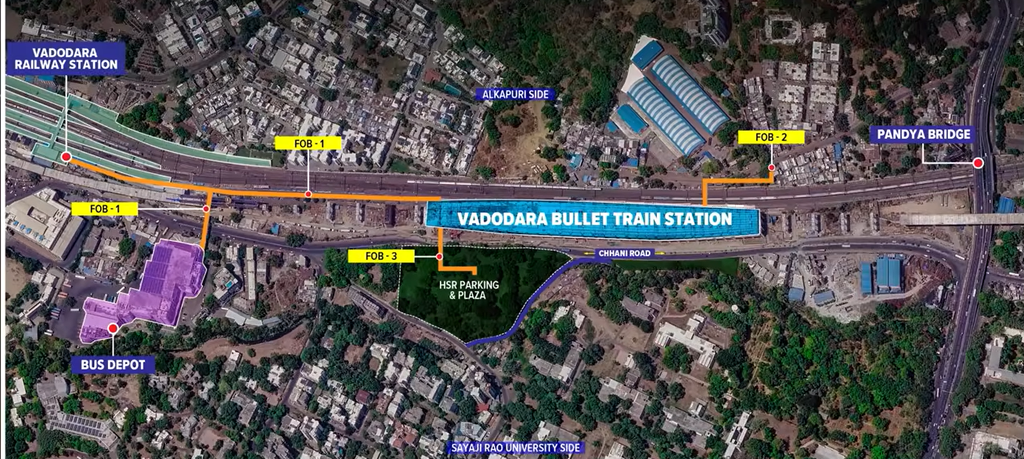
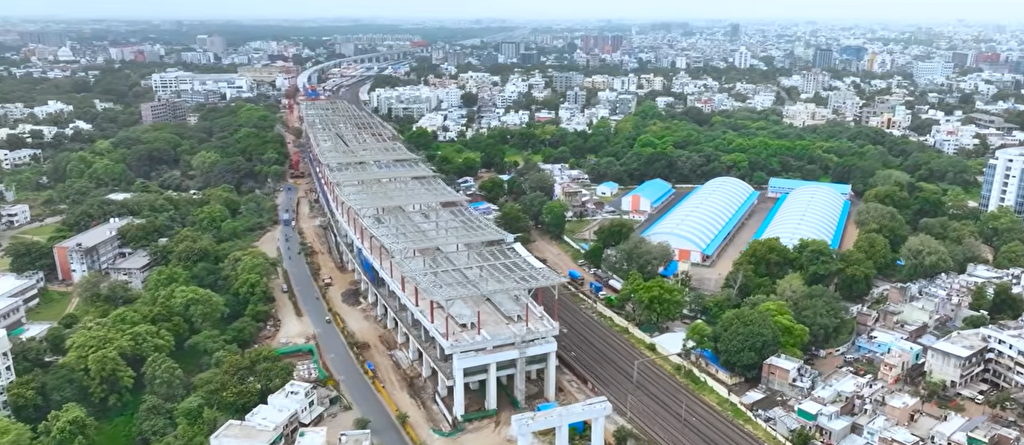
On October 12, 2026, the Ministry of Railways highlighted the successful installation of all 14 heavy portal beams over the Delhi–Mumbai Rajdhani railway line in Vadodara.
The installation was technically demanding because construction had to take place above an operational railway corridor carrying existing train services.
Portal beams form part of the supporting infrastructure required for the elevated bullet train viaduct. Completing their installation enables the next stages of construction in this section.
This milestone is particularly important because the project must integrate new high-speed railway infrastructure with India’s existing transport network while maintaining safety and minimising disruption to current railway operations.
3. Sabarmati River bridge completed in Ahmedabad
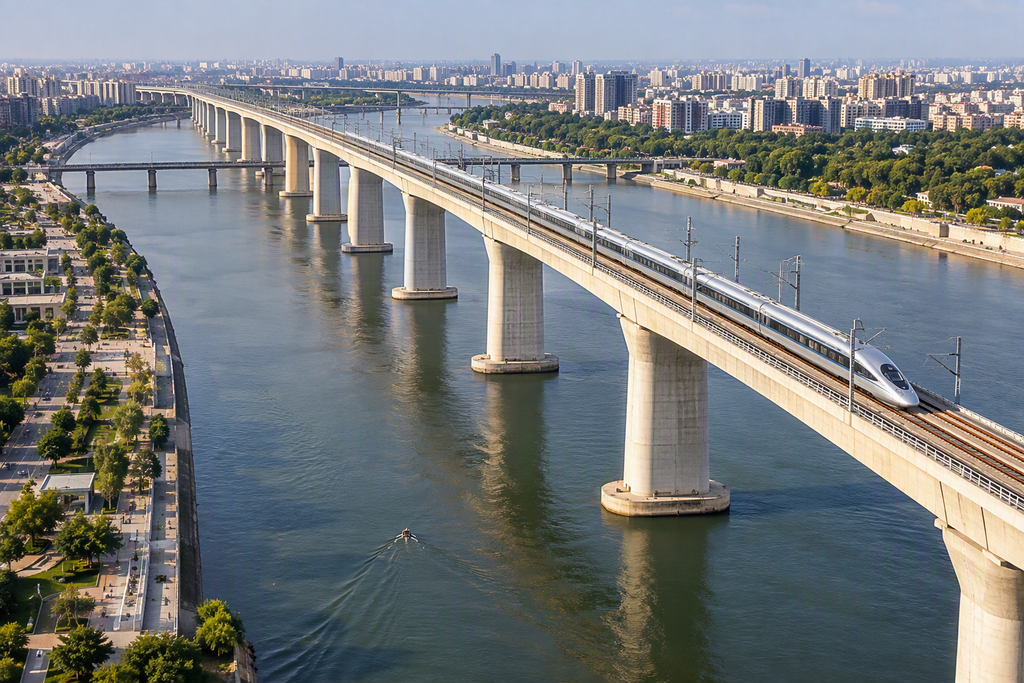
Another significant development was the completion of a 480-metre bridge across the Sabarmati River in Ahmedabad. Reports published in October 2026 stated that the bridge stands approximately 36 metres above the riverbed, equivalent to the height of a 12-storey building.
The structure forms part of the elevated railway corridor approaching Sabarmati. Its design uses longer spans to reduce the number of piers in the riverbed.
River crossings are important engineering components because they must meet structural requirements while accommodating local geography and environmental conditions.
4. India’s first undersea rail tunnel advances
The Mumbai end of the corridor includes one of the project’s most challenging engineering components: a tunnel beneath Thane Creek.
According to the National High Speed Rail Corporation Limited (NHSRCL), the second tunnel-boring machine began excavation from Sawli in Ghansoli towards Vikhroli on July 18, 2026. Approximately seven kilometres of the relevant 10-kilometre stretch will pass beneath Thane Creek.
The broader underground section measures approximately 21 kilometres. Around 16 kilometres between Sawli and Bandra-Kurla Complex (BKC) are being constructed using tunnel-boring machines, while the remaining five kilometres have been completed using the New Austrian Tunnelling Method.
The tunnel is essential to connecting the high-speed corridor with its underground Mumbai terminal. Its construction involves specialised machinery, ground monitoring, tunnel lining and careful management of underground conditions.
5. First steel bridge launched in Maharashtra
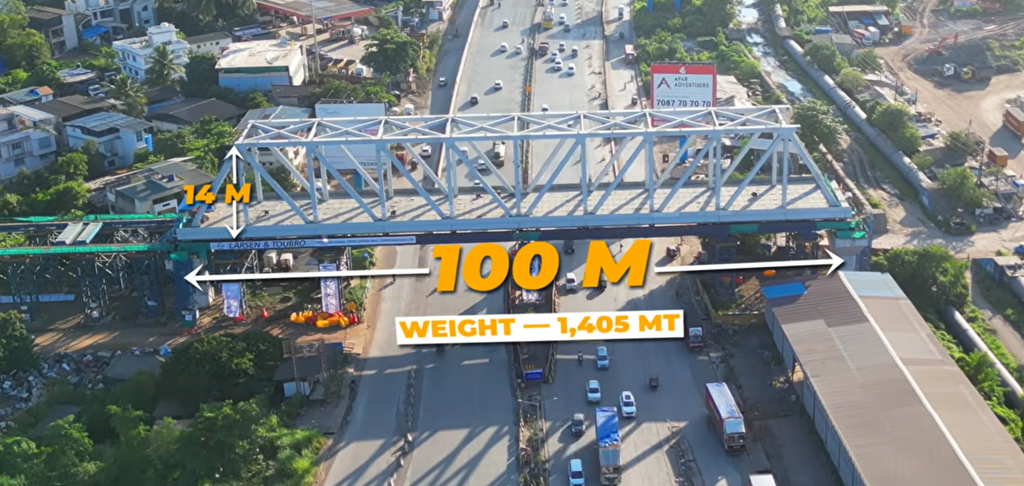
The project also recorded a milestone in Maharashtra with the launch of its first steel bridge. The 100-metre-long structure weighs approximately 1,405 tonnes and was fabricated in Tiruchirappalli, Tamil Nadu, before being transported for installation.
Steel bridges are useful where longer spans are required to cross existing transport infrastructure or other obstacles. Their construction requires precision engineering, specialised fabrication and coordinated installation.
The milestone also illustrates how the project draws on India’s domestic engineering and manufacturing capabilities.
6. BEML receives a ₹5,400 crore rolling-stock contract
In September 2026, state-owned BEML secured an order worth more than ₹5,400 crore from NHSRCL for high-speed rolling stock and associated maintenance work. The contract covers the supply and maintenance of trainsets for the corridor.
Rolling stock is a critical part of the project because trains must be designed to operate safely and reliably at high speeds.
The contract represents an important development for India’s domestic railway manufacturing industry. It also highlights the need to coordinate train production with the completion of tracks, electrical systems and other infrastructure.
7. Electrification and track installation continue
The high-speed corridor requires more than elevated tracks and stations. It also needs advanced traction power, signalling, telecommunications and train-control systems.
NHSRCL has reported the deployment of a 2×25 kV overhead traction system, designed to supply the power required for trains operating at speeds of up to 320 km/h. The system will receive electricity through grid substations and 14 traction substations along the corridor.
Track installation and electrification are progressing alongside civil construction. Their integration will be essential for testing and commissioning the railway.
Mumbai–Ahmedabad Bullet Train: Latest Updates:-
Mumbai–Ahmedabad Bullet Train Project: Route and 12 Stations
The foundation stone of the Mumbai–Ahmedabad Bullet Train Project was laid on 14 September 2017 by Indian Prime Minister Narendra Modi and Japanese Prime Minister Shinzo Abe in Ahmedabad, Gujarat.
The ceremony marked the launch of India’s first high-speed rail corridor, developed with technical and financial cooperation from Japan.
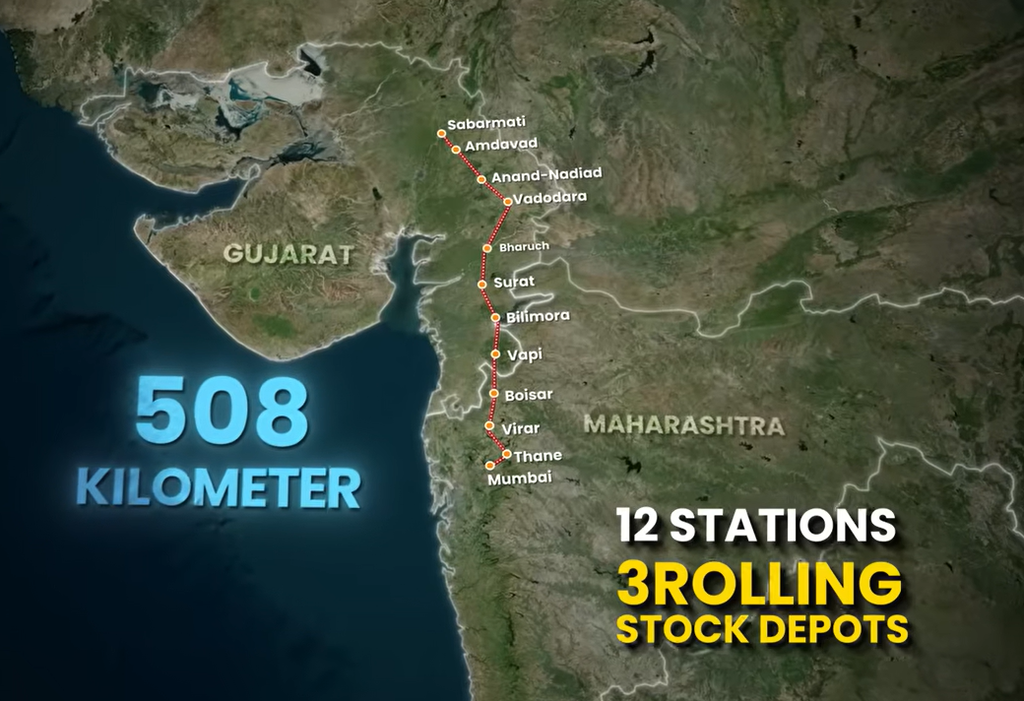
The corridor covers approximately 508 kilometres and passes through Maharashtra, Gujarat and Dadra and Nagar Haveli.
The 12 planned stations in Mumbai–Ahmedabad Bullet Train Project are:
- Mumbai (Bandra-Kurla Complex)
- Thane
- Virar
- Boisar
- Vapi
- Bilimora
- Surat
- Bharuch
- Vadodara
- Anand/Nadiad
- Ahmedabad
- Sabarmati
The route is designed to connect important urban, industrial and commercial centres across western India. Stations such as Surat, Vadodara, Vapi and Bharuch could improve access to faster passenger transport for professionals, business travellers and tourists.
The Mumbai terminal at BKC is being developed underground, while Sabarmati is planned as a multimodal transport hub.
Mumbai–Ahmedabad Bullet Train: Latest Updates:-
How Fast Will India’s First Bullet Train Travel?
The system has a design speed of 350 km/h and a planned operating speed of up to 320 km/h.
The planned fastest journey between Mumbai and Ahmedabad is approximately 1 hour and 58 minutes, according to NHSRCL project information. Actual journey times will depend on the service pattern, station stops and operating conditions.
Compared with conventional rail services, the new corridor is expected to reduce travel time considerably. The potential benefits include faster business travel, improved intercity mobility and more convenient connections between major commercial centres.
The train’s speed advantage depends on the complete railway system, including dedicated tracks, specialised rolling stock, advanced signalling, electrification and carefully engineered bridges and tunnels.
Mumbai–Ahmedabad Bullet Train Project: Expected Launch Date
The initial operating section and the complete corridor have different target dates.
NHSRCL project information in June 2026 indicated that the first high-speed rail service was expected to commence in August 2027. Other reporting has identified the Surat–Bilimora section as an initial operational milestone in 2027, while the full corridor has been reported as targeting completion by the end of 2029.
These dates should be treated as announced targets, not guaranteed opening dates.
Before commercial passenger services begin, the relevant sections must complete construction, railway systems installation, integration, trial runs and safety approvals.
A phased opening could allow a completed section to begin operations before the entire 508-kilometre corridor is ready. The exact launch date and operational boundaries will depend on official commissioning decisions.
Economic Benefits of the Mumbai–Ahmedabad Bullet Train Project
The project is intended to improve more than passenger travel. It could also influence industrial development, employment, tourism and domestic railway manufacturing.
Faster business connectivity
Mumbai and Ahmedabad are important financial, commercial and industrial centres. Faster rail connections could make same-day business trips easier for some passengers and reduce time spent travelling between the cities.
Employment and industrial opportunities
The construction programme requires civil engineers, technicians, electrical specialists, equipment operators and other skilled workers.
Domestic suppliers may also benefit from demand for steel, cement, electrical equipment, railway components and specialised engineering services.
Benefits for Gujarat’s industrial centres
Surat, Vadodara, Bharuch and Vapi have significant manufacturing and commercial activity. Better high-speed connectivity could improve access to markets and support business interactions across the region.
However, the benefits will depend on ticket prices, station accessibility, service frequency and connections with local transport.
Tourism and regional development
Improved connectivity could make multi-city trips more convenient for domestic and international visitors. Hotels, restaurants, transport operators and other local businesses may benefit if passenger demand develops as expected.
Technology transfer and domestic manufacturing
The project is helping develop expertise in high-speed track construction, tunnelling, bridge engineering, traction power and railway systems integration.
These capabilities could support future high-speed rail projects and strengthen India’s domestic railway engineering ecosystem.
Major Challenges Remaining Before Operations Begin
Mumbai–Ahmedabad Bullet Train: Latest Updates:-
Despite substantial construction progress, several tasks remain essential.
Railway systems integration: Tracks, power, signalling, telecommunications and rolling stock must function together reliably.
Tunnel and urban construction: The underground Mumbai section and work near existing railway lines require careful engineering and safety management.
Testing and certification: Trial runs, technical inspections and applicable safety approvals must be completed before passenger services can begin.
Schedule coordination: Stations, depots, trains and railway systems must be ready together. A completed bridge or viaduct does not by itself make a section operational.
Commercial viability: Ticket prices, passenger demand, service frequency and station access will influence the corridor’s long-term success.
These factors will help determine whether the project can meet its announced operational milestones.
Mumbai–Ahmedabad Bullet Train: Latest Updates:-
Frequently Asked Questions (FAQs)
1. What is the latest update on the Mumbai–Ahmedabad Bullet Train Project?
An RTI-based report published on September 25, 2026, put overall physical progress at 62.16%. Recent milestones include completion of the 14 portal beams in Vadodara and the Sabarmati River bridge in Ahmedabad.
2. When will India’s first bullet train start operating?
The first service has been targeted for August 2027, according to project information published in June 2026. The date remains a target and may change depending on construction, testing and commissioning.
3. What is the total length of the bullet train corridor?
The Mumbai–Ahmedabad High-Speed Rail corridor is approximately 508 kilometres long.
4. How many stations will the bullet train have?
The planned corridor includes 12 stations, from Mumbai BKC to Sabarmati, with intermediate stops in Maharashtra and Gujarat.
5. What will be the maximum operating speed?
The planned operating speed is up to 320 km/h, while the railway system has a design speed of 350 km/h.
6. How long will the Mumbai–Ahmedabad journey take?
The planned fastest service is expected to take approximately 1 hour and 58 minutes. Actual journey times may vary according to the timetable and stopping pattern.
7. What is India’s first undersea rail tunnel?
The project includes a tunnel section beneath Thane Creek in Maharashtra. Approximately seven kilometres of the relevant 10-kilometre stretch will pass beneath the creek.
8. Has all the land for the project been acquired?
Yes. The September 2026 RTI-based report stated that all land required for the corridor had been acquired.
9. How much will bullet train tickets cost?
A final commercial fare schedule was not confirmed in the sources reviewed for this article. Passengers should consult official announcements when ticket prices and booking arrangements are released.
10. Who is implementing the project?
The National High Speed Rail Corporation Limited (NHSRCL) is responsible for implementing the Mumbai–Ahmedabad High-Speed Rail Project. Its official website is www.nhsrcl.in.
Mumbai–Ahmedabad Bullet Train: Latest Updates:-
Conclusion.
Mumbai–Ahmedabad Bullet Train: Latest Updates:-
The Mumbai–Ahmedabad Bullet Train Project represents a major step in India’s railway modernisation programme. Construction progress reported in September 2026, the recent Vadodara portal-beam milestone, completion of the Sabarmati River bridge and continuing work on the undersea tunnel demonstrate advances across several critical components.
Nevertheless, construction progress and commercial readiness are different milestones. Track installation, electrification, signalling, rolling stock integration, testing and safety approvals will determine when passengers can begin using the service.
The announced target for the first services in 2027 and the reported full-corridor completion target of the end of 2029 remain important dates to monitor.
If delivered successfully, the corridor could improve connectivity between western India’s major economic centres, support industrial development and build domestic expertise in high-speed rail technology.