
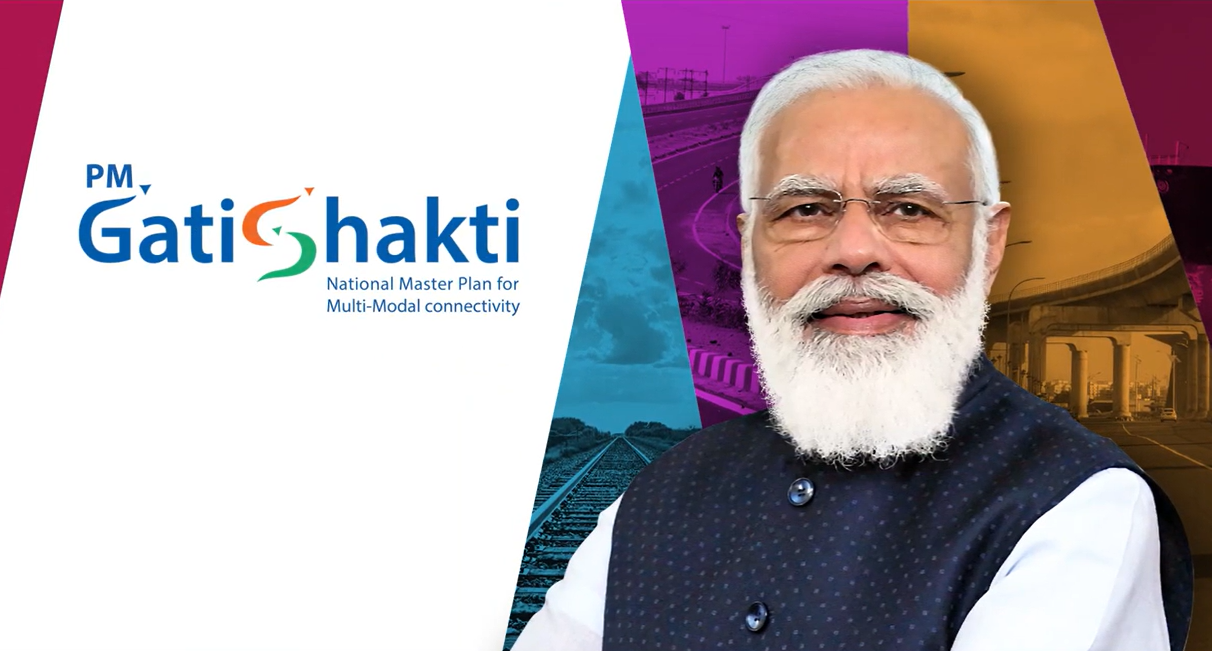
PM Gati Shakti: 5 Years of Infrastructure Growth
Five Years of PM Gati Shakti: Transforming India’s Infrastructure Landscape
India’s infrastructure development is entering a new era in which roads, railways, ports, airports, industrial corridors and logistics facilities are increasingly planned as interconnected networks. At the centre of this transformation is PM Gati Shakti, the National Master Plan for Multi-Modal Connectivity, launched by Prime Minister Narendra Modi on 13 October 2021.
The completion of five years marks an important milestone in India’s efforts to modernise infrastructure planning through digital technology, interdepartmental coordination and geospatial data. Rather than treating each infrastructure project as an isolated investment, the initiative aims to connect transport networks, economic centres and essential services through a common planning framework.
PM Gati Shakti: 5 Years of Infrastructure Growth is an opportunity to examine how this national initiative has evolved, what progress the government has reported, and how integrated planning could support India’s economic ambitions.
According to the Ministry of Commerce and Industry’s October 2026 update, the Network Planning Group (NPG) has evaluated 421 infrastructure projects worth approximately ₹20.23 lakh crore. The digital platform integrates data from 58 Central Ministries and Departments, along with all 36 States and Union Territories, enabling more coordinated infrastructure planning and informed decision-making across India. These figures describe evaluated projects and their estimated value, not the amount already spent or the number of projects completed.
As India advances towards its Viksit Bharat 2047 vision, the initiative’s long-term significance will depend on how effectively coordinated planning translates into completed infrastructure, improved connectivity and measurable benefits for citizens and businesses.
What Is PM Gati Shakti?
PM Gati Shakti is India’s National Master Plan for Multi-Modal Connectivity. Launched in October 2021, by PM Narendra Modi, it was designed to improve coordination between government departments responsible for infrastructure development.
Traditionally, infrastructure projects could be planned separately by different ministries, public-sector organisations and state agencies. This sometimes resulted in overlapping work, missing connections, delays and inefficient use of public resources.
For example, a road might be constructed without sufficient coordination with agencies responsible for water pipelines, electricity cables or telecommunications infrastructure. Subsequent excavation could damage the road, increase maintenance costs and inconvenience commuters.
PM Gati Shakti addresses this challenge by providing a shared digital platform that brings together geographical information, existing infrastructure, economic zones and proposed development projects.
Using Geographic Information System (GIS) technology, planners can examine infrastructure networks together before deciding where and how projects should be developed.
The objective is straightforward: infrastructure should be designed to work as part of a connected system rather than as a collection of independent projects.
PM Gati Shakti: 5 Years of Infrastructure Growth — Key Achievements
Over the five years since its launch, the initiative has evolved into a nationwide platform for integrated infrastructure planning and development.
Key milestones reported by the government in October 2026 include:
- Launch date: 13 October 2021.
- Infrastructure projects evaluated: 421.
- Estimated value of evaluated projects: Approximately ₹20.23 lakh crore.
- Central government participation: 58 Ministries and Departments.
- Geographical coverage: All 36 States and Union Territories.
- Integrated data layers: More than 1,800.
- Digital planning tools: More than 65 software modules and tools.
- Integrated applications: More than 100 mobile and web applications.
These achievements highlight the growing reach and capabilities of India’s digital infrastructure-planning system.
However, evaluating a project under the Network Planning Group mechanism does not mean that it has automatically received every required approval, secured funding or entered operation. The actual outcomes depend on the relevant authorities, project financing, implementation schedules and execution.

Five Years of PM Gati Shakti: Reshaping India’s Infrastructure Development Strategy
The most important change introduced by PM Gati Shakti is its emphasis on integrated planning.
Infrastructure development involves multiple interconnected requirements. A new industrial facility may need road access, railway connectivity, reliable electricity, water supply, telecommunications and access to ports or airports. Planning each requirement separately can create gaps that reduce the overall value of the investment.
Through a common geospatial framework, government departments can examine existing infrastructure and proposed projects in relation to one another.
This approach can help identify missing connections, reduce planning conflicts and improve coordination before construction begins.
The framework also supports the coordination of infrastructure programmes such as Bharatmala, Sagarmala, inland waterways development and regional aviation initiatives under UDAN.
Rather than replacing the responsibilities of individual ministries, the platform provides information that can help them make more coordinated decisions.
This is particularly important for a large economy such as India, where infrastructure projects frequently cross state boundaries and serve several industries simultaneously.
1. Multimodal Connectivity: Linking Roads, Railways, Ports and Airports
Multimodal connectivity is one of the central pillars of PM Gati Shakti.
An efficient logistics network depends on the seamless integration of different modes of transportation. A manufacturer may transport goods by road to a railway terminal, move them by rail to a port and then ship them to an international destination.
If one link is missing or poorly connected, the entire supply chain can become slower and more expensive.
Integrated planning helps identify where transport networks need better connections. It can also support decisions about the location of freight terminals, logistics parks, industrial clusters and transport hubs.
Road connectivity
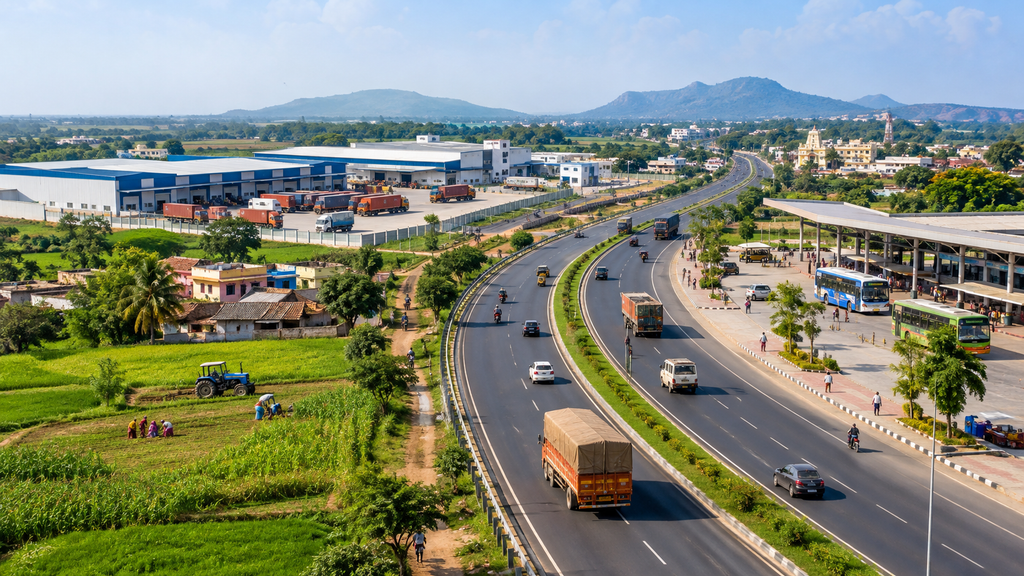
National highways, expressways and regional roads connect manufacturing centres, agricultural markets, warehouses and population centres. Coordinated planning can help improve access to important economic destinations.
Railway connectivity
Railways are essential for transporting bulk commodities, industrial materials and freight over long distances. Better integration between railway infrastructure and industrial areas can help improve freight movement.
Port and waterway connectivity
Ports connect Indian businesses with global markets. Efficient road and railway connections to ports can support cargo movement and improve supply-chain reliability.
Airport connectivity
Airports facilitate passenger travel, time-sensitive cargo movement and regional economic development. Their integration with other transport systems can improve accessibility for businesses and travellers.
The wider objective is to ensure that investment in one transport mode complements the capabilities of other modes.
2. How PM Gati Shakti Can Improve Logistics Efficiency
Logistics performance is a major factor in manufacturing competitiveness, agricultural distribution and international trade.
The cost of transporting goods depends on several factors, including distance, fuel consumption, handling, warehousing, delivery schedules and the reliability of transport infrastructure.
PM Gati Shakti can support logistics efficiency by helping planners identify missing links and coordinate investments across transport networks.
For example, an industrial area with good road access but no convenient railway freight connection may face limitations when transporting heavy goods. A coordinated planning process can help identify this gap and evaluate possible solutions.
Similarly, improved connections between agricultural production areas, warehouses and major markets can help businesses move products more efficiently.
Potential benefits include:
- Shorter and more efficient transportation routes.
- Improved coordination between freight terminals and transport corridors.
- Better access to ports and industrial clusters.
- Fewer infrastructure conflicts during project planning.
- More predictable movement of goods.
- Improved access to domestic and international markets.
These benefits are not automatic. Actual logistics improvements depend on infrastructure completion, service quality, operating efficiency and effective implementation.
Logistics and Multimodal Connectivity

3. GIS Technology and Digital Infrastructure Planning
Technology is central to the development of PM Gati Shakti.
The platform combines geographical information with infrastructure and economic data, allowing planners to assess different requirements through a common digital interface.
According to the government’s October 2026 update, the system integrates more than 1,800 data layers and supports planning through over 65 software modules and tools, alongside more than 100 mobile and web applications.
Geographic Information System mapping
GIS technology enables planners to view roads, railway lines, industrial areas, utilities and geographical features together. This can help identify connectivity gaps and evaluate possible project locations.
Better coordination through shared data
When participating departments can access relevant infrastructure information, they can consider the potential effects of their plans on other projects.
Data-driven decision-making
Geospatial information can help planners compare routes, examine geographical constraints and assess the relationship between proposed infrastructure and economic activity.
Public access to selected information
The PM Gati Shakti public platform, launched in September 2025, extended selected geospatial data-analytics capabilities to private entities and the public through a query-based mechanism.
This development can help eligible users access relevant information for infrastructure planning and investment decisions, subject to the platform’s access arrangements.
Digital systems alone cannot eliminate every planning challenge. Their effectiveness depends on reliable information, regular data updates, skilled personnel and cooperation among participating agencies.
4. Supporting Industrial Growth and Manufacturing
Infrastructure quality influences where businesses invest, how efficiently factories operate and how quickly goods reach customers.
Manufacturers need reliable transport links, utilities, industrial land and access to suppliers. When these requirements are not properly coordinated, businesses may face higher operating costs and supply-chain delays.
PM Gati Shakti can help planners examine infrastructure requirements around industrial clusters and economic zones.
For example, an electronics manufacturing facility may need dependable road access for components, a logistics network for finished products and reliable utilities to maintain production. A coordinated planning approach can help identify these requirements earlier.
Potentially relevant sectors include:
- Electronics and semiconductor manufacturing.
- Automobile and engineering industries.
- Pharmaceuticals and healthcare products.
- Textiles and apparel.
- Food processing and agricultural exports.
- Warehousing and logistics services.
Better connectivity may also help small and medium-sized businesses access suppliers and markets beyond their immediate regions.
Nevertheless, infrastructure is only one part of industrial competitiveness. Investment also depends on skills, technology, finance, regulatory conditions and market demand.
5. Benefits of PM Gati Shakti for Citizens and Regional Development
The value of infrastructure extends beyond freight movement and industrial growth.
Well-planned connectivity can improve access to employment, healthcare, education, markets and other essential services.
Improved access to services
Better transport connections can make it easier for people in remote and underserved areas to reach hospitals, educational institutions and government facilities.
Employment opportunities
Infrastructure projects can generate employment during construction and create longer-term opportunities in transportation, maintenance, logistics and related industries.
The scale of these opportunities depends on individual projects and their wider economic effects.
Better rural connectivity
Improved road and logistics links can help farmers and rural businesses reach markets, warehouses and processing facilities.
Balanced regional development
Geospatial planning can help authorities identify infrastructure gaps and assess the needs of different districts. Effective investment decisions are necessary to ensure that less-connected regions benefit from the process.
More efficient use of public resources
Better coordination may reduce unnecessary duplication and help authorities identify opportunities to use existing infrastructure more effectively.
For these benefits to reach citizens, planning must be accompanied by adequate funding, timely execution, maintenance and appropriate public-service delivery.
Infrastructure and Regional Development
6. Expanding Infrastructure Planning to Districts and Social Services
An important development in the evolution of PM Gati Shakti is the expansion of integrated planning beyond major transport infrastructure.
District-level planning can help authorities examine infrastructure requirements according to local conditions. Different districts have different needs: an industrial district may prioritise freight connectivity, while a rural district may need improved access to hospitals, schools and agricultural markets.
A common geospatial framework can support the identification of these requirements and help coordinate the work of relevant departments.
The approach can also support social-sector planning, including the location and connectivity of schools, healthcare facilities and water-related infrastructure.
This broader application is significant because infrastructure development is not only about connecting major cities. It is also about improving the accessibility of services and economic opportunities across regions.
However, a digital map cannot replace local consultation or detailed project assessments. District plans must reflect community needs, land conditions, available funding and the requirements of the relevant authorities.
7. Major Challenges Facing PM Gati Shakti
Despite its progress, PM Gati Shakti faces challenges that will influence its long-term impact.
Project execution and delays
Planning and project evaluation are important stages, but infrastructure must still pass through applicable approvals, land acquisition, procurement and construction.
Data accuracy
Outdated or incomplete geographical information can affect the quality of planning decisions. Continuous updates and data validation are essential.
Interdepartmental coordination
Different agencies may have different priorities, budgets and implementation schedules. Effective coordination requires sustained administrative cooperation.
Environmental and social safeguards
Infrastructure projects must consider environmental impacts, land-use restrictions, ecological sensitivity and affected communities. Integrated planning should support responsible development rather than bypass necessary safeguards.
Measuring real outcomes
The number of projects evaluated and their estimated value demonstrate the scale of planning activity. They do not, by themselves, establish how much travel time has been saved or how much logistics costs have declined.
A robust assessment should examine completed projects, actual connectivity improvements, implementation delays, service quality and economic outcomes.
8. The Road Ahead: PM Gati Shakti and Viksit Bharat 2047
India’s ambition to become a developed economy by 2047 will require infrastructure that supports manufacturing, trade, urban development, energy security and regional connectivity.
PM Gati Shakti can contribute by helping government agencies coordinate infrastructure investments and identify gaps across transport and economic networks.
The government’s October 2026 update also highlights the planned role of an Integrated Transport and Logistics Authority in strengthening multimodal connectivity and long-term transport planning.
Going forward, the priorities should include better last-mile connectivity, stronger links between industrial clusters and freight networks, improved data quality and more transparent monitoring of project implementation.
The expansion of district-level planning and selected public access to geospatial information may also help broaden the initiative’s usefulness.
Ultimately, infrastructure planning must be judged by its outcomes. Completed projects, reliable transport connections, improved access to services and more efficient logistics will provide a clearer measure of success than digital coverage alone.
Conclusion: Five Years of PM GatiShakti and India’s Infrastructure Future
The five-year milestone of PM Gati Shakti represents an important development in India’s approach to infrastructure planning. By bringing together geospatial data, government departments and infrastructure networks, the initiative aims to make planning more coordinated and decisions better informed.
The evaluation of 421 projects worth approximately ₹20.23 lakh crore, alongside the integration of more than 1,800 data layers, demonstrates the scale of the system reported by the government in October 2026.
However, the true measure of progress will be how effectively this planning framework supports infrastructure completion, improved connectivity, efficient logistics and better access to essential services.
As India moves towards Viksit Bharat 2047, coordinated infrastructure development can help strengthen economic competitiveness and regional opportunities. Sustained implementation, accurate data and transparent performance measurement will determine how much of this potential becomes a practical benefit for the country.
Frequently Asked Questions (FAQs)
1. What is PM Gati Shakti?
PM Gati Shakti is India’s National Master Plan for Multi-Modal Connectivity, launched on 13 October 2021. It uses a shared geospatial platform to support coordinated infrastructure planning.
2. When did PM Gati Shakti complete five years?
The initiative completed five years on 13 October 2026, marking five years since its launch.
3. How many projects has PM Gati Shakti evaluated?
The government reported that the Network Planning Group had evaluated 421 infrastructure projects worth approximately ₹20.23 lakh crore by October 2026.
4. How does PM Gati Shakti use technology?
It uses GIS-based mapping, geospatial data and digital planning tools to help government agencies examine infrastructure networks and coordinate proposed projects.
5. What are the main benefits of PM Gati Shakti?
Its intended benefits include better multimodal connectivity, improved last-mile access, more coordinated project planning, potentially more efficient logistics and better access to economic opportunities.
6. Does PM Gati Shakti directly fund every infrastructure project?
No. It provides an integrated planning framework. Individual ministries, departments and state governments remain responsible for project approvals, funding and implementation under their respective procedures.
7. How can PM Gati Shakti support Viksit Bharat 2047?
It can support India’s long-term development by improving infrastructure coordination, connecting economic centres and helping planners identify transport and service-delivery gaps.
Editorial View
PM Gati Shakti: 5 Years of Infrastructure Growth, highlight the importance of planning infrastructure as a connected national system rather than a series of isolated projects. Its next challenge is to translate digital coordination into completed projects and measurable improvements in logistics, public services and regional connectivity. The initiative’s long-term success will depend on execution, accountability and tangible benefits for citizens and businesses.
Official Sources
- Press Information Bureau, Ministry of Commerce and Industry: Five Years of PM GatiShakti: Transforming India’s Infrastructure Planning
- Press Information Bureau: PM GatiShakti National Master Plan Completes Five Years
- Ministry of New and Renewable Energy: PM Gati Shakti National Master Plan