
Europe Protests 2026: 6 Shocking Reasons Behind the Unrest
Europe Protests 2026: 6 Shocking Reasons Behind the Unrest has become an important topic in international affairs as demonstrations over rising living costs, fuel prices, housing shortages and public services spread across several European countries. France, Italy, Belgium, Spain, Portugal and Albania have witnessed significant unrest, although the causes and scale of demonstrations differ from country to country.
The latest developments raise an important question: why are people in some of the world’s developed economies increasingly dissatisfied with their governments?
The answer is not limited to immigration or inflation. Economic pressure, energy insecurity, declining confidence in political institutions, youth unemployment and disputes over public spending are also contributing to the wider debate.
In this article, we examine six major reasons behind the European protests, explore their potential political and economic consequences, and consider what India’s infrastructure-led development approach can teach policymakers about long-term economic resilience.
Europe Protests 2026: What Is Happening Across the Continent?
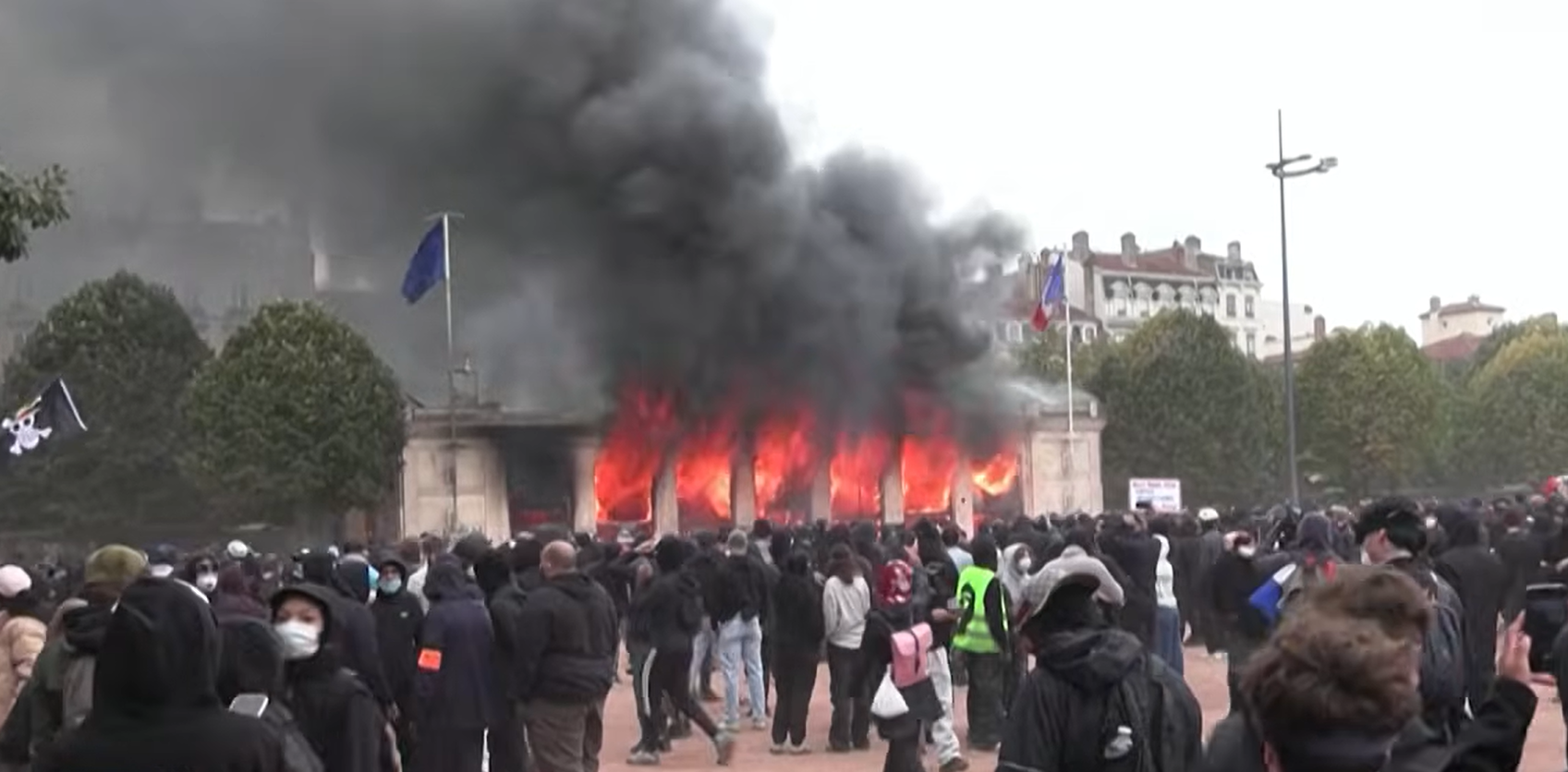
The recent demonstrations have highlighted the economic and social pressures facing European governments. In France, protests over the cost of living and public services have coincided with student demonstrations and episodes of violence. Italy has also experienced unrest over living costs and public services, while housing affordability and low wages have become major concerns in Portugal and Spain.
Belgium has witnessed demonstrations involving students and other groups, while protests in Albania have included demands concerning government accountability, employment and education.
According to recent reporting, the demonstrations are not necessarily part of one centrally coordinated movement. Instead, different groups are expressing overlapping grievances in different countries. Rising prices, inadequate public services and uncertainty about the future have become common themes.
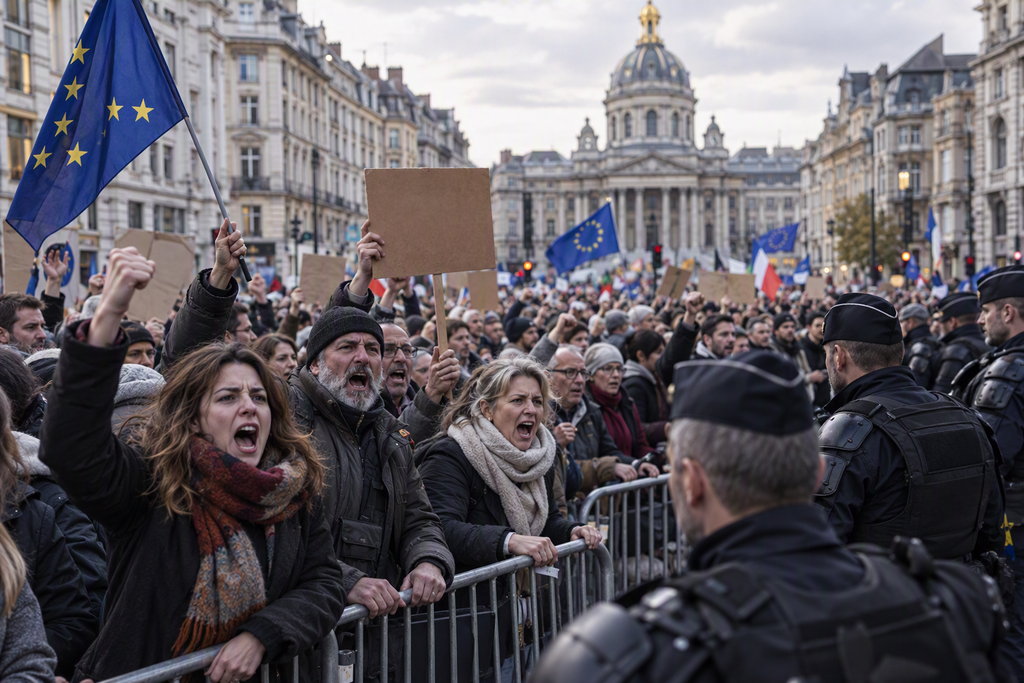
6 Shocking Reasons Behind Europe Protests 2026
1. Rising Inflation and the Cost-of-Living Crisis
One of the most important reasons behind Europe Protests 2026 is the pressure on household budgets.
When food, electricity, transport, rent and fuel become more expensive, families must make difficult financial decisions. Even people who remain employed can struggle if wages do not increase at the same pace as everyday expenses.
Fuel prices are particularly important because they affect much more than the cost of filling a vehicle. Higher transport costs can increase the prices of food, manufactured products and other essential goods. Businesses may also face higher operating expenses, putting pressure on wages, investment and hiring.
Recent reporting has identified rising fuel costs and the broader cost-of-living crisis as major factors behind demonstrations across Europe. The energy shock has added pressure to economies already dealing with longer-term financial challenges.
For governments, the challenge is to control inflation without weakening economic growth. Financial assistance may help vulnerable households, but prolonged price increases can place additional pressure on public finances.
Why it matters: When people feel that their incomes can no longer support a reasonable standard of living, economic dissatisfaction can turn into political opposition.

2. Immigration and Social Tensions
Immigration is another major issue in European political debates. Governments must balance border management, labour-market needs, humanitarian responsibilities and the integration of newcomers into society.
Some residents worry about pressure on housing, public services, schools and employment opportunities. These concerns can become politically significant when communities already face high living costs or shortages of affordable accommodation.
However, it is important to distinguish public perceptions from established evidence. Immigration does not automatically cause economic hardship, crime or social unrest. Its effects depend on factors such as employment opportunities, housing supply, integration policies, public investment and local economic conditions.
The available reporting on the latest protests identifies economic insecurity, education, housing and public services as significant grievances. It does not establish immigration as the single cause of the demonstrations or demonstrate that the unrest was orchestrated by a foreign government.
Political parties may nevertheless use immigration as an election issue, particularly when voters are concerned about public spending, national identity or pressure on local infrastructure.
Why it matters: Poorly managed integration and insufficient public investment can intensify social tensions, while simplistic political explanations can distract from the practical solutions communities need.
3. Europe’s Energy Crisis and Geopolitical Dependence
Energy security is central to understanding Europe’s economic difficulties.
European economies depend on reliable supplies of oil, natural gas and electricity. When international conflicts disrupt energy markets, the effects can spread rapidly through transport, manufacturing, agriculture and household budgets.
The Russia-Ukraine war previously forced European governments to reconsider their dependence on Russian energy. More recently, the conflict involving the United States and Iran has added further pressure to energy markets, according to current reporting. The resulting increases in fuel and gas costs have contributed to concerns about Europe’s economic outlook.
Higher energy prices can create a difficult situation for governments. Supporting households and businesses may require additional spending, while expensive imports can weaken purchasing power and increase operating costs.
This is also a geopolitical challenge. European governments must balance energy affordability, national security, environmental objectives and relationships with international partners.
The suggestion that the United States deliberately caused Europe’s protests is a separate and unproven political claim. Energy-market disruptions can have international consequences without establishing that a government intended to trigger demonstrations.
Why it matters: Diversified energy supplies, improved efficiency, renewable energy investment and stronger infrastructure can help countries reduce their exposure to external shocks.
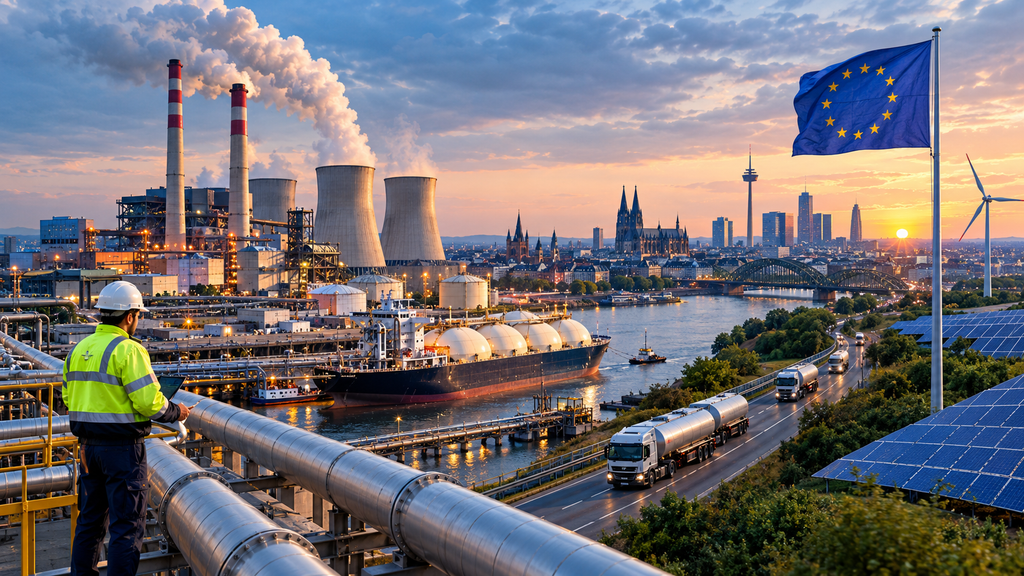
Europe’s energy challenge
4. Political Distrust and Frustration With Governments
Economic problems become more difficult to manage when citizens lose confidence in political institutions.
People may accept temporary hardship if they believe their government is acting fairly, communicating clearly and working towards a credible solution. However, dissatisfaction can grow when public services deteriorate, political promises remain unfulfilled or citizens feel that decision-makers do not understand their everyday problems.
Europe Protests 2026 also highlights the challenge of responding to demonstrations while maintaining public order.
Governments must distinguish between peaceful protesters expressing legitimate concerns and individuals committing violence, vandalism or looting. Protecting public safety is important, but so is ensuring that peaceful demonstrations can take place within the law.
In France, President Emmanuel Macron has acknowledged legitimate concerns about rising prices and public services while condemning violence and destruction. This illustrates the difficult balance facing political leaders during periods of unrest.
Political distrust can also create opportunities for opposition parties that promise major changes to economic policy, taxation, immigration or public spending.
Why it matters: Transparent decision-making, accountable institutions and effective public services can help rebuild trust and reduce the risk of prolonged unrest.
5. Youth Frustration, Education and Housing Shortages
Young people are among the groups most affected by uncertainty about employment, education and housing.
In many cities, rising rents make it difficult for students and young professionals to live independently. Education costs, inadequate facilities and concerns about future employment can add to this pressure.
Recent demonstrations in Europe have included demands concerning education funding, school conditions and housing affordability. In Portugal, for example, protests have focused on low wages, housing costs and difficulties finding affordable accommodation. In France, student-led demonstrations have intersected with wider public dissatisfaction.
These problems are particularly serious when young people believe that studying hard and obtaining employment will not allow them to achieve financial independence.
Housing shortages are not solved simply by announcing financial assistance. Governments also need to consider planning rules, construction capacity, transport connectivity, the supply of affordable homes and access to employment centres.
Similarly, improving education requires investment in facilities, teacher recruitment, training and links between education and the labour market.
Why it matters: Countries that fail to address the concerns of younger generations risk losing public confidence and weakening their future economic potential.
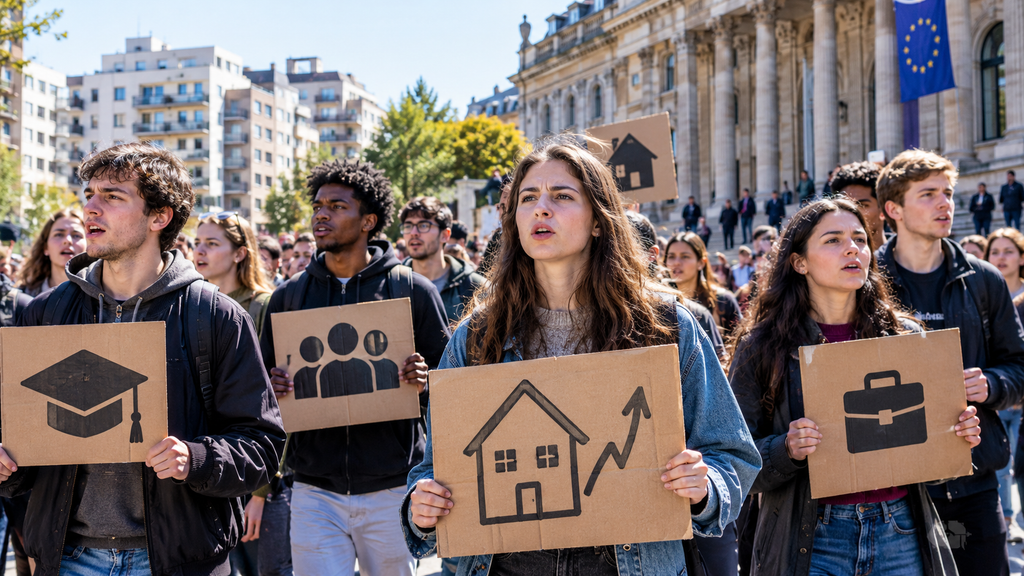
Youth and housing pressures
6. Political Polarisation and the Influence of International Politics
The sixth reason is the growing connection between domestic economic problems and international political competition.
When protests occur in major European countries, political leaders and commentators may use the images to support their own arguments about immigration, energy policy, government spending or national security.
In the United States, Donald Trump and other political figures have made immigration and border enforcement important parts of their political messaging. European unrest can become relevant to these debates because it provides examples that supporters and opponents interpret differently.
However, there is an important distinction between benefiting politically from an event and causing that event.
The fact that a politician uses European protests to support an argument does not establish that the politician organised, financed or deliberately triggered the protests.
The same caution applies to claims that all the demonstrations across Europe are part of one coordinated geopolitical operation. The reporting available so far describes protests with different national circumstances and overlapping economic and social concerns.
Europe Protests 2026 therefore needs to be understood through a combination of domestic policy failures, economic pressures and political competition rather than a single explanation.
Why it matters: Reliable analysis should separate verified events from political claims and examine the evidence before assigning responsibility.
How Could the Protests Affect Europe’s Economy?
The consequences could extend beyond the streets where demonstrations take place.
First, prolonged unrest can disrupt businesses, transport networks, tourism and retail activity. Damage to commercial property can increase costs for business owners and employees.
Second, governments may face pressure to increase spending on energy support, housing, education or public services. Such measures can help households, but they may also complicate efforts to control budget deficits.
Third, political uncertainty can influence investment decisions. Businesses generally prefer predictable regulations, stable public institutions and reliable infrastructure.
Fourth, widespread dissatisfaction can affect elections. Parties offering changes to energy policy, immigration rules or taxation may gain support, putting additional pressure on established political leaders.
These outcomes are not inevitable, and the impact will vary across countries. Governments that respond effectively to public concerns may be able to restore confidence more quickly.
What Can India Learn From Europe’s Economic Challenges?
India faces its own challenges, including employment generation, affordable housing, energy security, infrastructure financing and regional development. However, India’s development priorities also offer an opportunity to examine how long-term planning can strengthen economic resilience.
This is where the related topic Five Years of PM GatiShakti: Transforming India’s Infrastructure Planning becomes relevant.
Launched on 13 October 2021, the PM GatiShakti National Master Plan was designed to improve coordination across infrastructure sectors through a shared geospatial planning platform.
According to the Press Information Bureau, the framework covers 58 Central Ministries and Departments and all 36 States and Union Territories. It brings infrastructure information together to support more coordinated planning of roads, railways, ports, airports, waterways and logistics networks.
Why PM GatiShakti Matters for Economic Resilience
1. Better connectivity: Coordinated infrastructure can help connect industrial centres, agricultural regions, ports and markets.
2. Improved logistics: Better links between transport modes can reduce delays and make the movement of goods more efficient.
3. More informed planning: Geospatial data helps planners identify infrastructure gaps and assess the connections between proposed projects and existing networks.
4. Support for economic activity: Efficient infrastructure can improve access to jobs, services and commercial opportunities.
5. Long-term development: Integrated planning can help governments coordinate infrastructure investments across different regions and sectors.
PM GatiShakti cannot eliminate inflation or prevent every economic shock. Nevertheless, coordinated infrastructure, efficient logistics and reliable transport networks can strengthen the foundations of long-term economic growth.
The wider lesson is that economic resilience depends not only on managing immediate crises but also on building systems that help businesses and households withstand future disruptions.
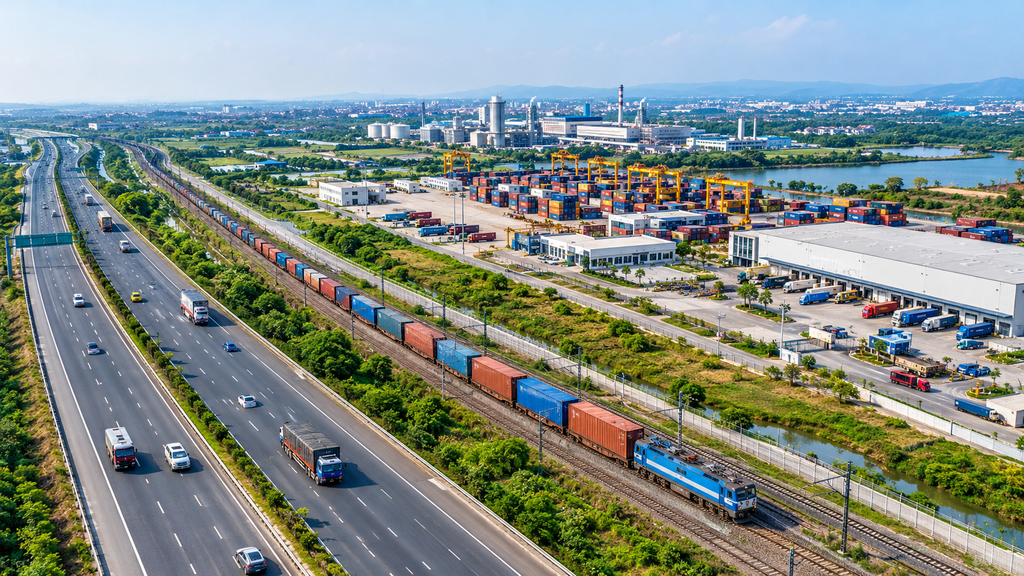
India’s infrastructure planning
What Happens Next? The Future of Europe Protests 2026
The future of the protests will depend on how governments respond to the underlying grievances.
If fuel prices remain high, housing stays unaffordable and public services fail to improve, dissatisfaction may continue. If governments provide credible solutions, engage with citizens and restore confidence, tensions may ease.
Several policy priorities stand out:
- Address the cost of living: Target assistance towards households most affected by high prices while pursuing sustainable economic policies.
- Improve housing access: Increase the supply of affordable homes and improve transport connections to employment centres.
- Strengthen public services: Invest in education, healthcare and essential infrastructure where shortages are contributing to public frustration.
- Improve energy security: Diversify energy sources and reduce exposure to international supply disruptions.
- Maintain democratic accountability: Protect peaceful protest while enforcing the law against violence and vandalism.
- Use evidence-based policymaking: Assess immigration, employment and public-spending policies using reliable data rather than political slogans.
The developments associated with Europe Protests 2026 demonstrate how different problems can combine to create a wider crisis of public confidence.
For policymakers, the challenge is not simply to restore order. It is to address the economic and social conditions that brought people onto the streets in the first place.
Key Takeaways
- Europe Protests 2026 reflects a combination of rising living costs, energy pressures, housing concerns and dissatisfaction with public services.
- Immigration is an important political debate, but it should not be treated as the proven cause of every protest.
- Energy-market disruptions and geopolitical conflicts can increase economic pressure across national borders.
- Political figures may use unrest to support their arguments, but political benefit does not prove responsibility for causing it.
- Young people face particular concerns involving education, housing affordability and employment prospects.
- Five Years of PM GatiShakti: Transforming India’s Infrastructure Planning offers a related perspective on the importance of coordinated infrastructure and long-term economic resilience.
Europe Protests 2026: 6 Shocking Reasons Behind the Unrest:
Frequently Asked Questions (FAQs)
1. Why are protests taking place across Europe in 2026?
Recent protests have been driven by a range of issues, including rising living costs, fuel prices, housing shortages, education concerns and dissatisfaction with public services. The specific causes vary by country.
2. Which European countries have experienced recent protests?
Recent reporting has described demonstrations in France, Italy, Belgium, Spain, Portugal and Albania, alongside unrest or emerging protest activity in other European countries. The scale and causes differ between locations.
3. Is immigration the main reason behind Europe Protests 2026?
Immigration is part of the wider political debate, but the available reporting identifies economic pressures, housing, education and public services as significant concerns. It would be misleading to attribute all the protests to immigration.
4. How does inflation contribute to protests?
Inflation reduces purchasing power when prices rise faster than household incomes. Higher expenses for food, fuel, electricity and housing can increase financial insecurity and public dissatisfaction.
5. How can geopolitical conflicts affect Europe’s economy?
International conflicts can disrupt energy supplies and trade, increase transport and production costs, and create uncertainty for businesses and households.
6. What is PM GatiShakti?
PM GatiShakti is India’s National Master Plan for coordinated infrastructure planning. It uses a geospatial digital platform to bring infrastructure information from different ministries and government bodies together.
7. What is the main lesson from Europe’s protests?
The main lesson is that economic stability depends on more than headline growth figures. Affordable housing, reliable public services, energy security, employment opportunities and public trust are also essential.
Conclusion
Europe Protests 2026: 6 Shocking Reasons Behind the Unrest highlights a complex combination of economic pressures, public dissatisfaction and political debate. Rising fuel prices, housing difficulties, education concerns and uncertainty about the future have contributed to demonstrations in several countries.
Immigration and international politics also shape the debate, but claims about responsibility must be supported by evidence rather than assumptions.
The long-term challenge for European governments is to restore confidence by addressing the practical problems faced by households and businesses. India’s experience with coordinated infrastructure planning, including PM GatiShakti, offers a useful complementary perspective on the importance of connectivity, planning and economic resilience.
Ultimately, lasting stability depends not only on controlling unrest but also on building economies in which people can access opportunities, afford essential services and trust their institutions.