
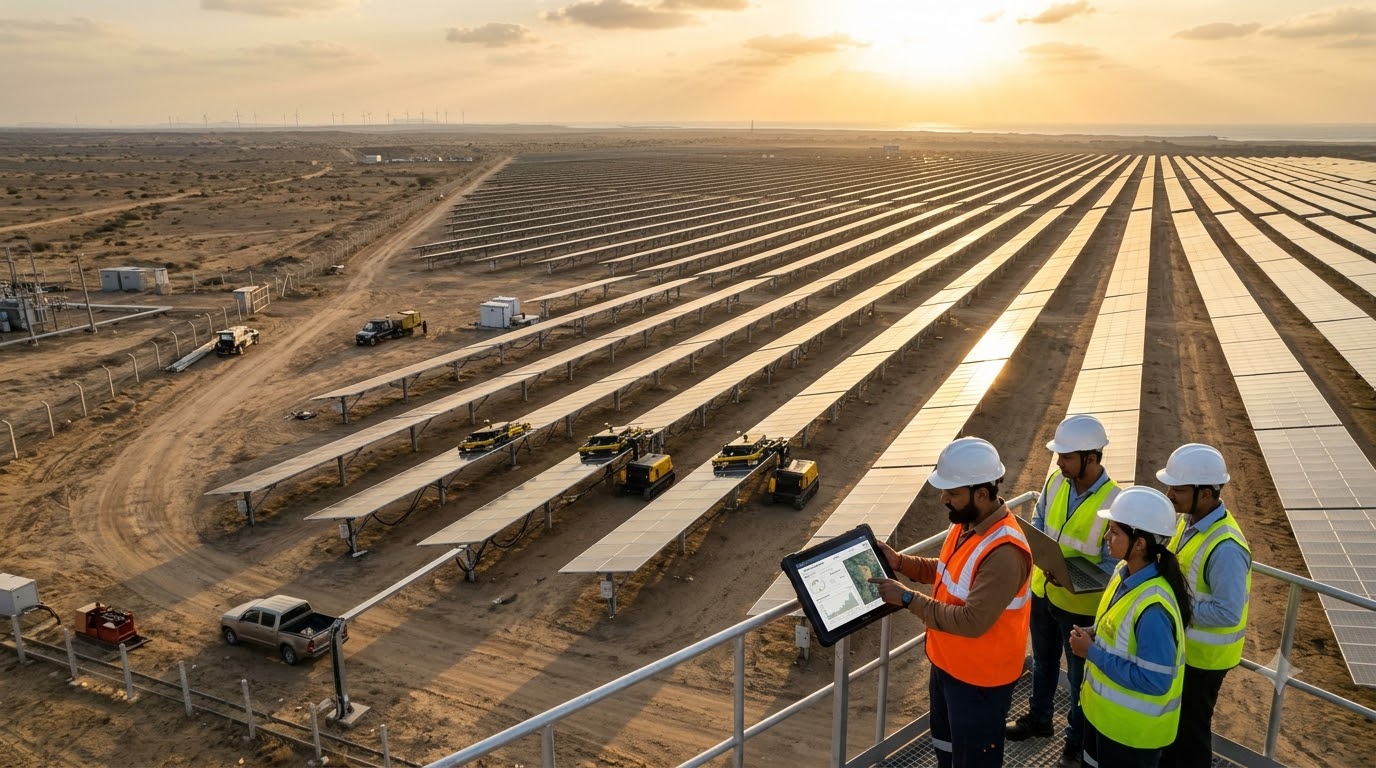
Adani Green Energy Hits 20,280 MW with 139 MW Soalr Boost
Adani Green Energy Hits 20,280 MW with 139 MW Solar Boost as the renewable energy major operationalises another solar power project at Khawda in Gujarat. The latest 139 MW addition has pushed the company’s total operational renewable energy generation capacity to 20,280.80 MW, taking it beyond the significant 20 GW milestone.
The new solar facility was commercially operationalised on September 1, 2026, at 2:05 P.M., after the required clearances were received. The project was executed through Adani Green Energy Twenty Six A Limited, a wholly owned step-down subsidiary of Adani Green Energy Limited (AGEL).
The development is particularly important because Khavda has become the centre of AGEL’s massive renewable energy expansion. The company is developing a large-scale renewable energy complex at the site, combining solar, wind, hybrid renewable generation and battery energy storage.
The latest commissioning also comes as AGEL continues to expand its energy-storage capabilities. Its total operational Battery Energy Storage System (BESS) capacity has reached 3,551 MWh, strengthening the company’s ability to integrate variable renewable generation with storage infrastructure.
Adani Green Energy Hits 20,280 MW with 139 MW Solar Boost: Key Highlights
The latest project marks several important milestones for the company and India’s renewable energy sector.
| Key Parameter | Details |
|---|---|
| Company | Adani Green Energy Limited |
| New solar capacity | 139 MW |
| Project location | Khavda, Gujarat |
| Commercial operation | September 1, 2026 |
| Total operational renewable capacity | 20,280.80 MW |
| Operational BESS capacity | 3,551 MWh |
| Project subsidiary | Adani Green Energy Twenty Six A Limited |
| Major renewable hub | Khavda, Gujarat |
| Long-term capacity target | 50 GW by 2030 |
The 139 MW project may appear relatively small compared with AGEL’s overall portfolio, but its commissioning has symbolic importance because it takes the company’s operational renewable generation capacity beyond 20 GW.
Adani Green Energy Hits 20,280 MW: What Changed?
The biggest immediate change is the increase in AGEL’s operational renewable generation capacity.
Before the latest addition, the company had reported operational renewable capacity of around 20,142 MW as of June 30, 2026. The commissioning of the 139 MW Khavda solar facility has now taken the total to 20,280.80 MW.
The project became commercially operational following the necessary clearances. AGEL informed the stock exchanges that the decision to commercially operationalise the plant was taken at 2:05 p.m. on September 1, 2026.
This is more than a routine capacity addition.
Crossing the 20 GW operational mark demonstrates the scale of renewable infrastructure that AGEL has built across India. The company’s portfolio includes solar, wind and hybrid renewable energy projects, with Khavda accounting for a major share of its recent growth.
Why Adani Green Energy Hits 20,280 MW Matters
The significance of Adani Green Energy Hits 20,280 MW with 139 MW Solar Boost extends beyond the latest plant.
Renewable energy companies are under increasing pressure to build capacity quickly while also ensuring that electricity can be integrated reliably into the grid.
A 20 GW-plus operational renewable portfolio provides AGEL with a substantial generation base. It also positions the company to participate in India’s expanding requirement for clean electricity.
The milestone is particularly relevant as electricity consumption increases because of industrialisation, urbanisation, digital infrastructure, electric mobility and expanding commercial activity.
Solar power can play a major role in meeting additional electricity demand without increasing dependence on fossil fuels.
However, large renewable portfolios also create a need for storage and transmission infrastructure. This is why AGEL’s simultaneous expansion of BESS capacity is strategically important.
Adani Green Energy Hits 20,280 MW Through Khavda Expansion
Khavda has emerged as the most important location in AGEL’s renewable energy expansion strategy.
The company is developing an enormous renewable energy project at Khavda in Gujarat’s Kutch region. The site covers approximately 538 square kilometres, according to AGEL’s disclosures, and is designed to combine multiple renewable technologies.
As of the June 2026 quarter, operational capacity at Khavda had reached approximately 10.3 GW, up sharply from 5.6 GW a year earlier.
That rapid growth explains why the latest 139 MW facility is important even though it represents only a fraction of the company’s total operational portfolio.
Khavda is being developed at a scale that allows AGEL to benefit from common infrastructure, engineering capabilities, transmission arrangements and operational systems.
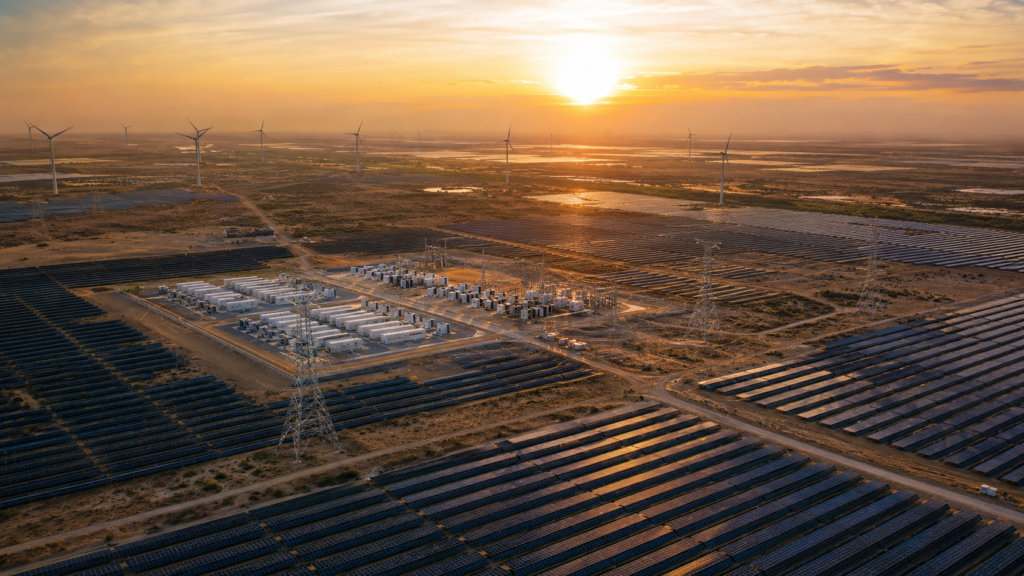
Adani Green Energy Hits 20,280 MW as Solar Capacity Expands
Solar power remains one of the most important components of AGEL’s expansion strategy.
The company has rapidly increased its solar generation footprint, particularly at Khavda. During the June 2026 quarter, AGEL added thousands of megawatts of greenfield renewable capacity, including significant solar capacity at Khavda and Rajasthan.
The latest 139 MW project therefore fits into a broader strategy of building large clusters of renewable generation.
Solar energy offers an important advantage in Gujarat because the region receives high levels of solar irradiation. Large-scale solar farms can therefore produce substantial quantities of electricity from relatively predictable daytime generation.
At the same time, the variability of solar power means that generation does not continue after sunset. This is where energy storage becomes increasingly important.
Adani Green Energy Hits 20,280 MW With BESS Expansion
One of the most important elements of AGEL’s renewable strategy is its growing battery storage portfolio.
Following the latest project commissioning, the company’s total operational BESS capacity stands at 3,551 MWh.
Battery storage can help renewable power producers address one of the fundamental challenges associated with solar and wind generation: variability.
Solar plants generate electricity primarily during daylight hours. Electricity demand, however, continues throughout the day and can remain high during evening hours.
A large-scale BESS can store electricity during periods of strong renewable generation and make it available when required.
AGEL had previously commissioned a cumulative 3.37 GWh BESS at Khavda in May 2026. The company described that deployment as the world’s largest single-location battery storage deployment outside China.
The company’s storage ambitions go significantly beyond the existing installed base.
AGEL has stated that it aims to add more than 10,000 MWh of BESS capacity during FY2026-27, while its longer-term target is 50,000 MWh by 2030.
How Battery Storage Supports Renewable Power
The combination of solar generation and BESS can potentially improve the usefulness of renewable electricity in several ways.
1. Day-to-Night Power Supply
Solar electricity can be stored during periods of strong sunlight and discharged later.
2. Peak Demand Support
Battery systems can support the grid during periods when electricity demand rises.
3. Better Renewable Integration
Storage can help balance variable renewable generation with electricity demand.
4. Reduced Curtailment Risk
Where renewable generation exceeds immediate grid requirements, storage can potentially absorb some excess electricity.
5. Greater Grid Flexibility
Large-scale storage can provide additional flexibility as the share of renewable electricity rises.
This is why the story of Adani Green Energy Hits 20,280 MW with 139 MW Solar Boost is not simply about adding another solar project. It is also about the transition toward an integrated generation-and-storage business model.
Adani Green Energy Hits 20,280 MW: Q1 FY27 Momentum
The latest capacity milestone comes after strong operational and financial growth reported by AGEL for the first quarter of FY2026-27.
According to Financial Express, the company’s installed capacity had grown 27% year-on-year to 20.1 GW during the quarter ended June 30, 2026, compared with 15.8 GW a year earlier.
Energy sales increased 30% year-on-year to 13,657 million units during the quarter.
Revenue from power supply increased 29% to ₹4,280 crore, while EBITDA from power supply rose 33% to ₹4,122 crore. Financial Express reported an EBITDA margin of 94% for the power-supply business during the quarter.
Cash profit also increased by 28% to ₹2,225 crore.
These numbers provide useful context for the latest capacity addition.
The company’s expansion is not occurring in isolation. It is being accompanied by increased energy sales and continued investment in renewable infrastructure.
Khavda Is Becoming a Renewable Energy Powerhouse
The importance of Khavda extends well beyond AGEL.
The region is increasingly becoming one of India’s most significant renewable energy development zones.
Its geography provides strong conditions for solar and wind generation. Vast areas of land allow developers to construct utility-scale projects, while the availability of renewable resources makes the region attractive for large clean-energy investments.
AGEL’s development combines different technologies rather than relying exclusively on solar.
This is important because solar and wind generation profiles can complement one another. When combined with battery storage, the overall system can potentially deliver a more balanced renewable electricity profile.
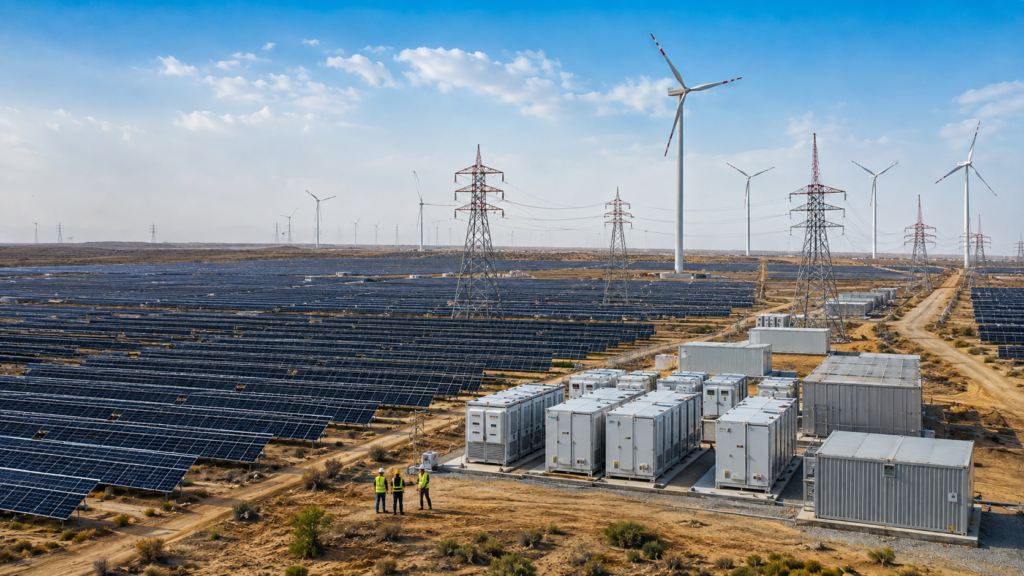
Adani Green Energy Hits 20,280 MW: The 30 GW Khavda Ambition
The latest 139 MW project is only one component of AGEL’s much larger Khavda programme.
The company has been developing a planned 30 GW renewable energy complex at Khavda. AGEL has described the project as one of the world’s largest renewable energy developments.
The scale of the project is extraordinary.
Instead of developing individual solar plants in isolation, the Khavda strategy creates a large integrated renewable energy hub.
The project is expected to combine:
- Solar power generation
- Wind power generation
- Solar-wind hybrid generation
- Battery energy storage
- Transmission infrastructure
- Digital monitoring systems
- Advanced operations and maintenance technology
The concentration of infrastructure can potentially improve construction efficiency and enable AGEL to develop renewable capacity at a much larger scale.
Why 20 GW Is a Major Renewable Milestone
The Adani Green Energy Hits 20,280 MW with 139 MW Solar Boost milestone is significant because 20 GW represents a very large operating portfolio.
For perspective, 20 GW is equivalent to 20,000 MW of installed generation capacity.
However, installed capacity should not be confused with actual electricity generation.
Solar and wind plants do not operate at full rated capacity continuously. Their output depends on sunlight, wind conditions, plant availability and other operating factors.
Therefore, the actual electricity generated by a renewable portfolio depends on its generation profile and capacity utilisation.
Even so, a 20 GW operational portfolio represents substantial renewable infrastructure.
For India’s energy transition, such scale is increasingly necessary as the country seeks to increase the contribution of non-fossil electricity while meeting rising electricity demand.
Adani Green Energy Hits 20,280 MW and India’s Clean Energy Transition
India’s electricity system is undergoing a structural transformation.
Electricity demand is expected to increase as manufacturing expands, cities grow and new technologies such as electric vehicles, data centres and green hydrogen increase power consumption.
At the same time, India has been expanding renewable generation to reduce the carbon intensity of its electricity system.
Large companies such as AGEL therefore have a major role in building generation capacity.
But the transition requires more than solar panels.
India also needs:
- Strong transmission networks
- Energy storage
- Grid balancing
- Flexible generation
- Advanced forecasting
- Digital power management
- Modern distribution infrastructure
The latest AGEL project demonstrates why generation and storage are increasingly being developed together.
Technology Behind Large-Scale Solar Development
Building a solar project of significant size requires much more than installing photovoltaic modules.
Modern utility-scale solar facilities can use advanced tracking systems, high-efficiency modules, automated cleaning equipment, remote monitoring and predictive maintenance.
At Khavda, AGEL has highlighted technologies and operational practices designed to improve large-scale renewable project execution.
These include digital monitoring systems and advanced operations and maintenance capabilities.
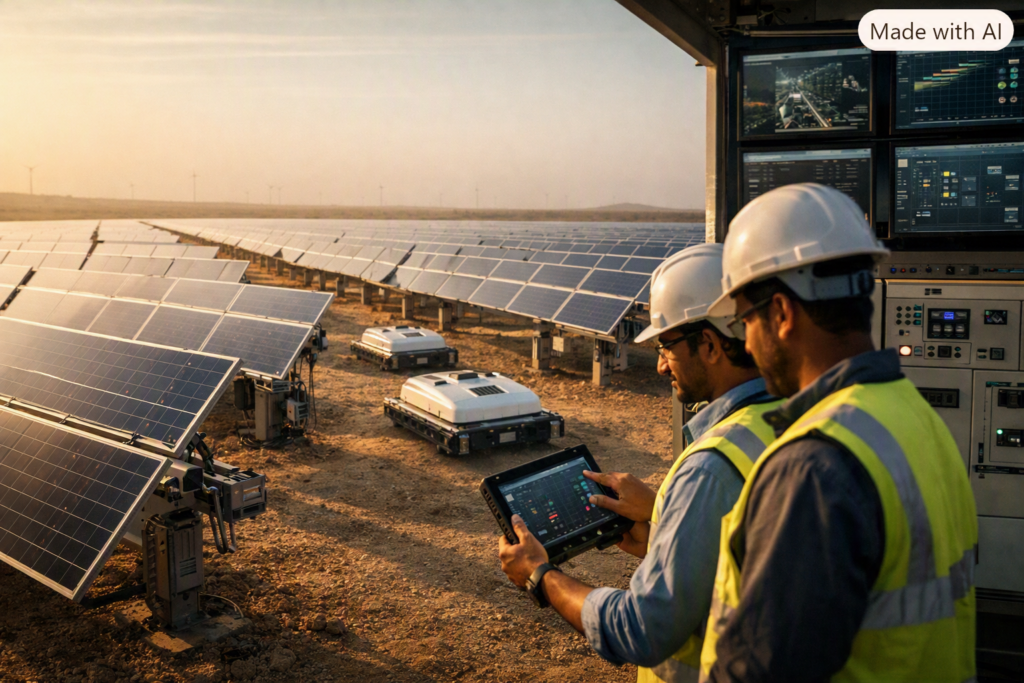
The company has also been deploying robotic technologies in its renewable projects.
At a site covering hundreds of square kilometres, automation can become particularly valuable because manual inspection and maintenance can be difficult and time-consuming.
Adani Green Energy Hits 20,280 MW: What It Means for Investors
The latest project is also relevant to investors following AGEL.
Capacity expansion is a core part of the company’s growth strategy. A larger operational portfolio can increase electricity-generation potential and expand the company’s long-term renewable power platform.
However, investors should not evaluate renewable companies solely on installed capacity.
Other factors include:
- Energy generation
- Power purchase agreements
- Project execution
- Financing costs
- Debt levels
- Interest rates
- Transmission availability
- Renewable tariffs
- Storage costs
- Regulatory conditions
The latest milestone is therefore a positive operational development, but it should be considered alongside AGEL’s financial performance and broader market conditions.
Adani Green Energy Hits 20,280 MW: Challenges Ahead
Despite the positive capacity milestone, large-scale renewable development faces several challenges.
Transmission Infrastructure
Renewable projects are often located far from major electricity consumption centres.
As more solar and wind capacity is connected to the grid, transmission networks must expand at a similar pace.
Renewable Intermittency
Solar generation falls sharply after sunset, while wind output varies depending on weather conditions.
Energy storage can help, but storage deployment requires substantial investment.
Financing
Large renewable projects require significant capital.
Maintaining competitive financing costs is therefore crucial for companies pursuing aggressive capacity targets.
Land and Construction
Large renewable energy parks require extensive land, roads, transmission systems and supporting infrastructure.
Supply Chains
Solar modules, inverters, transformers, batteries and other equipment must be available at scale.
These challenges mean that simply announcing renewable capacity is not enough. Successful execution is what ultimately determines whether projects contribute to India’s electricity system.
AGEL’s 50 GW Target by 2030
AGEL has set an ambitious target of reaching 50 GW of renewable energy capacity by 2030.
The latest Adani Green Energy Hits 20,280 MW with 139 MW Solar Boost milestone brings the company closer to that objective.
At 20,280.80 MW, the company still has substantial capacity to add before reaching 50 GW.
That means the coming years are likely to remain focused on rapid project development.
Khavda will be central to that expansion, but the company’s broader portfolio also includes renewable assets across other parts of India.
The combination of solar, wind, hybrid projects and battery storage could help AGEL build a more diversified renewable platform.
Why Storage Could Become AGEL’s Next Big Growth Driver
The renewable industry is gradually moving from a capacity race toward a reliability race.
In the early stages of renewable development, the main objective was to build as much solar and wind capacity as possible.
As renewable penetration rises, the challenge changes.
The key question becomes:
How can renewable electricity be delivered when consumers need it?
Battery storage provides one answer.
AGEL’s expansion of BESS capacity indicates that the company recognises this changing market requirement.
The company’s previous 3.37 GWh Khavda BESS deployment demonstrates the scale at which storage is already being developed.
The longer-term 50 GWh storage ambition would represent an even larger transformation in the company’s business model.
Adani Green Energy Hits 20,280 MW: What Comes Next?
The latest 139 MW commissioning is unlikely to be the final major capacity announcement from Khavda.
The company continues to develop its broader renewable pipeline while working toward its 2030 capacity ambitions.
The next phase will likely focus on three interconnected areas:
More Renewable Generation
Solar, wind and hybrid projects will continue increasing AGEL’s generation portfolio.
More Battery Storage
BESS will become increasingly important for balancing renewable generation and supporting reliable power supply.
Better Grid Integration
Transmission and digital grid-management systems will be essential as renewable capacity increases.
Together, these developments could help move India’s renewable sector toward a more integrated electricity ecosystem.
Environmental Significance of the Khavda Expansion
Renewable energy projects can contribute to reducing reliance on fossil-fuel-based electricity generation.
Solar and wind plants generate electricity without directly burning coal or natural gas during operation.
However, renewable projects also have environmental considerations, including land use, biodiversity, water requirements and equipment manufacturing.
For large projects, responsible land management and environmental planning remain important.
The increasing deployment of water-efficient or waterless cleaning technologies can also be relevant in arid areas such as Kutch.
A balanced renewable strategy therefore needs to consider both clean electricity generation and responsible infrastructure development.
Economic Impact of Large Renewable Projects
Large renewable projects can create economic activity across several stages.
Construction requires engineering, transportation, civil works, electrical equipment and skilled labour.
Once operational, projects require maintenance teams, monitoring systems, security, logistics and technical services.
Large renewable hubs can also stimulate supporting infrastructure and supply chains.
Khavda’s scale makes it particularly significant because development involves multiple technologies and a large network of supporting infrastructure.
For Gujarat, continued renewable investment can reinforce the state’s position as a major clean-energy investment destination.
Adani Green Energy Hits 20,280 MW: The Bigger Picture
The latest 139 MW addition should be viewed as part of a much larger transformation.
AGEL is no longer operating as a small renewable developer. Its operational portfolio has crossed the 20 GW mark, while its ambitions extend toward 50 GW.
Khavda has become the centre of that strategy.
The combination of solar, wind and battery storage represents a shift toward integrated renewable-energy systems.
The company’s expansion also reflects a wider trend across India’s electricity market.
Renewable generation is becoming increasingly central to future power capacity additions, while storage is becoming more important as renewable penetration rises.
This means the next decade could see renewable companies compete not only on how much capacity they build, but also on how reliably they can deliver clean electricity.
Key Takeaways
The most important points from the latest development are:
- AGEL has operationalised a 139 MW solar project at Khavda, Gujarat.
- The plant became commercially operational on September 1, 2026.
- AGEL’s total operational renewable generation capacity has reached 20,280.80 MW.
- The company has crossed the 20 GW operational renewable capacity milestone.
- Operational BESS capacity stands at 3,551 MWh.
- Khavda has become the company’s most important renewable expansion hub.
- Operational capacity at Khavda had reached approximately 10.3 GW by June 2026.
- AGEL is developing a much larger renewable energy complex at Khavda.
- The company has a long-term target of reaching 50 GW of renewable capacity by 2030.
- Battery storage is becoming a central component of AGEL’s growth strategy.
Frequently Asked Questions
What is the latest Adani Green Energy capacity?
Following the commissioning of the new 139 MW Khavda solar project, Adani Green Energy’s total operational renewable generation capacity has reached 20,280.80 MW.
Where is the new 139 MW Adani Green Energy project located?
The new 139 MW solar project is located at Khavda in Gujarat. It was developed through Adani Green Energy Twenty Six A Limited, a wholly owned step-down subsidiary of AGEL.
When did the 139 MW Khavda project become operational?
The project was commercially operationalised on September 1, 2026, at 2:05 p.m., following the required clearances.
What is Adani Green Energy’s operational BESS capacity?
AGEL’s total operational Battery Energy Storage System capacity stands at 3,551 MWh following the latest capacity update.
Why is Khavda important for Adani Green Energy?
Khavda is central to AGEL’s renewable expansion strategy. The company is developing a massive renewable energy complex there combining solar, wind, hybrid renewable generation and battery storage.
What is Adani Green Energy’s 2030 target?
AGEL has stated that it is targeting a 50 GW renewable energy portfolio by 2030.
How large is the Khavda renewable project?
AGEL is developing a planned 30 GW renewable energy complex at Khavda, making it one of the world’s largest renewable energy developments.
Why is battery storage important for solar power?
Solar plants generate most of their electricity during daylight hours. Battery storage can store electricity and release it later, helping address the timing difference between renewable generation and electricity demand.
Does 20,280 MW mean Adani Green Energy generates 20,280 MW continuously?
No. 20,280.80 MW is operational generation capacity, not continuous electricity output. Actual generation varies according to solar irradiation, wind conditions, plant availability and other factors.
Is the latest project positive for India’s renewable energy sector?
Yes. The commissioning adds another 139 MW of operational renewable capacity and contributes to India’s growing clean-energy infrastructure. It also demonstrates the increasing scale of utility-level solar development and energy-storage investment.
Conclusion
Adani Green Energy Hits 20,280 MW with 139 MW Solar Boost, marking another important milestone in India’s renewable energy expansion.
The latest 139 MW solar project at Khavda has pushed AGEL’s operational renewable generation capacity to 20,280.80 MW, taking the company beyond the 20 GW threshold. At the same time, its operational battery storage capacity has reached 3,551 MWh.
The real significance of the development lies in the broader Khavda strategy.
AGEL is developing one of the world’s largest renewable energy complexes at the site, combining solar, wind, hybrid generation and battery storage. Operational capacity at Khavda had already reached approximately 10.3 GW by June 2026, highlighting how quickly the site is expanding.
The company’s 50 GW renewable energy target for 2030 means that substantial additional capacity will need to be developed in the coming years.
At the same time, energy storage is becoming increasingly important. As India’s renewable generation base grows, the ability to store and dispatch clean electricity when required will become a critical part of the country’s energy transition.
The latest Adani Green Energy Hits 20,280 MW with 139 MW Solar Boost milestone therefore represents more than another solar commissioning. It is a snapshot of a much larger shift toward utility-scale renewable generation, integrated battery storage and a more flexible clean-energy system.
For AGEL, Khavda remains at the heart of that transformation. For Gujarat and India, the project highlights the enormous scale at which renewable infrastructure is now being developed.
With 20.28 GW already operational and a 50 GW target ahead, Adani Green Energy’s next phase will be defined by one key question: how quickly can it turn massive renewable capacity additions into reliable, scalable and storage-backed clean power?