
India’s Biogas Boom: ₹1 Lakh Crore Waste-to-Fuel Revolution
Introduction
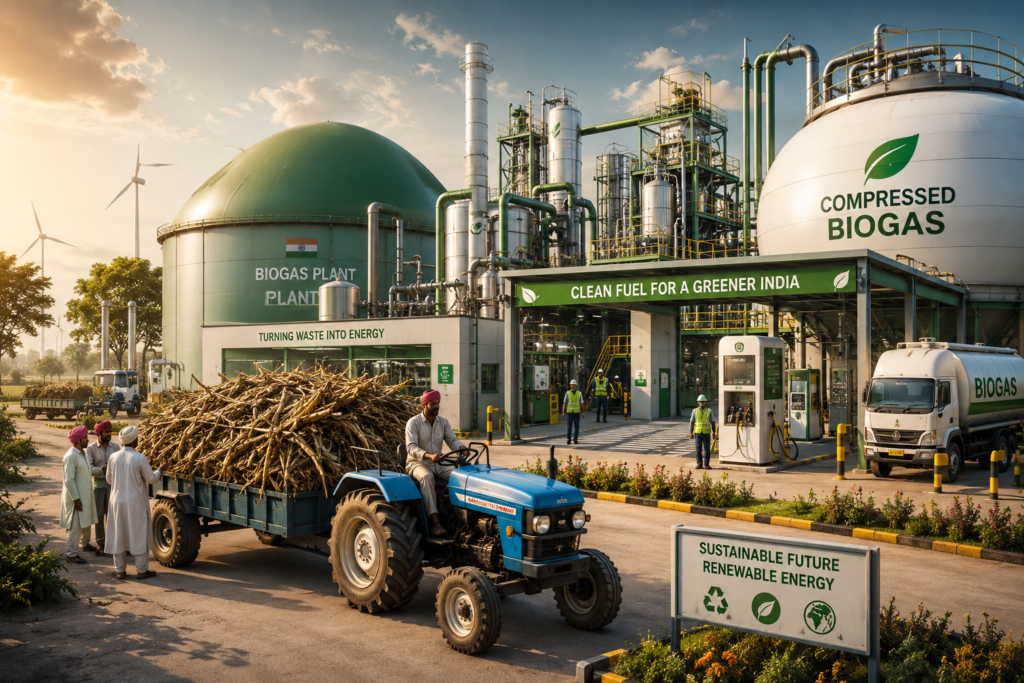
India’s Biogas Boom: ₹1 Lakh Crore Waste-to-Fuel Revolution is emerging as one of the most significant clean energy transformations in the country’s history. Over the last decade, I have closely followed India’s renewable energy sector, from solar parks in Rajasthan to green hydrogen projects on the western coast. Yet few initiatives possess the unique combination of environmental, economic, agricultural, and energy-security benefits that the biogas sector offers today.
The scale is remarkable. What was once considered agricultural waste, municipal garbage, cattle dung, and food waste is now being viewed as a valuable resource capable of generating clean fuel, reducing imports, supporting farmers, and creating thousands of jobs.
As India aims to reduce dependence on imported fossil fuels while meeting ambitious climate goals, India’s Biogas Boom: ₹1 Lakh Crore Waste-to-Fuel Revolution is becoming a critical pillar of the country’s energy future.
India’s Biogas Boom: ₹1 Lakh Crore Waste-to-Fuel Revolution
The Untapped Potential of Waste
Cattle Waste
India’s 300+ million cattle produce millions of tonnes of dung annually. Traditionally used as manure or fuel cakes, this resource can be harnessed to generate methane‑rich biogas.
Agricultural Residue
Over 500 million metric tonnes of crop residue are generated each year. Much of it is burned, worsening air pollution. Redirecting this biomass into biogas plants could simultaneously reduce pollution and produce clean energy.
Compressed Biogas (CBG)
With modern infrastructure, India could produce up to 62 million metric tonnes of CBG annually—equivalent to millions of LPG cylinders.
Why India Is Betting Big on Biogas
India generates enormous quantities of organic waste every year:
- Agricultural residue
- Sugarcane press mud
- Crop stubble
- Municipal solid waste
- Food waste
- Animal manure
Traditionally, much of this waste was burned, dumped, or left to decompose, contributing to pollution and greenhouse gas emissions.
Today, policymakers see an opportunity to convert this waste into valuable energy.
The government’s vision aligns with multiple national priorities:
- Energy security
- Rural development
- Waste management
- Carbon emission reduction
- Farmer income enhancement
This is precisely why India’s Biogas Boom: ₹1 Lakh Crore Waste-to-Fuel Revolution is attracting substantial public and private investments.
Understanding the Waste-to-Fuel Model
At its core, biogas production relies on anaerobic digestion—a natural process where microorganisms break down organic matter in the absence of oxygen.
The process typically involves:
Step 1: Waste Collection
Organic materials are collected from:
- Farms
- Dairy operations
- Municipal waste streams
- Food processing units
Step 2: Digestion
The waste enters biodigesters where microbes convert it into biogas.
Step 3: Gas Purification
The raw gas is refined into:
- Compressed Biogas (CBG)
- Bio-CNG
- Renewable natural gas
Step 4: Distribution
The purified fuel can be used for:
- Vehicles
- Industries
- Power generation
- Cooking fuel
This innovative model is the backbone of India’s Biogas Boom: ₹1 Lakh Crore Waste-to-Fuel Revolution.
The SATAT Initiative Driving Growth
A major catalyst behind the sector’s rapid expansion is the government’s SATAT initiative (Sustainable Alternative Towards Affordable Transportation).
The program encourages entrepreneurs and energy companies to establish compressed biogas plants across India.
Its goals include:
- Producing cleaner transportation fuel
- Utilizing agricultural waste
- Creating rural employment
- Reducing stubble burning
In my experience analyzing energy policies, SATAT stands out because it solves multiple challenges simultaneously rather than addressing them individually.
India’s Biogas Boom: ₹1 Lakh Crore Waste-to-Fuel Revolution
The ₹1 Lakh Crore Investment Opportunity
Industry experts estimate that investments linked to biogas infrastructure, compressed biogas facilities, logistics networks, and supporting ecosystems could exceed ₹1 lakh crore over the coming years.
Key Investment Areas
| Sector | Investment Potential |
|---|---|
| CBG Plants | High |
| Waste Collection Systems | High |
| Storage Infrastructure | Medium |
| Transportation Networks | High |
| Rural Energy Projects | High |
| Bio-fertilizer Units | Medium |
The scale of funding behind India’s Biogas Boom: ₹1 Lakh Crore Waste-to-Fuel Revolution demonstrates growing confidence among investors.
How Farmers Stand to Benefit
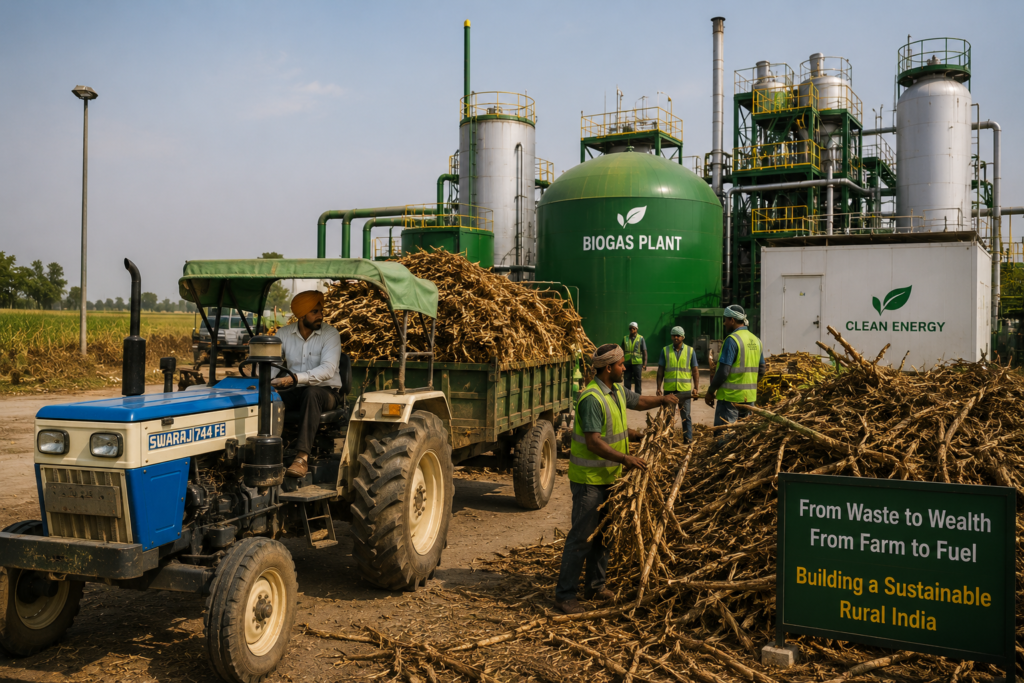
One of the most overlooked aspects of India’s Biogas Boom: ₹1 Lakh Crore Waste-to-Fuel Revolution is its potential to transform rural incomes.
For decades, crop residue was largely treated as a disposal problem.
Now farmers can:
- Sell agricultural waste
- Earn additional revenue
- Reduce field-burning costs
- Access organic bio-fertilizers
I have spoken with agricultural entrepreneurs who describe crop residue as a “new cash crop.” That shift in perception may become one of the biggest long-term successes of India’s biogas strategy.
Solving India’s Stubble Burning Crisis
Every winter, northern India faces severe air pollution partly linked to crop residue burning.
Biogas plants create an economic incentive to collect and process agricultural waste instead of burning it.
Benefits include:
Cleaner Air
Reduced particulate matter emissions.
Better Public Health
Lower respiratory illness rates.
Reduced Carbon Emissions
Significant climate benefits.
Improved Soil Health
Less damage from repeated burning.
This makes India’s Biogas Boom: ₹1 Lakh Crore Waste-to-Fuel Revolution both an energy initiative and an environmental solution.
The Rise of Compressed Biogas (CBG)
Compressed Biogas is becoming one of the fastest-growing segments of India’s renewable energy sector.
CBG offers several advantages:
- Similar properties to natural gas
- Lower emissions
- Domestic production
- Existing gas infrastructure compatibility
Major oil marketing companies are increasingly integrating CBG into fuel distribution networks.
As a result, India’s Biogas Boom: ₹1 Lakh Crore Waste-to-Fuel Revolution is creating a new ecosystem that connects farmers, energy companies, and consumers.
Impact on Energy Security
India imports a significant portion of its energy requirements.
Reducing import dependence has become a strategic priority.
Biogas contributes by:
- Replacing imported LNG
- Supporting domestic fuel production
- Diversifying energy sources
- Enhancing resilience against global price shocks
From an energy security perspective, India’s Biogas Boom: ₹1 Lakh Crore Waste-to-Fuel Revolution may prove just as important as some large-scale renewable power projects.
Climate Benefits and Carbon Reduction
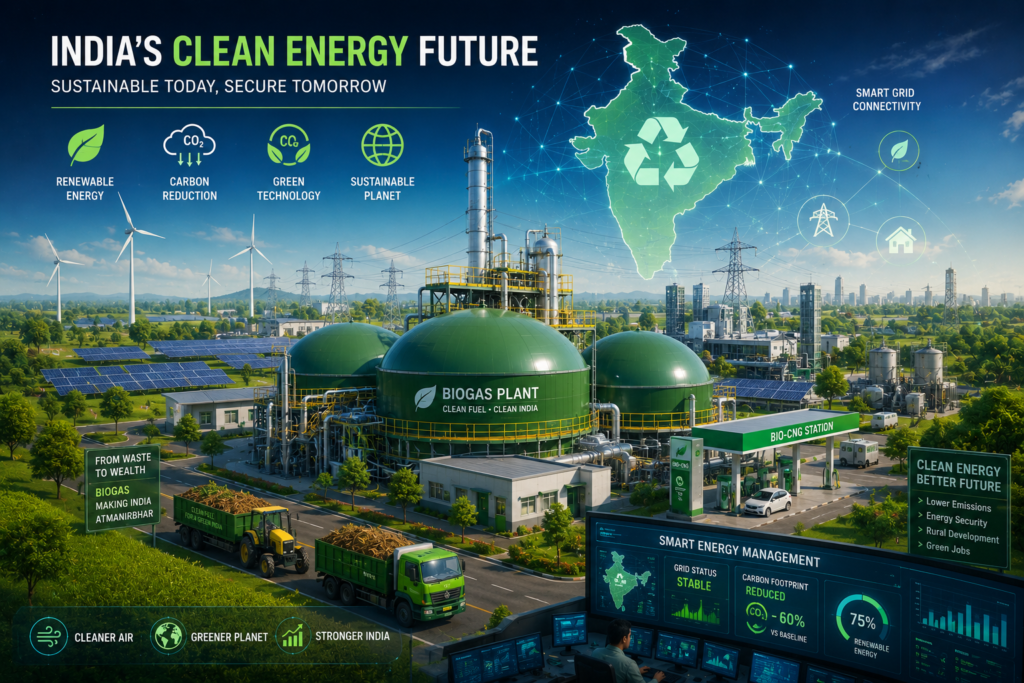
Methane is one of the most potent greenhouse gases.
When organic waste decomposes openly, methane escapes into the atmosphere.
Biogas facilities capture this methane and convert it into usable fuel.
Environmental benefits include:
- Lower greenhouse gas emissions
- Reduced landfill waste
- Cleaner transportation fuel
- Circular economy development
These advantages explain why India’s Biogas Boom: ₹1 Lakh Crore Waste-to-Fuel Revolution is gaining attention among climate experts worldwide.
Job Creation Potential
The biogas sector is labor-intensive and can generate employment across multiple segments.
Direct Jobs
- Plant operators
- Engineers
- Technicians
- Maintenance workers
Indirect Jobs
- Waste collection
- Transportation
- Equipment manufacturing
- Bio-fertilizer marketing
Industry projections suggest that thousands of direct and indirect jobs could emerge as India’s Biogas Boom: ₹1 Lakh Crore Waste-to-Fuel Revolution accelerates.
The Bio-Fertilizer Advantage
An often-neglected benefit of biogas production is the digestate left after processing.
This nutrient-rich byproduct can be converted into organic fertilizer.
Benefits include:
- Improved soil fertility
- Reduced chemical fertilizer dependence
- Lower farming costs
- Sustainable agriculture
Many experts believe the fertilizer component alone could significantly improve project economics.
Private Sector Participation Is Increasing
Several major companies are actively exploring biogas opportunities.
Key Drivers
- ESG commitments
- Green energy demand
- Carbon reduction targets
- Attractive long-term returns
The participation of private investors further strengthens India’s Biogas Boom: ₹1 Lakh Crore Waste-to-Fuel Revolution and accelerates commercialization.
Challenges Ahead
Despite the positive outlook, challenges remain.
Feedstock Supply
Consistent waste collection systems are essential.
Financing
Smaller developers often struggle to access affordable capital.
Infrastructure
Storage and transportation networks need expansion.
Awareness
Many farmers and local bodies still require education about the economic value of waste.
Addressing these challenges will determine how quickly India’s Biogas Boom: ₹1 Lakh Crore Waste-to-Fuel Revolution reaches its full potential.
Future Outlook: A Decade of Transformation
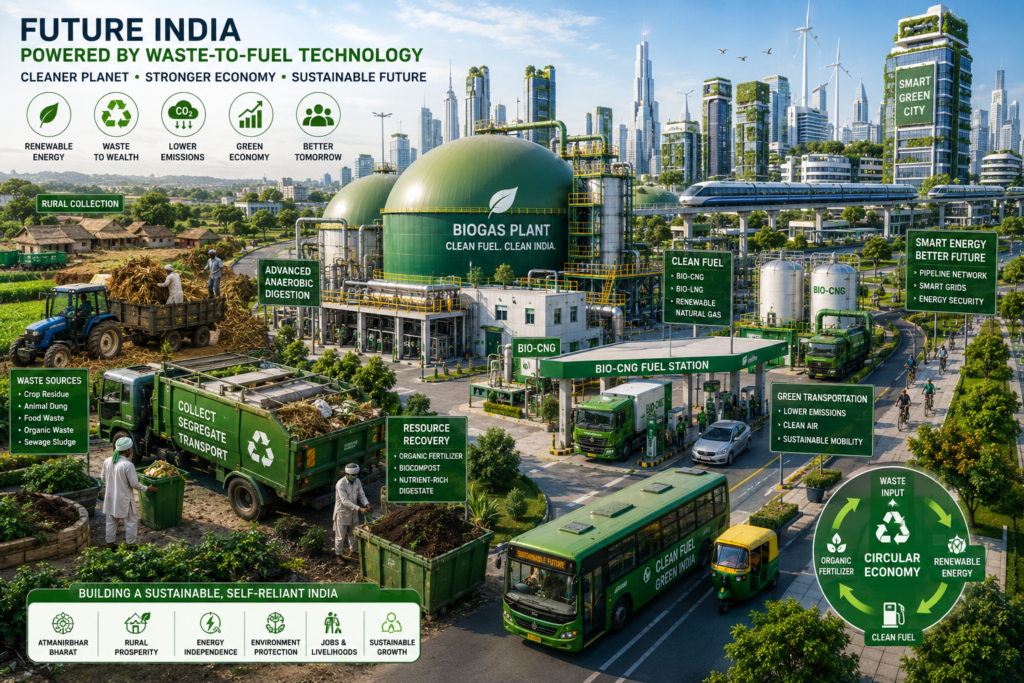
Looking ahead, the next decade could be transformative.
Key trends likely to shape the industry include:
- Expansion of CBG plants
- Greater private investment
- AI-enabled waste management
- Integration with green hydrogen ecosystems
- Growth of rural energy clusters
- Increased carbon credit opportunities
Having observed numerous energy transitions over the years, I believe the biogas revolution has a unique advantage: it generates value from a resource that already exists in abundance—waste.
That fundamental economic logic gives India’s Biogas Boom: ₹1 Lakh Crore Waste-to-Fuel Revolution a strong foundation for long-term success.
Conclusion
India’s Biogas Boom: ₹1 Lakh Crore Waste-to-Fuel Revolution represents far more than a renewable energy initiative. It is a comprehensive strategy that addresses energy security, farmer welfare, waste management, environmental sustainability, and economic growth simultaneously.
The transformation of waste into wealth could become one of the defining stories of India’s clean-energy journey. As investments grow, technology improves, and infrastructure expands, the sector is poised to play a crucial role in shaping India’s sustainable future.
For investors, policymakers, farmers, and environmentalists alike, India’s Biogas Boom: ₹1 Lakh Crore Waste-to-Fuel Revolution is a development worth watching closely.
Frequently Asked Questions (FAQs)
What is India’s Biogas Boom: ₹1 Lakh Crore Waste-to-Fuel Revolution?
It refers to India’s large-scale investment and expansion of biogas and compressed biogas projects that convert organic waste into clean fuel and bio-fertilizers.
What is compressed biogas (CBG)?
CBG is purified biogas compressed to a form similar to natural gas and can be used as transportation fuel or industrial energy.
How does biogas help farmers?
Farmers can earn additional income by selling crop residue and agricultural waste to biogas plants while also gaining access to organic fertilizers.
Can biogas reduce air pollution?
Yes. By preventing crop residue burning and capturing methane emissions, biogas projects significantly improve air quality.
Why is the government promoting biogas?
Biogas supports energy security, waste management, rural employment, climate goals, and sustainable agriculture.
What is the future of India’s biogas sector?
The future appears highly promising, with large-scale investments, increasing private-sector participation, growing CBG demand, and expanding renewable energy infrastructure expected over the next decade.