
The phrase India’s Smart Strategy Keeps Fuel Prices Stable has become a defining narrative in the country’s energy and economic policy. Despite global oil shocks and geopolitical turmoil, India has successfully shielded consumers from volatile fuel prices. This achievement reflects a blend of fiscal prudence, strategic reserves, and the resilience of state‑run oil marketing companies (OMCs).

India’s Smart Strategy Keeps Fuel Prices Stable: Global Context
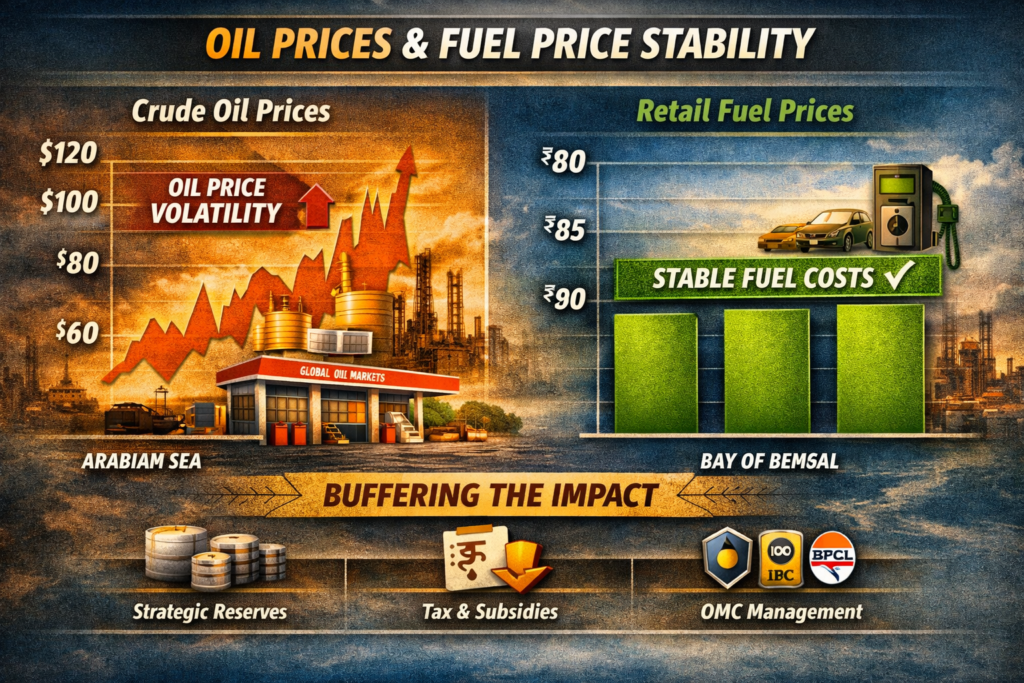
Crude oil prices have surged past $100 per barrel in recent months, driven by conflicts in West Asia and supply chain disruptions. For a nation that imports nearly 85% of its crude oil, such volatility could have triggered runaway inflation. Yet, retail fuel prices in India have remained largely unchanged since mid‑2022.
This stability is not accidental—it is the result of a calibrated policy framework that balances market forces with government oversight.

India’s Smart Strategy Keeps Fuel Prices Stable: Pricing Mechanism
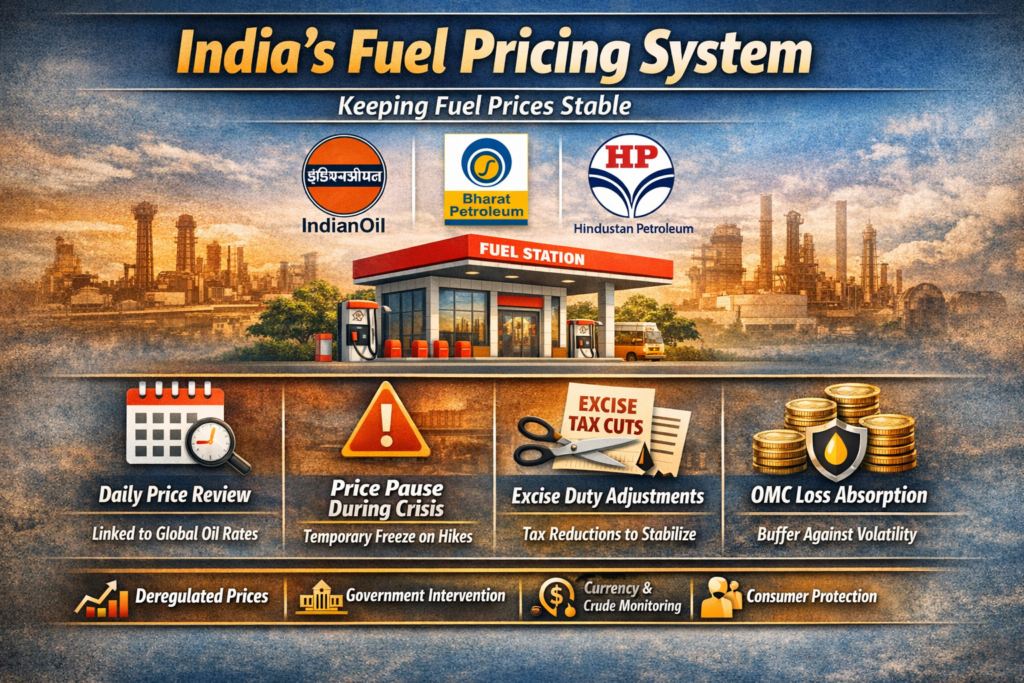
India follows a daily price revision model, where OMCs—Indian Oil Corporation, Bharat Petroleum, and Hindustan Petroleum—adjust petrol and diesel prices based on global benchmarks and currency fluctuations.
However, during extreme volatility, OMCs act as shock absorbers, delaying hikes and managing margins internally. The government also intervenes through excise duty cuts or subsidies to ensure consumer protection.
India’s Smart Strategy Keeps Fuel Prices Stable: Global Context
Key Elements of the Pricing System:
- Deregulated retail prices for petrol and diesel.
- Strategic pauses in price revisions during crises.
- Excise duty adjustments to offset global shocks.
- OMC absorption of short‑term losses to maintain stability.
India’s Smart Strategy Keeps Fuel Prices Stable: Strategic Reserves
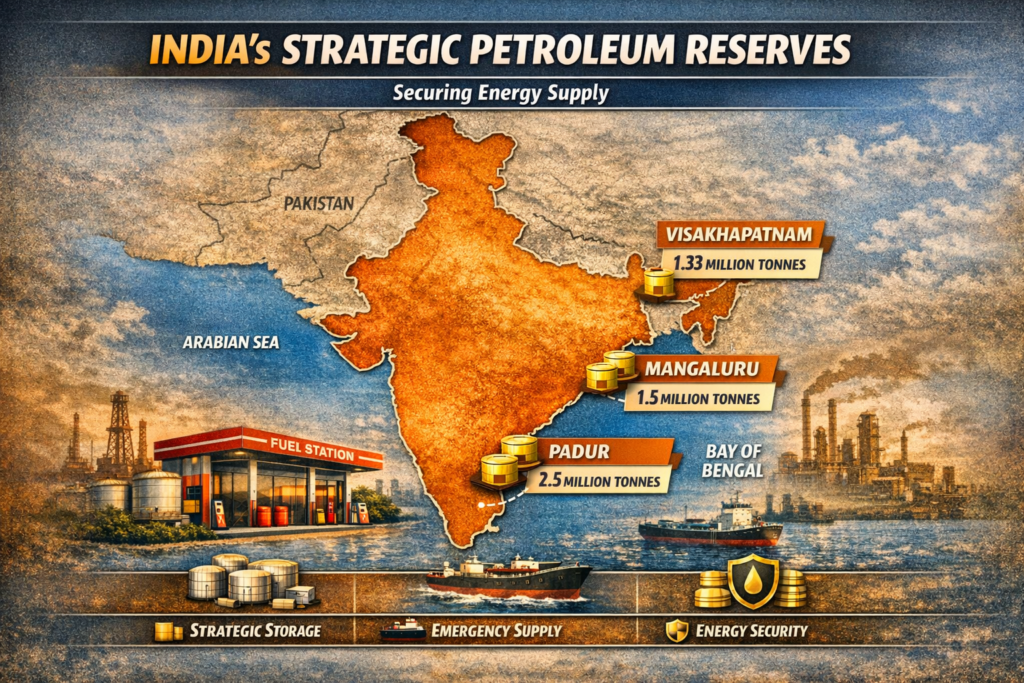
India maintains Strategic Petroleum Reserves (SPRs) in Visakhapatnam, Mangaluru, and Padur, with expansion underway. These reserves act as a national insurance policy, allowing the government to release crude during supply disruptions.
Diversification of imports—from Saudi Arabia, Iraq, UAE, and Russia—further reduces dependence on any single source, strengthening resilience against geopolitical risks.
India’s Smart Strategy Keeps Fuel Prices Stable: Fiscal Tools
The government employs several fiscal levers to cushion oil shocks:
| Tool | Function | Impact |
|---|---|---|
| Excise Duty Cuts | Reduce consumer burden | Keeps retail prices steady |
| Windfall Tax | Capture excess profits | Funds subsidies |
| Targeted Subsidies | Support LPG & kerosene users | Protects vulnerable households |
| Currency Management | RBI stabilizes rupee | Limits imported inflation |
These measures ensure that while global oil prices fluctuate, domestic fuel prices remain predictable.
India’s Smart Strategy Keeps Fuel Prices Stable: Role of OMCs
OMCs are the backbone of India’s fuel stability. They employ hedging strategies, inventory management, and cross‑subsidization to absorb shocks. Profits from petrochemicals or aviation fuel often offset temporary losses in retail fuel sales.
This operational resilience allows India to maintain consumer confidence and industrial cost predictability.
India’s Smart Strategy Keeps Fuel Prices Stable: Consumer Impact
Stable fuel prices have helped India keep headline inflation below 5.5%, supporting:
- Household budgets by preventing sudden spikes.
- Industrial growth through predictable logistics costs.
- Macroeconomic stability, aligning with RBI’s inflation control goals.
India’s Smart Strategy Keeps Fuel Prices Stable: Challenges Ahead
Despite success, risks remain:
- Persistent global volatility from geopolitical conflicts.
- Pressure on OMC margins if crude remains elevated.
- Fiscal strain from prolonged subsidies.
- Energy transition challenges as India shifts toward renewables.
India’s Smart Strategy Keeps Fuel Prices Stable: Future Outlook
Looking ahead, India’s Smart Strategy Keeps Fuel Prices Stable will likely evolve with changing global dynamics.
Increased Renewable Energy Adoption
Investments in solar, wind, and alternative fuels will reduce reliance on imported crude.
Digital Monitoring Systems
Advanced data analytics will enable better forecasting and quicker policy responses.
Global Partnerships
Strengthening energy ties with multiple countries will enhance supply security.
Conclusion
The narrative that India’s Smart Strategy Keeps Fuel Prices Stable highlights the country’s ability to balance global oil shocks with domestic stability. By leveraging strategic reserves, fiscal tools, and OMC resilience, India has shielded consumers while sustaining growth.
This equilibrium—between price stability and fiscal prudence—is a cornerstone of India’s energy resilience and a model for other emerging economies navigating global uncertainty.