
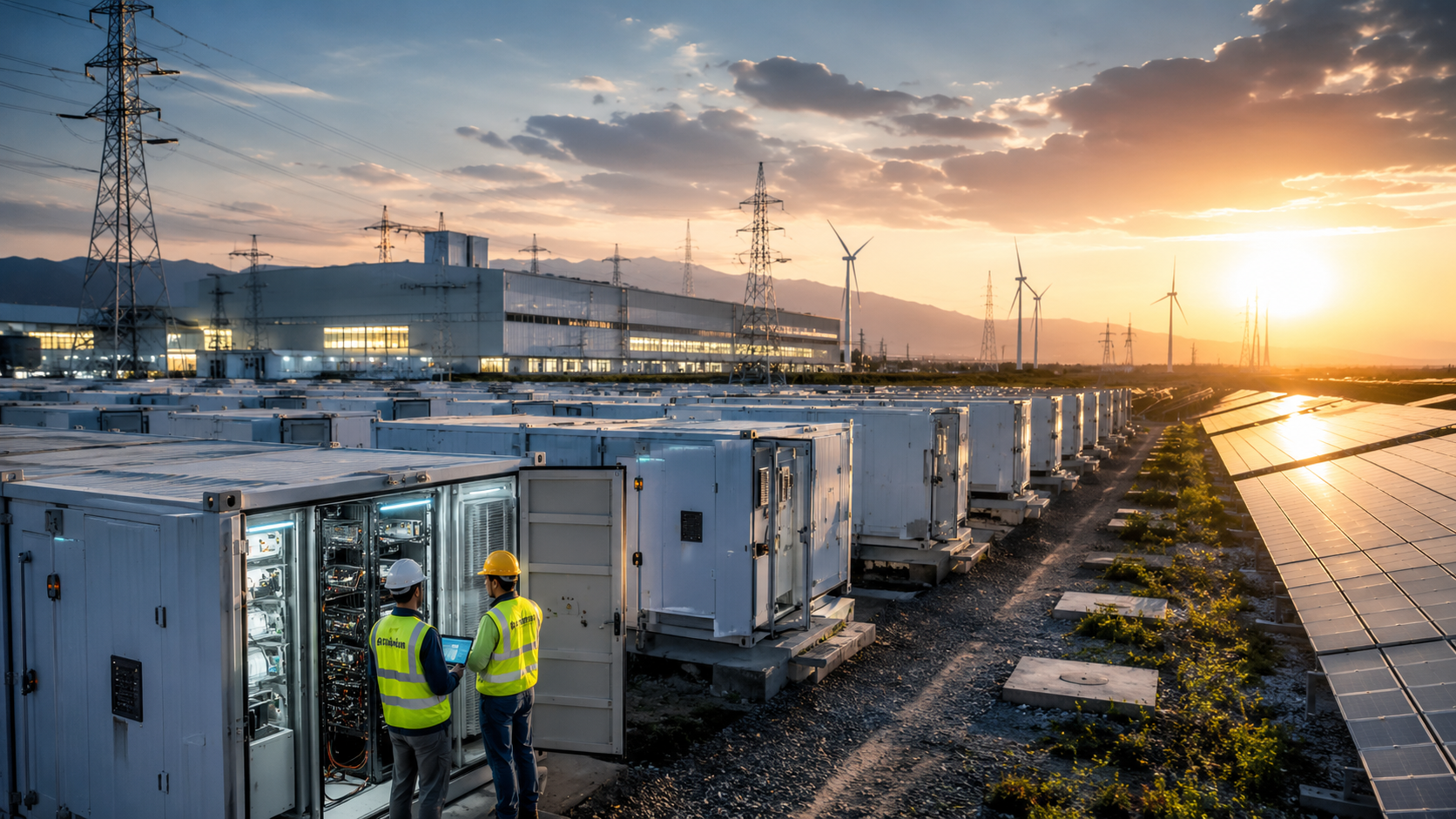
Ola Electric’s Mahashakti BESS Deal Powers 20 GWh: A Massive Leap for India’s Energy Storage Revolution
Ola Electric’s Mahashakti BESS Deal Powers 20 GWh, marking one of the biggest milestones in India’s rapidly growing battery energy storage sector. The strategic Memorandum of Understanding (MoU) between Ola Electric and Axis Energy aims to deploy up to 20 GWh of Battery Energy Storage Systems (BESS) by 2032, creating one of the country’s largest clean energy storage partnerships. The announcement highlights Ola Electric’s ambition to evolve beyond electric vehicles into a comprehensive energy technology company while strengthening India’s renewable energy ecosystem.
Key Highlights
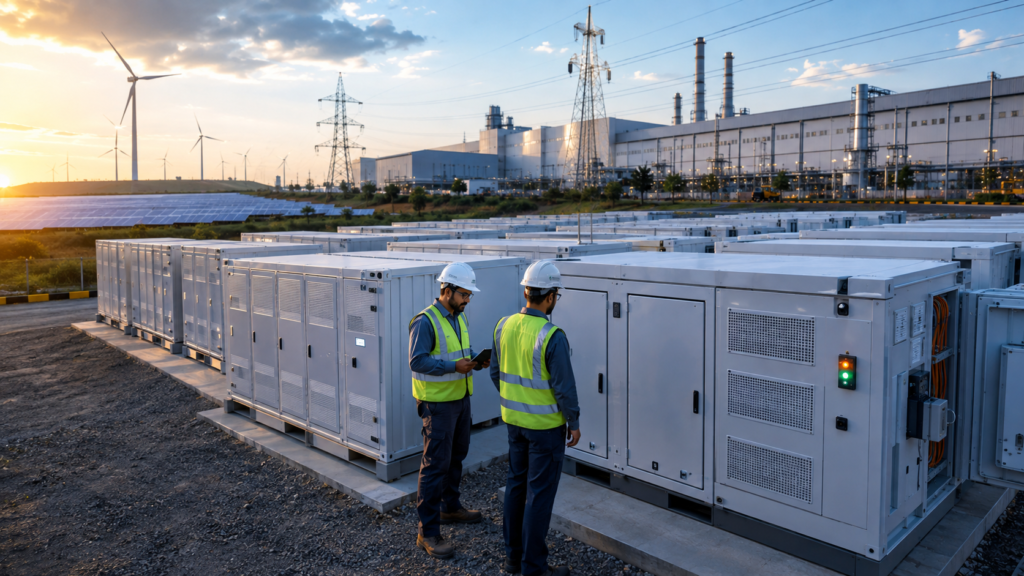
- Ola Electric signed an MoU with Axis Energy for deployment of up to 20 GWh of Mahashakti Battery Energy Storage Systems.
- The project roadmap extends until 2032.
- Annual deployments are expected to scale significantly as manufacturing expands.
- The partnership supports India’s renewable energy integration and grid stability goals.
- The announcement strengthened investor sentiment, with Ola Electric shares gaining after the news.
Ola Electric’s Mahashakti BESS Deal Powers 20 GWh: Understanding the Announcement
The announcement that Ola Electric’s Mahashakti BESS Deal Powers 20 GWh is far more significant than a standard business agreement. It signals Ola Electric’s strategic transformation into an integrated clean-energy company.
While Ola Electric initially built its reputation through electric scooters and battery manufacturing, the company has steadily expanded into battery cell technology, residential energy storage, and now utility-scale Battery Energy Storage Systems (BESS).
The partnership with Axis Energy focuses on deploying Mahashakti battery systems across renewable energy projects, enabling efficient storage of electricity generated by solar and wind power.
This agreement complements Ola Electric’s broader strategy of scaling indigenous battery technology based on its Bharat Cell platform and expanding cell manufacturing capacity.
What is Mahashakti BESS?
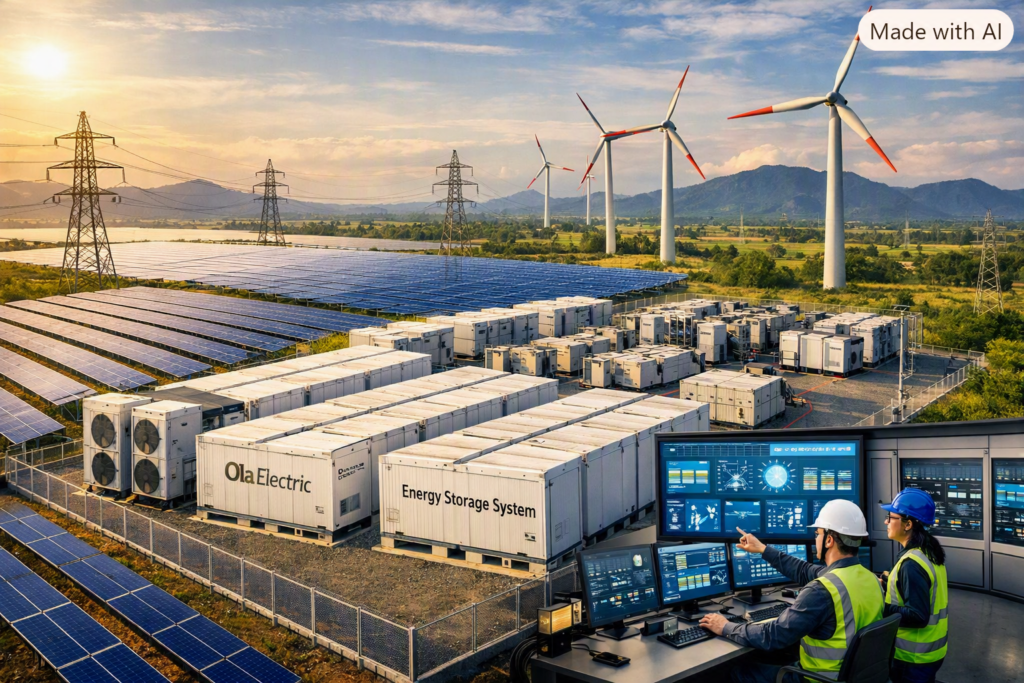
Mahashakti represents Ola Electric’s large-scale Battery Energy Storage System designed for commercial and grid-scale applications.
Unlike residential battery systems, Mahashakti is engineered to store enormous amounts of electricity generated during peak renewable production and release it when electricity demand increases.
Its applications include:
- Utility-scale renewable projects
- Solar parks
- Wind farms
- Industrial energy backup
- Grid balancing
- Peak demand management
- Frequency regulation
As renewable energy generation grows rapidly across India, storage solutions like Mahashakti become essential for maintaining reliable electricity supply.
Ola Electric’s Mahashakti BESS Deal Powers 20 GWh
Why Battery Energy Storage Matters
Renewable energy is naturally intermittent.
Solar panels only generate electricity during daylight hours.
Wind turbines depend on wind availability.
Without large-scale storage, surplus electricity is wasted while shortages occur during peak demand.
Battery Energy Storage Systems solve this problem by:
- Storing excess renewable electricity
- Improving grid stability
- Reducing dependence on fossil fuels
- Supporting 24×7 clean energy supply
- Lowering transmission congestion
- Providing emergency backup power
India’s renewable energy ambitions require massive storage capacity over the coming decade, making projects like Mahashakti strategically important.
How the Axis Energy Partnership Works
Axis Energy has emerged as one of India’s growing renewable energy developers, focusing on large-scale solar and wind projects.
Through this partnership:
- Axis Energy will deploy Mahashakti Battery Energy Storage Systems.
- Ola Electric will supply battery storage technology.
- Both companies will collaborate on long-term renewable infrastructure.
- Deployment is planned to reach 20 GWh by 2032.
- Annual installations are expected to accelerate as manufacturing scales.
Rather than being a one-time purchase, the agreement establishes a long-term deployment roadmap that aligns with India’s expanding renewable power capacity.
Ola Electric’s Mahashakti BESS Deal Powers 20 GWh: Why 20 GWh Is a Huge Number
Battery storage capacity is measured in Gigawatt-hours (GWh).
To understand the scale:
- 1 GWh = 1,000 Megawatt-hours
- 20 GWh = 20,000 Megawatt-hours
Such capacity can support large renewable energy projects, helping balance electricity supply during fluctuations and improving grid reliability.
The agreement therefore represents one of the most ambitious energy storage deployment plans announced by an Indian EV manufacturer.
Ola Electric’s Bigger Energy Vision
Many people still associate Ola Electric primarily with electric scooters.
However, the company’s strategy has expanded significantly to include:
- Battery cell manufacturing
- Bharat Cell technology
- Residential energy storage
- Grid-scale Mahashakti systems
- Energy software
- Smart energy management
- Integrated EV ecosystem
Its Gigafactory expansion is intended to support increasing demand for battery cells used across mobility and stationary storage applications.
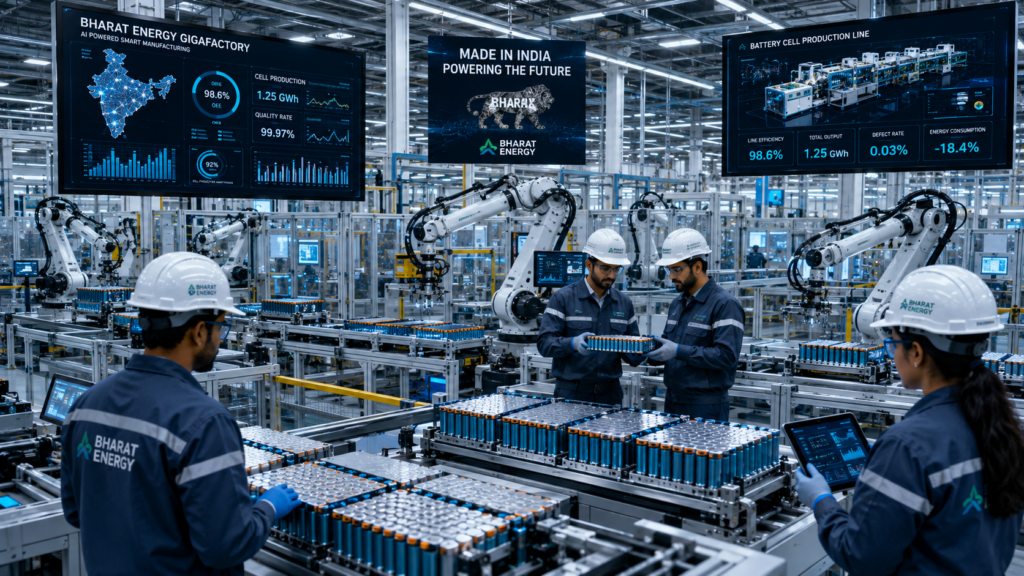
(Gigafactory Interior)
Market Reaction
Following the announcement of the MoU with Axis Energy, Ola Electric shares saw a notable rise as investors viewed the agreement as a positive step toward diversification and long-term growth. Analysts interpreted the deal as evidence that the company is broadening its revenue opportunities beyond electric two-wheelers into the fast-growing energy storage market.
Ola Electric’s Mahashakti BESS Deal Powers 20 GWh: The Technology Behind Mahashakti
The announcement that Ola Electric’s Mahashakti BESS Deal Powers 20 GWh is not just about installing batteries—it is about building an intelligent energy ecosystem capable of supporting India’s transition toward renewable electricity.
Mahashakti is designed as a utility-scale Battery Energy Storage System (BESS) that stores surplus electricity generated from renewable sources such as solar and wind. When demand rises or renewable generation falls, the stored electricity can be dispatched back to the grid, ensuring uninterrupted power supply. This makes BESS a critical component of modern electricity infrastructure as India increases the share of renewable energy in its power mix.
Unlike conventional backup batteries, Mahashakti integrates advanced battery management software, thermal controls, real-time monitoring, and scalable containerized storage units for large commercial and grid applications.
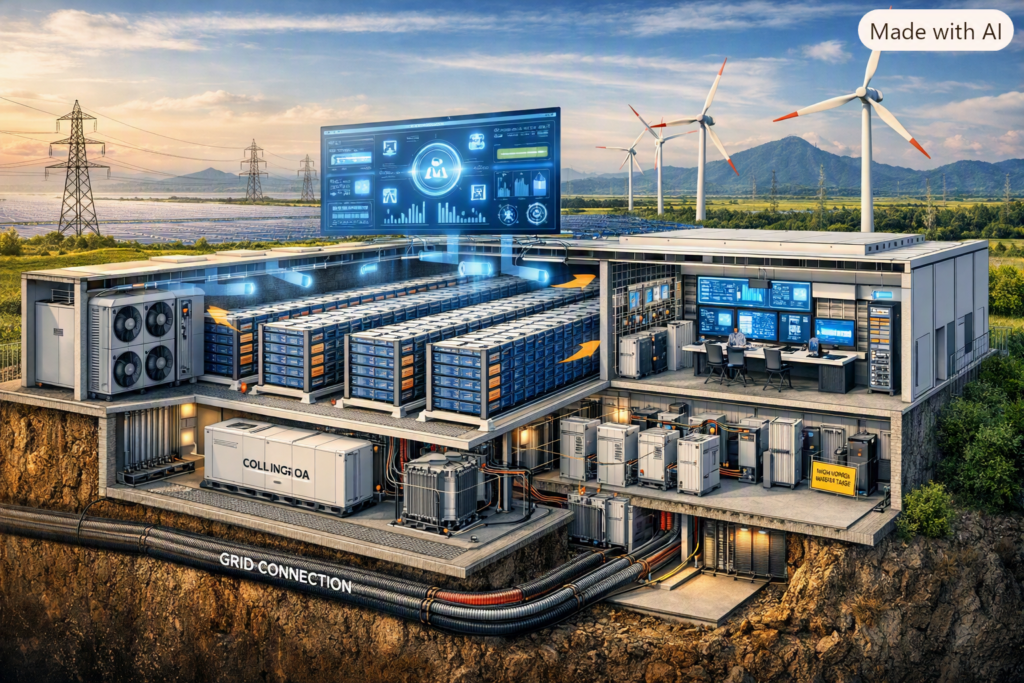
(Mahashakti Technology Diagram)
How Mahashakti BESS Supports Renewable Energy
One of the biggest challenges of renewable energy is variability.
For example:
- Solar farms generate maximum electricity during midday.
- Electricity demand generally peaks in the evening.
- Wind generation fluctuates based on weather conditions.
Battery Energy Storage Systems bridge this gap by storing energy when production exceeds demand and releasing it during periods of higher consumption.
Mahashakti can help:
- Improve renewable energy utilization.
- Reduce curtailment of solar and wind power.
- Stabilize voltage and frequency.
- Provide backup during grid disturbances.
- Lower dependence on fossil-fuel-based peaking power plants.
As India’s renewable capacity expands, large-scale storage projects will become increasingly important for maintaining grid reliability.
Ola Electric’s Mahashakti BESS Deal Powers 20 GWh: Strategic Importance for India
The strategic significance of Ola Electric’s Mahashakti BESS Deal Powers 20 GWh extends beyond the companies involved.
India has set ambitious clean energy goals, requiring substantial investments in energy storage infrastructure. The Central Electricity Authority has projected a massive increase in battery storage requirements over the coming years to support renewable integration and grid flexibility.
Projects like Mahashakti contribute to several national priorities:
- Enhancing energy security.
- Supporting renewable energy targets.
- Reducing dependence on imported fossil fuels.
- Strengthening domestic battery manufacturing.
- Encouraging indigenous clean technology development.
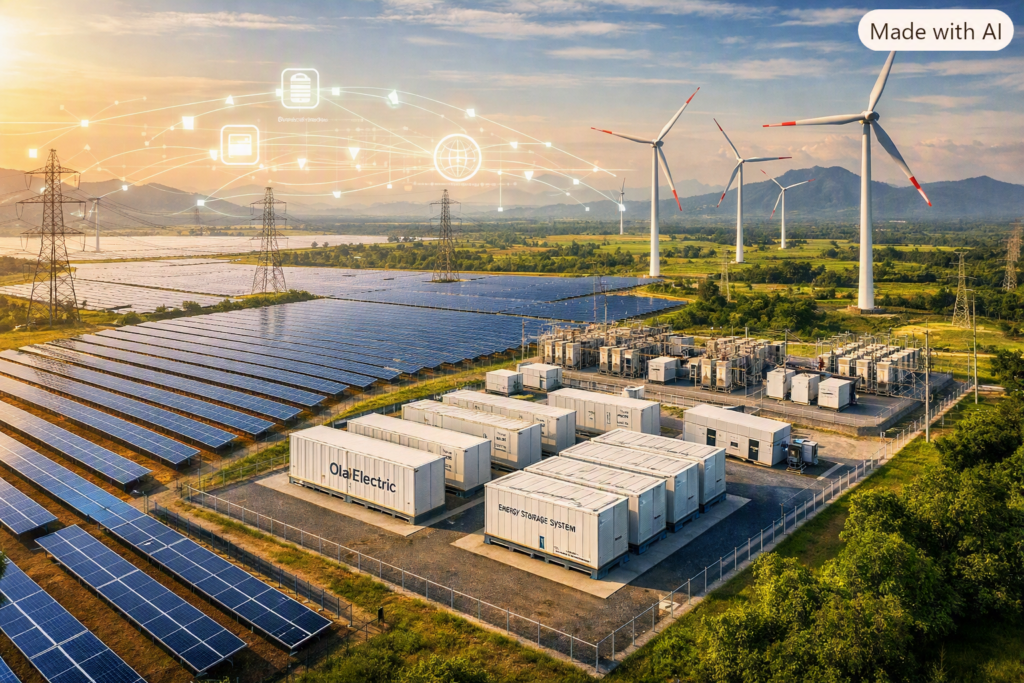
(India Renewable Energy Map)
Ola Electric’s Mahashakti BESS Deal Powers 20 GWh-
Financial Impact on Ola Electric
The partnership with Axis Energy has the potential to diversify Ola Electric’s business model.
Historically, the company’s revenue has primarily come from electric two-wheelers. However, expanding into battery energy storage opens opportunities in:
- Grid-scale energy projects.
- Commercial energy storage.
- Industrial power backup.
- Renewable energy infrastructure.
- Long-term energy service contracts.
Investors responded positively to the announcement, reflecting optimism that the company is building multiple growth engines beyond vehicle sales.
Manufacturing Advantage
A major strength behind Mahashakti is Ola Electric’s investment in domestic battery manufacturing.
The company has announced plans to scale its battery cell manufacturing capacity from approximately 6 GWh to 20 GWh, supporting both electric mobility and stationary energy storage products. This vertical integration could improve supply-chain resilience and reduce reliance on imported battery cells.
Potential advantages include:
- Lower production costs.
- Better quality control.
- Faster innovation cycles.
- Reduced import dependency.
- Improved scalability for future BESS deployments.
Competitive Landscape
India’s Battery Energy Storage market is attracting significant investment from domestic and international players.
Key competitors operate across areas such as:
- Grid-scale battery storage.
- Renewable energy integration.
- Lithium-ion manufacturing.
- Energy management software.
- Commercial storage systems.
Ola Electric differentiates itself through:
- In-house battery cell manufacturing.
- Integrated software platform.
- Existing EV ecosystem.
- Proprietary Bharat Cell technology.
- End-to-end energy solutions spanning mobility and storage.
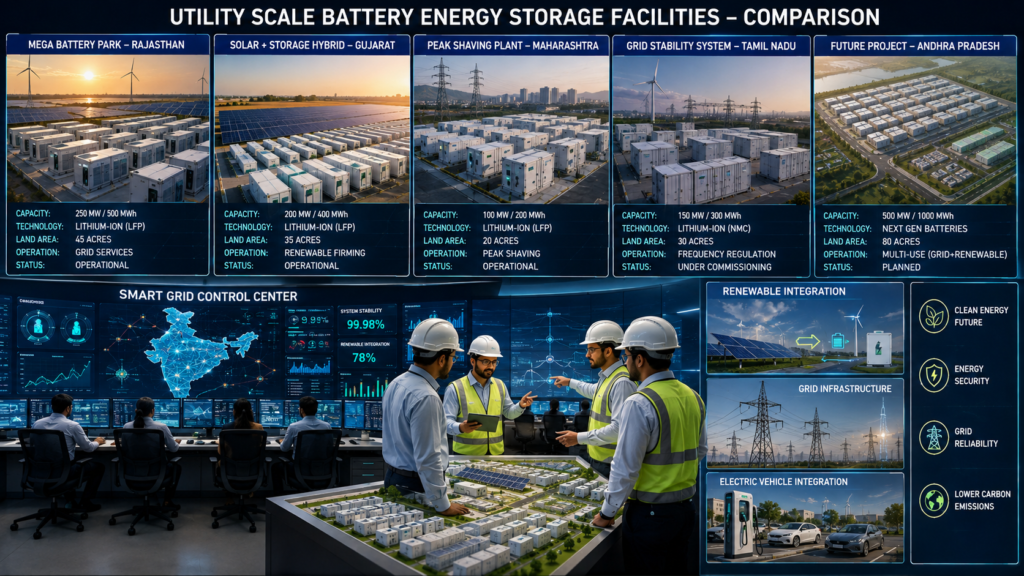
Challenges Ahead
Despite the promising outlook, large-scale Battery Energy Storage deployment comes with challenges.
1. Capital Investment
Utility-scale battery projects require significant upfront investment in manufacturing, infrastructure, and deployment.
2. Raw Material Availability
Battery production depends on materials such as lithium, nickel, and graphite. Diversifying supply chains and improving recycling will remain important.
3. Technology Evolution
Battery chemistry continues to evolve rapidly. Manufacturers must keep improving energy density, safety, and lifecycle performance to remain competitive.
4. Grid Integration
Successful deployment also depends on transmission infrastructure, regulatory support, and effective integration with existing power systems.
Addressing these factors will be key to realizing the full potential of the 20 GWh deployment roadmap.
Environmental Benefits
Large-scale Battery Energy Storage Systems provide several sustainability benefits:
- Reduced renewable energy wastage.
- Lower greenhouse gas emissions.
- Improved use of clean electricity.
- Better grid efficiency.
- Reduced reliance on diesel backup systems.
- Enhanced energy resilience during peak demand.
By enabling greater renewable energy adoption, projects like Mahashakti can contribute to India’s long-term decarbonization goals.
Ola Electric’s Mahashakti BESS Deal Powers 20 GWh
Looking Beyond Electric Scooters
The Mahashakti initiative shows that Ola Electric is positioning itself as more than an electric vehicle manufacturer.
Its broader ecosystem now includes:
- Electric scooters and motorcycles.
- Battery cell manufacturing.
- Residential energy storage (Shakti).
- Utility-scale energy storage (Mahashakti).
- Smart energy software.
- Charging infrastructure.
- Future grid-scale clean energy solutions
Ola Electric’s Mahashakti BESS Deal Powers 20 GWh: Future Roadmap to 2032
The announcement that Ola Electric’s Mahashakti BESS Deal Powers 20 GWh represents the beginning of a long-term strategy rather than a single project. Under the Memorandum of Understanding (MoU) with Axis Energy, the companies plan to deploy up to 20 GWh of Battery Energy Storage Systems (BESS) by 2032, with annual deployments expected to accelerate as manufacturing capacity expands. This aligns with Ola Electric’s broader ambition to become a major player in India’s clean energy ecosystem.
The roadmap includes:
- Scaling Mahashakti deployments across utility-scale renewable projects.
- Increasing domestic battery cell production using Ola’s Bharat Cell platform.
- Expanding commercial and industrial battery storage solutions.
- Supporting India’s transition to a renewable-powered electricity grid.
- Building a vertically integrated energy technology business.
As battery storage demand rises, Mahashakti could become one of the company’s most important growth platforms alongside electric mobility.
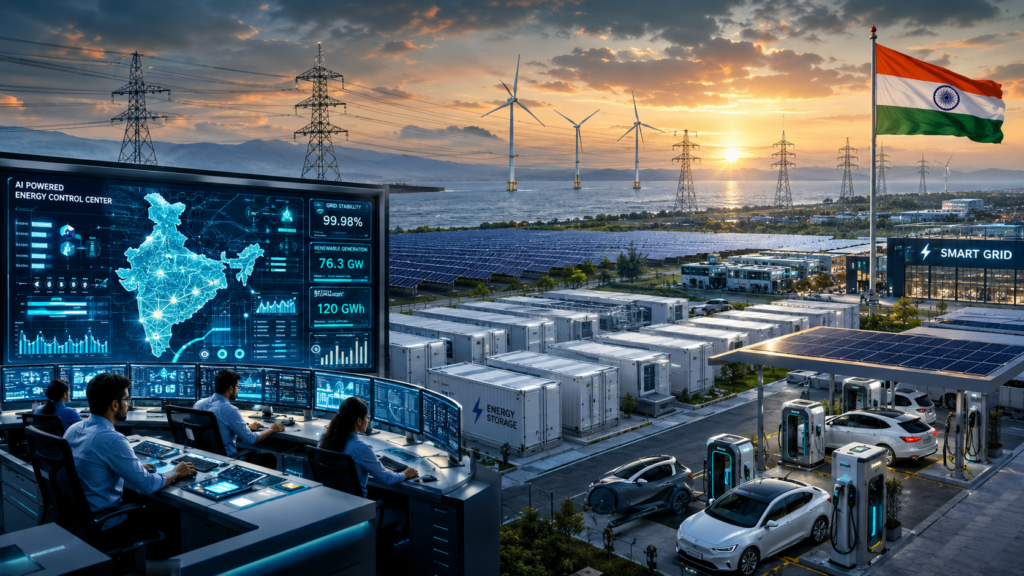
(Future Smart Energy Grid)
Ola Electric’s Mahashakti BESS Deal Powers 20 GWh
Expert Analysis
Industry experts view the Axis Energy partnership as a strategic diversification move.
Instead of relying solely on electric scooter sales, Ola Electric is expanding into sectors expected to witness rapid growth over the next decade:
- Battery cell manufacturing
- Residential energy storage
- Commercial energy storage
- Utility-scale Battery Energy Storage Systems
- Energy management software
This diversification could help the company build additional long-term revenue streams while leveraging its investments in battery technology and manufacturing. The company’s shareholder communications also indicate plans to deepen integration of its battery cells across both mobility and energy storage products.
Ola Electric’s Mahashakti BESS Deal Powers 20 GWh
Investor Perspective
The market responded positively after the MoU announcement, with Ola Electric shares gaining as investors welcomed the company’s entry into large-scale energy storage deployments. Analysts believe that participating in India’s expanding BESS market may reduce dependence on the cyclical electric two-wheeler business and strengthen long-term growth prospects.
Potential opportunities include:
- Diversified revenue sources.
- Larger infrastructure contracts.
- Higher utilization of domestic battery manufacturing.
- Greater participation in India’s energy transition.
However, investors will continue to monitor execution, manufacturing scale-up, and project delivery over the coming years.
Opportunities Created by the Mahashakti Deal
The partnership opens several strategic opportunities:
1. Accelerating Renewable Energy
Large-scale battery storage allows renewable electricity generated during off-peak periods to be stored and used when demand increases.
2. Strengthening Domestic Manufacturing
Using Bharat Cell technology could reduce dependence on imported battery cells and strengthen India’s battery manufacturing ecosystem.
3. Supporting Grid Stability
Battery Energy Storage Systems help stabilize electricity networks by balancing supply and demand.
4. Enabling New Business Models
Grid-scale storage creates opportunities for energy services, demand response, and commercial backup solutions.
Ola Electric’s Mahashakti BESS Deal Powers 20 GWh
Challenges That Could Influence Success
Despite the positive outlook, several factors will determine the success of the project:
- Scaling manufacturing efficiently.
- Managing battery raw material supply chains.
- Maintaining competitive production costs.
- Achieving timely project deployment.
- Adapting to evolving battery technologies.
- Navigating regulatory and grid integration requirements.
Effective execution will be essential for meeting the 20 GWh deployment target by 2032.
What This Means for India’s Clean Energy Future
Ola Electric’s Mahashakti BESS Deal Powers 20 GWh
India is rapidly expanding its renewable energy capacity, and battery storage is expected to become a critical enabler of that growth. According to estimates referenced by the Central Electricity Authority, the country will require hundreds of gigawatt-hours of energy storage by 2032 to support renewable integration. Projects such as Mahashakti contribute directly to that long-term requirement.
Benefits include:
- Better renewable energy utilization.
- Reduced carbon emissions.
- Improved electricity reliability.
- Enhanced energy security.
- Lower dependence on fossil-fuel-based peaking power.
Ola Electric’s Mahashakti BESS Deal Powers 20 GWh: Final Verdict
Ola Electric’s Mahashakti BESS Deal Powers 20 GWh is one of the company’s most significant strategic announcements beyond electric mobility. By partnering with Axis Energy to deploy up to 20 GWh of Battery Energy Storage Systems by 2032, Ola Electric is positioning itself as an integrated clean energy technology company rather than solely an EV manufacturer.
If the company successfully scales manufacturing, executes projects on schedule, and continues advancing its Bharat Cell technology, Mahashakti could become a major contributor to India’s renewable energy infrastructure and grid modernization.
Frequently Asked Questions (FAQ)
Ola Electric’s Mahashakti BESS Deal Powers 20 GWh
1. What is the Mahashakti BESS project?
Mahashakti is Ola Electric’s utility-scale Battery Energy Storage System designed to store renewable electricity for commercial and grid applications.
2. What is the Axis Energy partnership?
Axis Energy signed an MoU with Ola Electric to deploy up to 20 GWh of Mahashakti Battery Energy Storage Systems by 2032.
3. What does BESS stand for?
BESS stands for Battery Energy Storage System.
4. Why is 20 GWh significant?
A deployment target of 20 GWh represents one of India’s largest announced battery energy storage collaborations.
5. How does battery storage help renewable energy?
It stores surplus electricity from solar and wind projects and supplies it when generation is low or demand is high.
6. What is Bharat Cell?
Bharat Cell is Ola Electric’s in-house battery cell technology platform that supports its EV and energy storage products.
7. Will Mahashakti be used only for electric vehicles?
No. Mahashakti is intended for utility-scale, commercial, and industrial energy storage applications.
8. How could this deal benefit India?
It can improve grid stability, increase renewable energy utilization, and support domestic battery manufacturing.
9. Why did Ola Electric’s shares rise?
Investors reacted positively to the announcement, viewing it as a strategic diversification into the fast-growing energy storage sector.
10. When is the project expected to be completed?
The deployment roadmap extends through 2032, with installations planned over multiple phases.
MY View-
Ola Electric’s Mahashakti BESS partnership with Axis Energy marks a significant strategic shift from being primarily an electric vehicle manufacturer to becoming a broader clean energy player. The planned deployment of upto 20 GWh of Battery Energy Storage Systems by 2032 reflects the growing importance of energy storage in supporting India’s renewable energy ambitions and improving grid reliability.
While the agreement highlights strong long-term potential, its success will depend on timely execution, scaling domestic battery manufacturing, and navigating a competitive energy storage market. If Ola Electric delivers on its roadmap, the Mahashakti initiative could strengthen India’s energy security and establish the company as a key contributor to the country’s clean energy mission.