
The Sensex crashes 650 points: 5 shocking reasons why has become the headline dominating financial news today. This sharp decline reflects a combination of global and domestic pressures that rattled investor confidence. In this article, we break down the five key triggers behind the fall, analyze sectoral impacts, and explore what lies ahead for the Indian stock market.
Market Snapshot: Sensex Crashes 650 Points Today
- BSE Sensex: Down 650 points
- Nifty 50: Fell sharply below key support levels
- Bank Nifty: Major pressure from private banks
- Midcap & Smallcap Stocks: Heavy profit booking
- Investor Sentiment: Fear-driven selling dominates
The sudden market fall erased lakhs of crores in market capitalization within hours.
Sensex Crashes 650 Points: Global Geopolitical Tensions
One of the most significant factors driving the Sensex crash is escalating geopolitical tensions in West Asia. The Strait of Hormuz crisis, involving Iran and U.S. military actions, has disrupted global energy supply chains. For India, which imports nearly 85% of its crude oil, such disruptions translate directly into higher import bills and inflationary pressures.

Sensex Crashes 650 Points: Crude Oil Surge Above $100
Brent crude prices have surged past $100 per barrel, with some sessions crossing $110. Rising oil prices are a nightmare for India’s economy, as they increase transportation costs, widen the trade deficit, and squeeze corporate margins.
Sectors such as aviation, logistics, and manufacturing are particularly vulnerable. Investors fear that prolonged high crude prices could derail India’s growth momentum.

Sensex Crashes 650 Points: Rupee Weakness
The rupee has slipped below ₹94 per U.S. dollar, marking its fifth consecutive session of decline. A weakening rupee makes imports costlier, further aggravating inflation.
Foreign investors often view currency weakness as a red flag, prompting capital flight. This double blow—currency depreciation and equity sell‑off—has intensified the Sensex decline.

Sensex Crashes 650 Points: FII Outflows
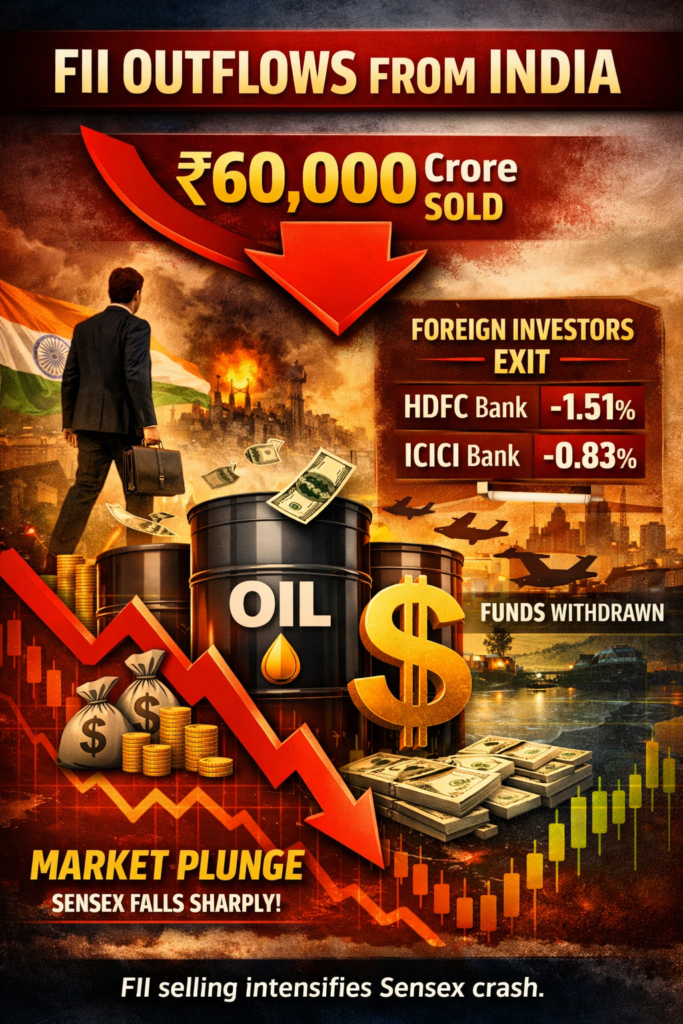
Foreign Institutional Investors (FIIs) have offloaded nearly ₹60,000 crore in the March quarter. Heavy selling in banking giants like HDFC Bank and ICICI Bank has dragged the indices lower.
Persistent FII outflows signal declining confidence in Indian equities amid global uncertainty. Domestic investors alone cannot offset this scale of withdrawal, making the market vulnerable to sharp corrections.
Sensex Crashes 650 Points: Sectoral Impact
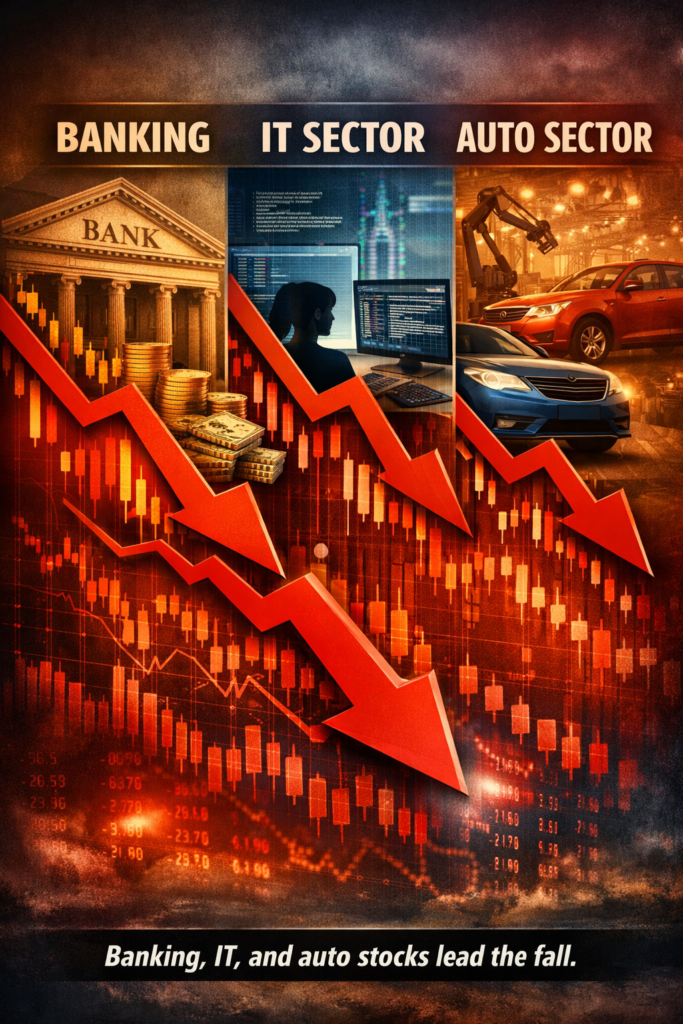
The crash has been broad‑based, affecting multiple sectors:
- Banking & Financials: HDFC Bank fell 0.83%, ICICI Bank slipped 1.51%.
- IT Stocks: Infosys, HCL Tech, and Tech Mahindra dropped over 2%.
- Automobiles: Mahindra & Mahindra declined 2.14%.
This sectoral weakness highlights how global shocks ripple across industries, eroding investor wealth.
Investor Wealth Erosion
In just three sessions, the Sensex has plunged 2,660 points (3.4%), wiping out nearly ₹9 lakh crore in investor wealth. Market capitalization of BSE‑listed firms dropped from ₹469 lakh crore to ₹460 lakh crore.
This erosion underscores the fragility of investor sentiment in times of global uncertainty.
Outlook Ahead
- Short‑term volatility will persist until clarity emerges on the Strait of Hormuz crisis.
- Medium‑term risks include sustained crude above $100, continued rupee weakness, and FII outflows.
- Long‑term resilience may depend on India’s domestic demand strength and government measures to stabilize inflation.
Takeaway for Investors
- Stay cautious in banking and IT stocks, which are bearing the brunt of FII selling.
- Focus on defensives like FMCG and pharma, which are less sensitive to oil shocks.
- Monitor crude prices and rupee trends closely, as they remain the biggest triggers for market direction.
Expert Outlook on Market Direction
Analysts believe India’s long-term growth story remains strong due to:
- Strong GDP growth
- Rising domestic participation
- Manufacturing push
- Infrastructure spending
- Stable banking system
Short-term volatility is part of the market cycle.
Final Verdict
The headline Sensex Crashes 650 Points: 5 Shocking Reasons Why reflects a sharp but understandable market reaction to multiple negative triggers. Global weakness, FII selling, rising oil prices, profit booking, and weak earnings combined to drag indices lower.