
India’s Resilient Economy: 5 RBI Insights on Stability is the latest theme emerging from the Reserve Bank of India’s April 2026 Bulletin. Despite global volatility, capital outflows, and geopolitical tensions, India’s financial system and external sector continue to demonstrate remarkable strength. With foreign exchange reserves at $697.1 billion, strong FDI inflows, and a healthy banking sector, the RBI underscores that India’s macroeconomic fundamentals remain robust.
The phrase India’s Resilient Economy: 5 RBI Insights on Stability captures the essence of how India has managed to maintain balance between growth and price stability. RBI’s policy decisions, regulatory oversight, and economic guidance have played a central role in this performance.
In this article, we explore five major RBI insights that explain why India’s economy remains strong and what lies ahead for investors, businesses, and citizens.
1. India’s Resilient Economy: Forex Reserves Cushion Global Shocks
India’s forex reserves surged to $697.1 billion, covering nearly 11 months of imports. This buffer provides India with the ability to withstand external shocks such as volatile oil prices, currency fluctuations, and capital outflows.

2. India’s Resilient Economy: Strong FDI Inflows Amid Global Uncertainty
Despite risk aversion in global markets, India continues to attract robust foreign direct investment (FDI). Net FDI inflows have improved, reflecting investor confidence in India’s growth story, particularly in sectors like technology, renewable energy, and manufacturing.

3. India’s Resilient Economy: Banking Sector Stability
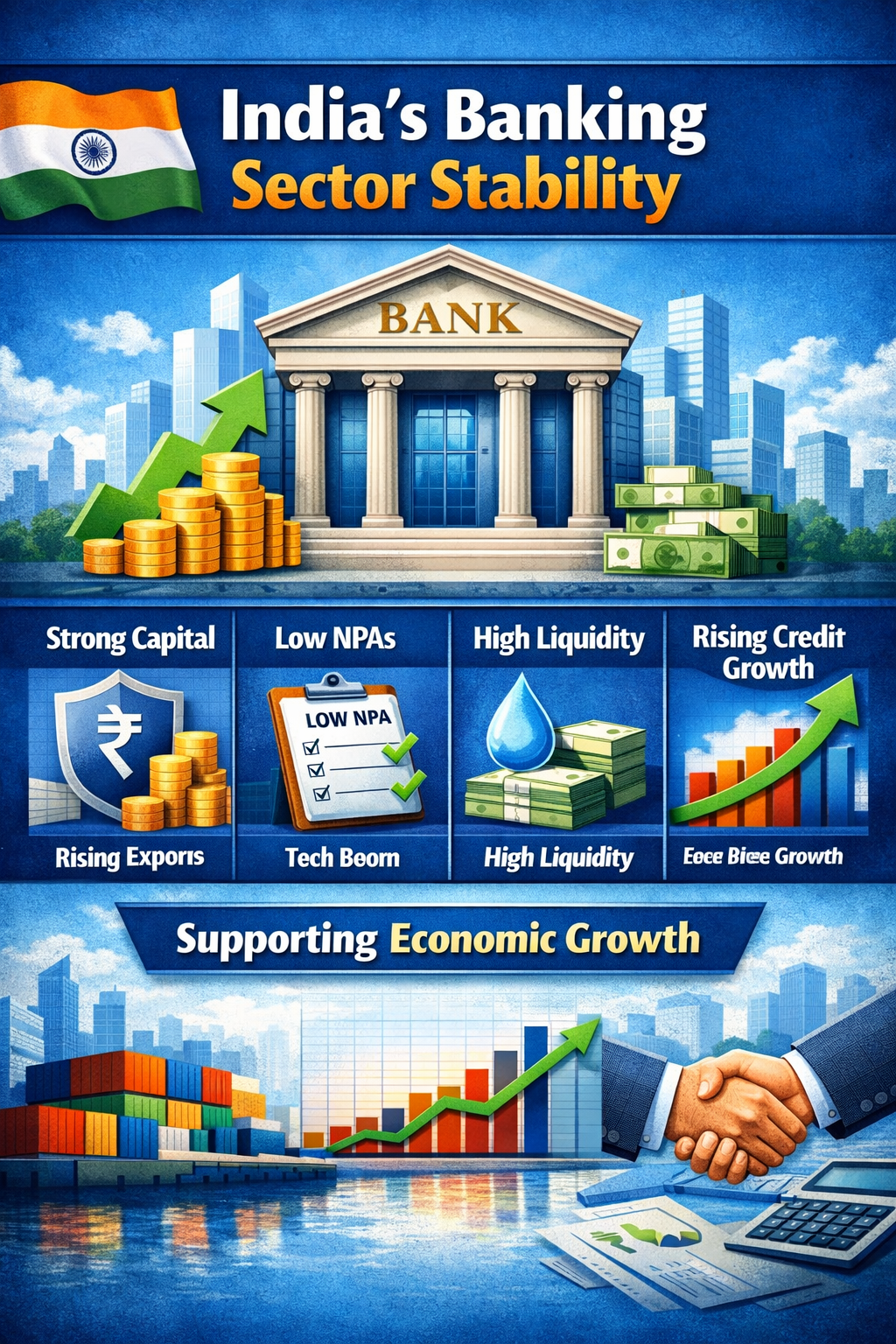
The RBI bulletin highlights that India’s banking sector remains strong, with healthy capital adequacy, liquidity, and asset quality. Credit growth across corporate and retail segments has accelerated, supporting investment and consumption.
4. India’s Resilient Economy: Trade Deficit Narrows
India’s trade deficit narrowed to a nine-month low, supported by rising exports and moderated imports. This improvement strengthens the external balance and reduces vulnerability to global shocks.

5. India’s Resilient Economy: Inflation Risks and Policy Vigilance
While resilience is evident, the RBI cautions about inflationary pressures. CPI inflation edged up in March due to food and fuel costs, largely driven by supply chain disruptions from the West Asia conflict.

Key Challenges RBI Continues to Monitor
Even with strong fundamentals, RBI remains cautious about certain risks.
Global Risks
- Slowing world demand
- Commodity price spikes
- Geopolitical tensions
- Financial market volatility
Domestic Risks
- Food inflation due to weather
- Employment generation pace
- Rural consumption recovery
- Private investment acceleration
The central bank’s balanced policy approach aims to protect growth while maintaining stability.
What This Means for Investors and Businesses
India’s resilient economic outlook creates opportunities across sectors such as:
- Banking and finance
- Infrastructure
- Manufacturing
- Consumer goods
- Technology
- Renewable energy
- Real estate
Businesses benefit from stable demand, improving credit access, and predictable monetary policy.
Investors often view stable economies as safer destinations for long-term capital deployment.
What This Means for Common Citizens
For ordinary households, economic resilience can translate into:
- Better job opportunities
- Stable prices over time
- Easier loan availability
- Stronger rupee confidence
- Improved public infrastructure
- Rising income potential
While challenges remain, sustained growth improves quality of life gradually across urban and rural India.
Comparative Snapshot
| Indicator | Current Status (Apr 2026) | Outlook |
|---|---|---|
| Forex Reserves | $697.1 bn (11 months cover) | Strong buffer |
| FDI Inflows | Robust, net positive | Continued confidence |
| FPI Flows | Net outflows, volatile | Risk from global uncertainty |
| Trade Deficit | Narrowed to 9-month low | Positive trend |
| Banking Sector Health | Strong capital adequacy | Stable |
| Credit Growth | High across sectors | Boosts GDP |
| Inflation | Rising food & fuel costs | Risks elevated |
Conclusion
India’s Resilient Economy: 5 RBI Insights on Stability highlights how strong forex reserves, healthy banking indicators, and robust FDI inflows are cushioning India against global volatility. While challenges such as inflationary pressures and geopolitical risks persist, India’s macroeconomic fundamentals remain solid.
The RBI’s bulletin underscores that policy vigilance, structural reforms, and continued investor confidence will be key to sustaining resilience in the months ahead.