
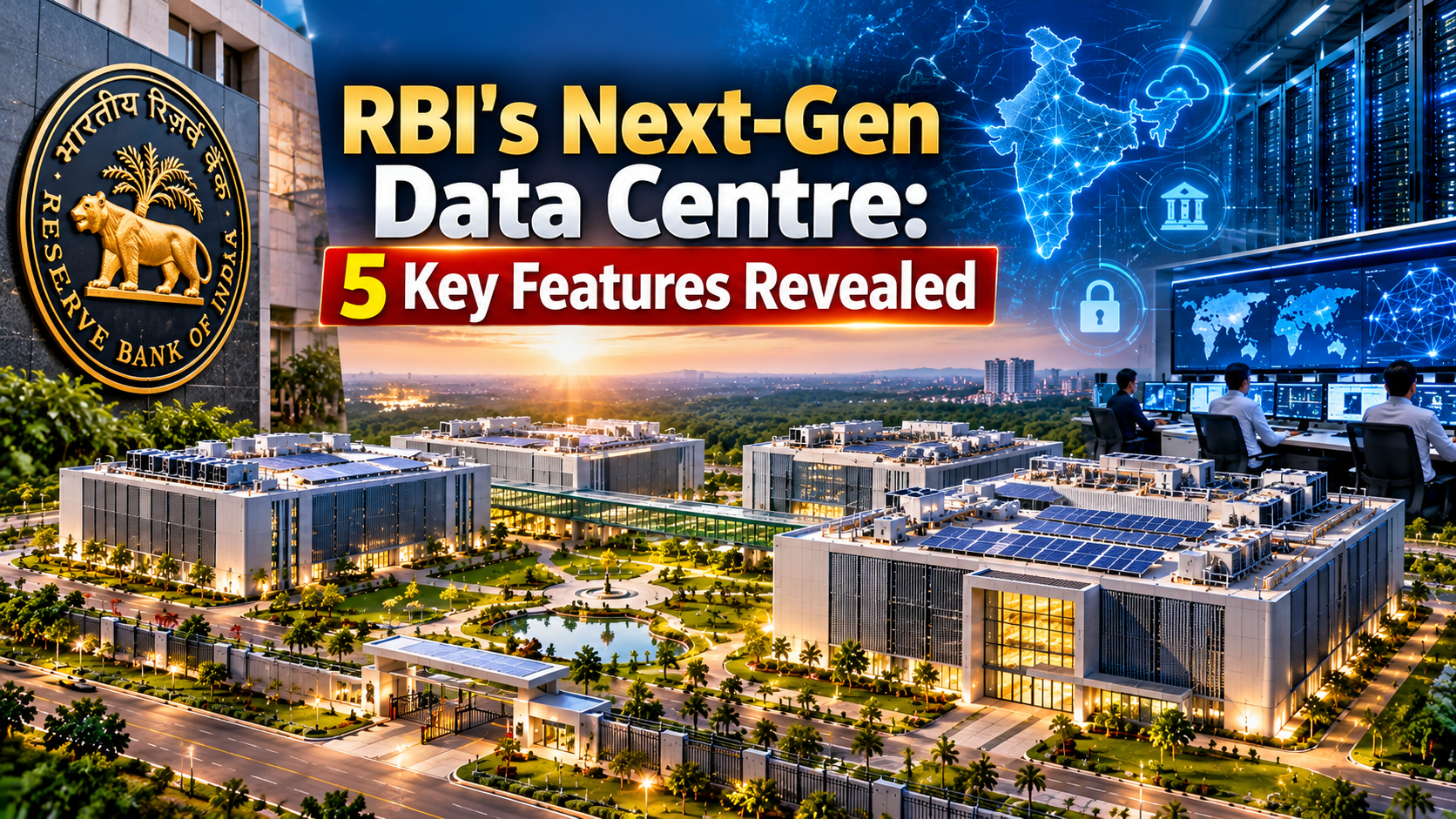
RBI’s Next-Gen Data Centre: 5 Key Features Revealed-Introduction
India’s financial landscape is experiencing a historic digital transformation, supported by the rapid expansion of digital payments, mobile banking, financial inclusion and emerging technologies. As millions of Indians increasingly rely on electronic transactions, the need for secure, reliable and uninterrupted financial infrastructure has become more important than ever.
In a significant step towards strengthening India’s digital economy, Prime Minister Narendra Modi inaugurated the Reserve Bank of India’s (RBI) next generation Data Centre and Cybersecurity Training Institute in Bhubaneswar, Odisha, on October 25, 2026.
Developed at a reported cost of approximately ₹169 crore, the project represents a major investment in India’s financial technology infrastructure. The facility includes four integrated data centers designed to support mission critical payment and settlement systems, improve operational resilience and meet future computing requirements.
RBI’s Next-Gen Data Centre: 5 Key Features Revealed explores the technological innovations, cybersecurity capabilities, advanced computing infrastructure and sustainability objectives that make this project an important milestone for India’s financial future.
The facility is also central to the broader theme of RBI’s Next-Gen Data Centre: A Digital Revolution, demonstrating how advanced infrastructure can support a secure, scalable and technologically empowered financial ecosystem.
datacenters.economictimes.indiatimes.com
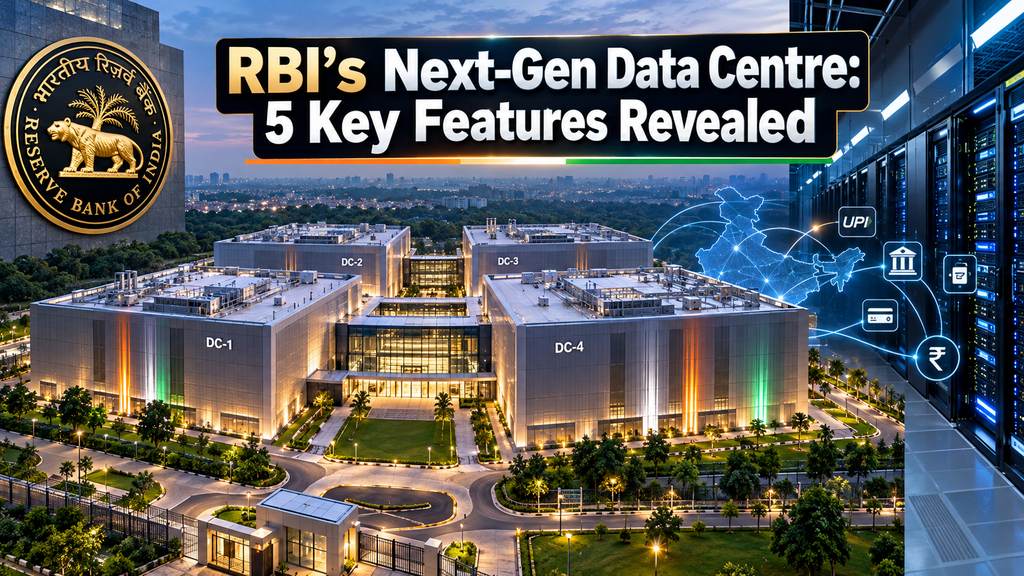
What Is RBI’s Next-Gen Data Centre?
The Reserve Bank of India is India’s central bank, responsible for maintaining monetary and financial stability, managing currency issuance, regulating important parts of the financial system and overseeing payment and settlement infrastructure.
With the increasing digitalisation of banking services, the RBI requires advanced computing facilities capable of processing sensitive financial information and supporting essential financial operations.
The new data centre in Odisha is designed to meet these requirements by combining high-availability infrastructure, advanced security capabilities and scalable computing resources.
The project also includes a dedicated Cybersecurity Training Institute to support research, professional development and technological innovation.
The RBI had identified the need for a new greenfield data centre to address computing capacity constraints, growing IT requirements and geographical concentration risks.
RBI’s Next-Gen Data Centre: Key Project Details
| Particular | Details |
|---|---|
| Project | RBI Data Centre and Cybersecurity Training Institute |
| Location | Info Valley-II, Jatni, near Bhubaneswar, Odisha |
| Inaugurated by | Prime Minister Narendra Modi |
| Inauguration date | October 25, 2026 |
| Reported investment | ₹169 crore |
| Campus area | 18.55 acres |
| Integrated data centres | Four |
| Certification | Uptime Institute Tier IV |
| Foundation stone | March 22, 2023 |
| Foundation laid by | Former RBI Governor Shaktikanta Das |
| Main purpose | Secure computing, critical financial applications and operational resilience |

RBI’s Next-Gen Data Centre: 5 Key Features Revealed in Detail
The project brings together five important technological and operational features that distinguish it from conventional computing infrastructure.
1. Four integrated, high-performance data centres
Infrastructure designed for critical payment and settlement applications and growing computing requirements.
2. Tier IV-certified infrastructure
Fault-tolerant architecture intended to support high availability and operational continuity.
3. Cybersecurity training and research
A dedicated institute for developing technical expertise and responding to emerging financial-sector risks.
4. AI-ready and future-focused technology
Infrastructure intended to accommodate artificial intelligence, cloud computing, big data and other emerging technologies.
5. Data sovereignty and sustainable development
Domestic infrastructure designed with attention to resilience, environmental responsibility and long-term technology needs.
Feature 1: Four Integrated Data Centres for India’s Digital Financial Infrastructure
The first major highlight of RBI’s Next-Gen Data Centre: 5 Key Features Revealed is its integrated cluster of four modern data centres.
According to the Press Information Bureau, these facilities will host mission-critical payment and settlement systems, along with other important RBI initiatives.
This infrastructure is particularly important because India’s digital financial system has become increasingly complex and interconnected.
Digital transactions now support everyday activities, including shopping, business payments, salary transfers, bill payments and government benefit distribution.
Such services depend on multiple institutions and technologies working together efficiently.
Supporting 24×7×365 Financial Operations
Modern financial infrastructure must remain dependable throughout the year.
A payment system cannot simply stop functioning because it is a weekend, public holiday or period of high transaction demand.
Critical computing facilities therefore require robust power arrangements, cooling systems, network connectivity, monitoring and disaster recovery capabilities.
The RBI’s integrated data centre infrastructure is designed to strengthen its ability to maintain essential operations.
Importantly, this does not mean that every UPI transaction will be processed directly at the new facility. UPI operates through an ecosystem involving the National Payments Corporation of India, banks and other participants.
The new data centre instead strengthens the RBI’s own critical technology infrastructure and the systems within its operational responsibility.
Why This Matters for India’s Economy
Reliable payment and settlement infrastructure contributes to financial stability.
When essential financial systems remain available, banks and businesses can operate with greater confidence.
For a growing digital economy, resilient infrastructure is therefore not simply a technical requirement. It is an important part of economic preparedness.
FOUR INTEGRATED DATA CENTRE
Feature 2: Tier IV Certification for High Reliability and Operational Resilience
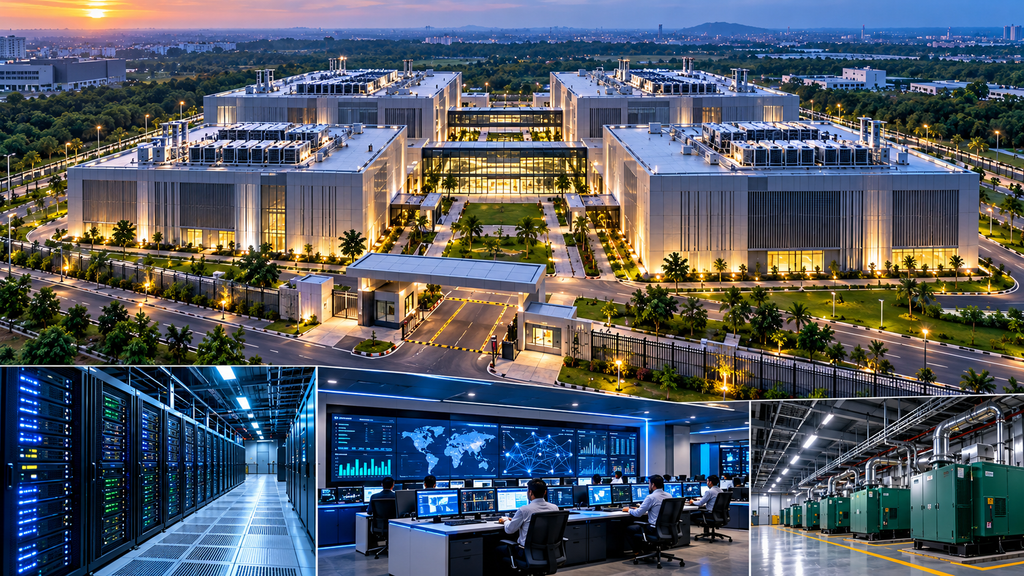
The second important feature of RBI’s Next-Gen Data Centre: 5 Key Features Revealed is its Tier IV certification from the Uptime Institute.
Tier IV represents the highest infrastructure tier within the Uptime Institute’s data centre classification system.
The government states that the RBI facility is among the largest Tier IV-certified data centre facilities in the global banking, financial services and insurance sector.
What Does Tier IV Certification Mean?
Tier IV infrastructure is designed around fault tolerance.
This means that certain equipment failures should not interrupt critical computing operations because alternative infrastructure paths and supporting systems are available.
High-availability facilities commonly incorporate redundant power distribution, cooling capacity and other essential components.
These arrangements reduce dependence on individual pieces of equipment.
For a central bank, such resilience is particularly valuable because interruptions to critical financial systems can have consequences beyond a single institution.
Benefits of Tier IV Infrastructure
The major advantages include:
- Reduced exposure to certain infrastructure failures.
- Improved ability to perform maintenance without disrupting critical operations.
- Stronger power and cooling redundancy.
- Greater reliability for essential financial applications.
- Better preparedness for unexpected technical incidents.
However, Tier IV certification should not be interpreted as a guarantee that every service will remain available under all circumstances.
Software errors, cyberattacks, telecommunications disruptions and operational failures still require separate safeguards.
The RBI’s broader resilience strategy must therefore combine infrastructure design with cybersecurity, monitoring, recovery planning and operational governance.
TIER IV INFRASTRUCTURE
Feature 3: Advanced Cybersecurity Training and Research Institute
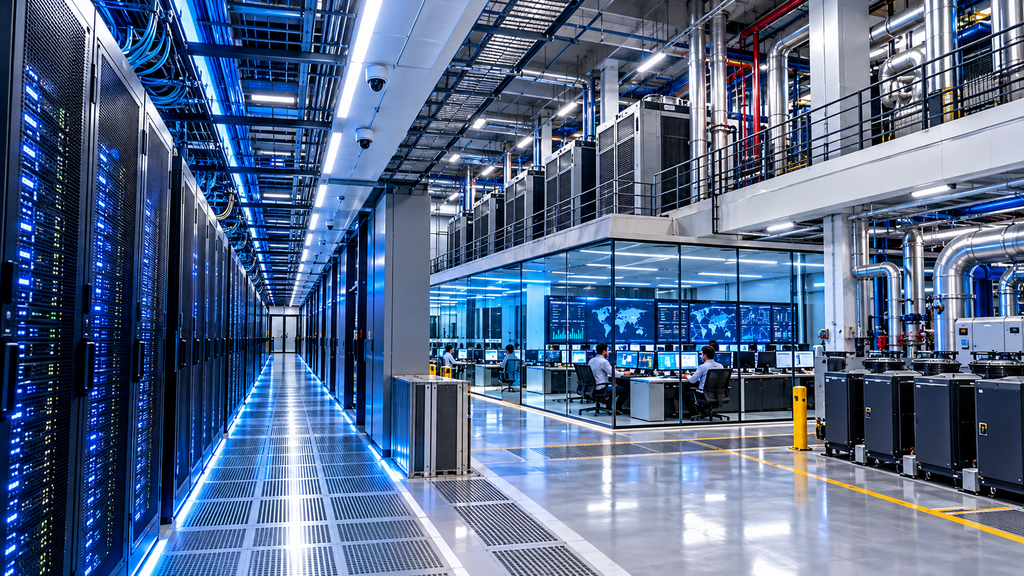
Another major highlight of RBI’s Next-Gen Data Centre: 5 Key Features Revealed is the establishment of a dedicated Cybersecurity Training Institute.
The institute is intended to strengthen technical capabilities across the banking, financial services and insurance sector.
According to the government’s announcement, its focus includes cybersecurity, enterprise technology, artificial intelligence, quantum computing and other emerging technologies.
Why Cybersecurity Is Critical for India’s Banking Sector
As financial services become more digital, cybercriminals are developing increasingly sophisticated methods of attacking financial institutions.
Common threats include ransomware, phishing, unauthorised access, identity theft, data breaches and attacks on critical IT infrastructure.
Even when a bank maintains strong internal security, risks can arise through external vendors, compromised software or interconnected networks.
A dedicated cybersecurity institute can help address these challenges by supporting specialised training, research and knowledge sharing.
Research, Innovation and Skill Development
The institute can contribute to long-term cybersecurity preparedness through several areas of activity:
- Cybersecurity training: Developing the technical capabilities of professionals responsible for protecting critical systems.
- Threat intelligence: Improving understanding of emerging attack techniques and vulnerabilities.
- Incident response: Strengthening preparedness for identifying, containing and recovering from security incidents.
- Advanced computing research: Studying technologies that may influence future financial infrastructure.
- Institutional capacity building: Supporting stronger technical expertise across relevant financial-sector organisations.
These activities are especially important because technology evolves faster than traditional institutional training programmes.
Preparing for AI-Driven Cyber Threats
Artificial intelligence introduces both opportunities and risks.
AI-based tools can assist cybersecurity teams by identifying suspicious activity, detecting anomalies and processing large volumes of security information.
However, attackers can also use AI to develop more convincing phishing campaigns and automate certain malicious activities.
The RBI’s focus on advanced cybersecurity research could help institutions prepare for these changing threats.
This is one reason RBI’s Next-Gen Data Centre: A Digital Revolution extends beyond infrastructure construction and includes investment in specialised human expertise.
CYBERSECURITY RESEARCH

Feature 4: Artificial Intelligence, Cloud Computing and Future-Ready Infrastructure
The fourth feature of RBI’s Next-Gen Data Centre: 5 Key Features Revealed is its readiness to support emerging technologies.
Financial systems are becoming increasingly dependent on advanced computing capabilities.
Traditional infrastructure may struggle to accommodate the growing demands of artificial intelligence, machine learning, large-scale data analysis and complex financial applications.
The project presentation describes the new facility as being prepared for future requirements involving these technologies.
Artificial Intelligence in Financial Services
Artificial intelligence has the potential to transform several aspects of financial operations.
Banks and financial institutions can use appropriately governed AI systems for fraud detection, transaction monitoring, customer support and operational risk analysis.
For central banks, advanced analytical tools may also support research, supervisory analysis and institutional decision-making.
However, AI adoption must be accompanied by appropriate controls addressing data protection, accuracy, transparency and accountability.
The existence of AI-ready infrastructure does not itself establish that every such application has already been deployed.
Machine Learning and Big Data Analytics
Machine learning allows computing systems to identify patterns in large datasets.
In financial services, these capabilities can help institutions examine unusual activity, understand operational trends and improve monitoring.
Big data analytics can also support the processing of complex information generated by increasingly interconnected financial systems.
As India’s digital economy expands, scalable computing resources will become more important for these applications.
Cloud Computing and Scalability
Cloud computing enables organisations to access computing resources through flexible infrastructure arrangements.
For financial institutions, potential advantages include scalability, resource efficiency and faster deployment of certain applications.
The RBI’s future-ready infrastructure can support technology modernisation while maintaining appropriate security and governance requirements.
Nevertheless, decisions involving cloud architecture, sensitive data and outsourcing must remain consistent with applicable regulatory and operational safeguards.
Quantum Computing and Future Financial Security
Quantum computing is another emerging technology receiving increasing attention from financial institutions.
Although practical applications are still developing, sufficiently capable future quantum computers could create challenges for some widely used cryptographic methods.
Research into quantum computing and quantum-resistant security approaches may therefore become important for long-term financial infrastructure protection.
The accompanying institute’s focus on quantum technologies reflects this need for preparedness.
AI AND CLOUD COMPUTING

Feature 5: Data Sovereignty, Sustainability and Long-Term Financial Security
The fifth major aspect of RBI’s Next-Gen Data Centre: 5 Key Features Revealed combines domestic infrastructure development, geographical resilience and environmental responsibility.
The new facility strengthens the RBI’s ability to operate critical computing infrastructure within India.
This contributes to the broader objective of maintaining appropriate control over essential financial technology systems.
Understanding Data Sovereignty
Data sovereignty concerns the legal and regulatory framework governing data and its processing.
For financial institutions, it is particularly relevant because their systems handle sensitive operational and financial information.
Domestic infrastructure can support stronger institutional oversight and reduce certain dependencies on geographically concentrated facilities.
However, data sovereignty involves more than the physical location of servers.
Effective protection also requires sound cybersecurity practices, access controls, legal safeguards and operational governance.
Why Bhubaneswar Was Selected
The RBI’s new campus is located at Info Valley-II in Jatni, near Bhubaneswar.
The facility covers approximately 18.55 acres, with its foundation stone laid by former RBI Governor Shaktikanta Das on March 22, 2023.
The location provides geographical separation from the RBI’s existing computing infrastructure in Navi Mumbai.
According to reporting on the project, the Odisha facility is intended to serve as secondary or backup infrastructure, strengthening business continuity and disaster recovery preparedness.
This separation is important because concentrating critical systems in one geographical area can increase exposure to regional disruptions.
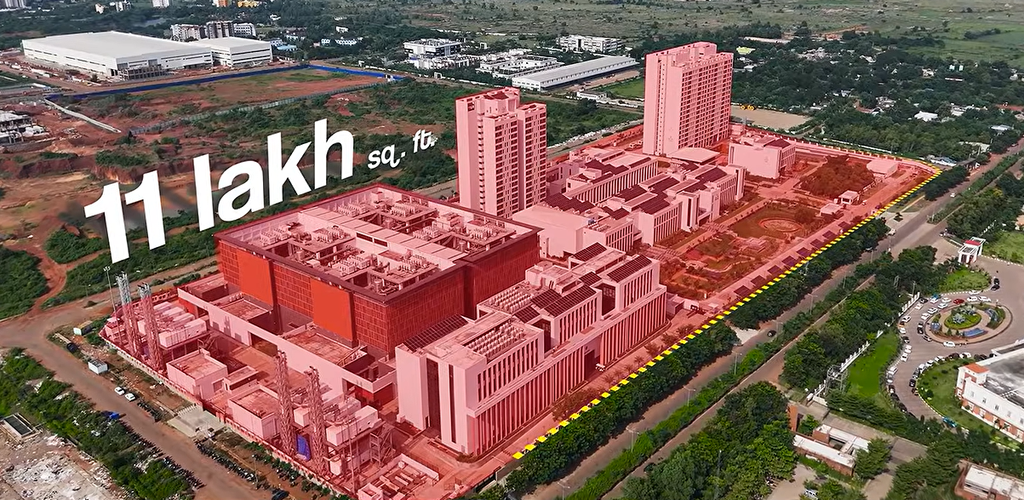
More Than 11 Lakh Square Feet of Infrastructure
The project presentation describes the transformation of an undeveloped site into more than 11 lakh square feet of built-up infrastructure over approximately three years.
It also highlights construction challenges associated with adverse weather and global supply chain disruptions.
This built-up-area figure comes from the project material supplied for this article and should be independently confirmed against detailed official project documentation before publication.
Green Infrastructure and Environmental Responsibility
Data centres consume electricity for computing, cooling, networking and supporting equipment.
As demand for computing increases, improving energy efficiency becomes an important part of sustainable infrastructure development.
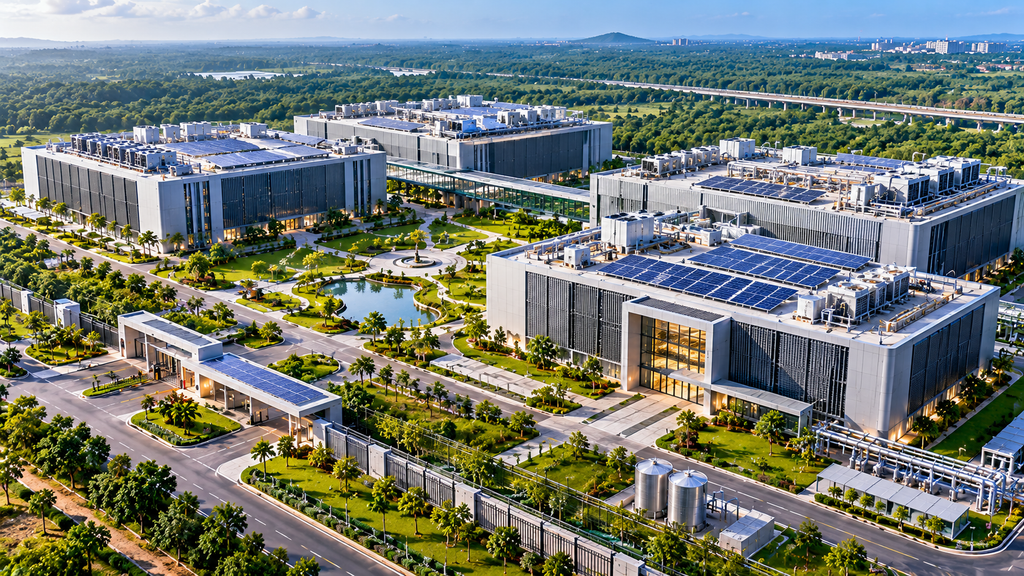
The project presentation emphasises the use of local resources, cultural considerations, cleaner energy and environmental responsibility in the campus design.
Potential sustainable practices include efficient cooling systems, renewable electricity, water conservation and responsible equipment management.
Actual environmental performance, however, should be assessed using verified operational data rather than design intentions alone.
SUSTAINABLE DATA CENTRE CAMPUS
RBI’s Next-Gen Data Centre: A Digital Revolution for India’s Financial Ecosystem
The secondary keyword, RBI’s Next-Gen Data Centre: A Digital Revolution, reflects the wider significance of the project.
India’s financial transformation has been supported by improvements in digital connectivity, banking access, financial technology and payment infrastructure.
The Jan Dhan–Aadhaar–Mobile (JAM) framework has helped expand access to financial and government services.
Meanwhile, digital payment technologies have made electronic transactions increasingly accessible to individuals and businesses.
However, digital innovation requires dependable underlying infrastructure.
Financial services cannot operate effectively without secure computing systems, resilient networks, data protection and operational continuity.
The RBI’s new facility addresses an important part of these requirements.
Supporting India’s Digital Payment Growth
India’s digital payment ecosystem includes UPI, real-time gross settlement, electronic fund transfers and other payment arrangements.
Each system operates within its own institutional and technical framework.
The RBI’s new data centre is expected to strengthen critical central banking applications and support the reliability of financial infrastructure.
This does not mean the new facility independently controls all digital payment platforms.
Rather, it contributes to the broader ecosystem through the systems and responsibilities assigned to the central bank.
Supporting Financial Inclusion
Financial inclusion depends on more than access to a bank account.
Customers also need dependable payment services, accessible banking channels and confidence in the security of financial transactions.
Reliable central banking infrastructure can indirectly support these objectives by strengthening essential financial operations.
The long-term benefit is a financial system better equipped to accommodate growing digital participation.
RBI’s Next-Gen Data Centre: 5 Key Features Revealed and Their Economic Impact
The project could have important implications for India’s financial and technology sectors.
First, improved computing resilience can support the continuity of essential financial operations.
Second, stronger cybersecurity capabilities can help institutions prepare for increasingly complex digital threats.
Third, investment in modern infrastructure can support the adoption of new technologies.
Fourth, the Cybersecurity Training Institute can contribute to specialised workforce development.
Finally, geographically diversified infrastructure can improve preparedness for disruptions affecting critical facilities.
These benefits should be understood as expected contributions rather than guaranteed outcomes.
The actual impact will depend on how effectively the facility is commissioned, operated, maintained and integrated with existing RBI systems.
Why the Project Matters for Odisha
The establishment of RBI’s new data centre also represents an important development for Odisha’s technology ecosystem.
Bhubaneswar has been expanding its role as a destination for information technology, digital services and institutional infrastructure.
A major central banking technology facility adds to the region’s significance within India’s financial technology landscape.
The project may also encourage demand for specialised technical services, infrastructure maintenance, cybersecurity expertise and related professional capabilities.
However, specific employment or investment multiplier claims would require separate evidence.
The facility’s long-term contribution to the state will depend on its operational requirements and the development of supporting technology and skills ecosystems.
Challenges Ahead for RBI’s Next-Generation Data Centre
Despite its advanced design, the facility will face ongoing operational challenges.
Cybersecurity threats are continuously evolving, making regular security assessments and incident response preparation essential.
Technology infrastructure also requires periodic upgrades to remain compatible with changing computing requirements.
Another challenge involves energy consumption.
As AI applications and data-processing demands expand, modern data centres must manage power requirements and cooling efficiency.
Specialised workforce development will also remain important.
Advanced infrastructure can deliver its intended benefits only when supported by trained professionals, effective management and appropriate governance.
The new research and training institute could play an important role in addressing these requirements.
The Future of India’s Financial Infrastructure
The inauguration of RBI’s next-generation data centre represents a shift towards greater emphasis on infrastructure resilience, advanced computing and long-term technological preparedness.
As India continues to expand digital financial services, critical infrastructure will need to accommodate increasing transaction activity, more complex applications and emerging cybersecurity threats.
The RBI’s investment provides additional computing capacity and an institutional platform for research and skills development.
It also highlights the importance of combining technology, operational security and environmental responsibility.
For India’s financial sector, future readiness will increasingly depend on the ability to maintain reliable systems while adapting to technological change.
Conclusion: RBI’s Next-Gen Data Centre and India’s Digital Future
RBI’s Next-Gen Data Centre: 5 Key Features Revealed highlights an important development in India’s financial infrastructure modernisation.
The integration of four advanced data centres, Tier IV-certified infrastructure, specialised cybersecurity research, future-ready computing capabilities and a focus on resilience provides a stronger technological foundation for the central bank.
The project also demonstrates why investment in critical computing infrastructure matters for an economy increasingly dependent on digital financial services.
The broader vision of RBI’s Next-Gen Data Centre: A Digital Revolution is therefore not limited to faster computers or larger server facilities.
It concerns the development of secure, dependable and adaptable infrastructure capable of supporting India’s financial system in the years ahead.
As digital transactions and financial technology continue to evolve, the long-term value of the project will be measured by its contribution to operational continuity, cybersecurity preparedness and the resilience of essential financial services.
Frequently Asked Questions (FAQs)
1. What is RBI’s Next-Gen Data Centre?
It is a modern computing facility established by the Reserve Bank of India in Odisha to support critical financial applications, operational resilience, secure computing and future technology requirements.
2. Where is RBI’s Next-Gen Data Centre located?
The facility is located at Info Valley-II in Jatni, near Bhubaneswar, Odisha.
3. Who inaugurated RBI’s new data centre in 2026?
Prime Minister Narendra Modi inaugurated the Data Centre and Cybersecurity Training Institute on October 25, 2026.
4. What are the five key features of RBI’s next-gen data centre?
The five major features are four integrated data centres, Tier IV-certified infrastructure, cybersecurity research and training, AI-ready computing capabilities, and a focus on data sovereignty and sustainable infrastructure.
5. What is the reported cost of the project?
Recent reports place the project cost at approximately ₹169 crore.
6. What does Tier IV certification mean?
Tier IV is the highest infrastructure tier in the Uptime Institute’s classification framework, associated with fault-tolerant design and high availability.
7. How will the new data centre benefit India’s digital economy?
It is intended to strengthen the resilience and reliability of critical central banking technology systems, which form part of India’s wider digital financial infrastructure.
8. Will the facility support artificial intelligence?
The project is designed with future computing requirements in mind, including artificial intelligence and other advanced technologies. The accompanying training institute will also support research and capability development.
9. Why is cybersecurity training important for the RBI?
Cybersecurity training helps develop expertise in protecting critical systems, identifying threats, responding to incidents and preparing for emerging technological risks.
10. Why is the Bhubaneswar location important?
The location provides geographical diversification from existing RBI infrastructure in Navi Mumbai and supports business continuity and disaster recovery objectives.