
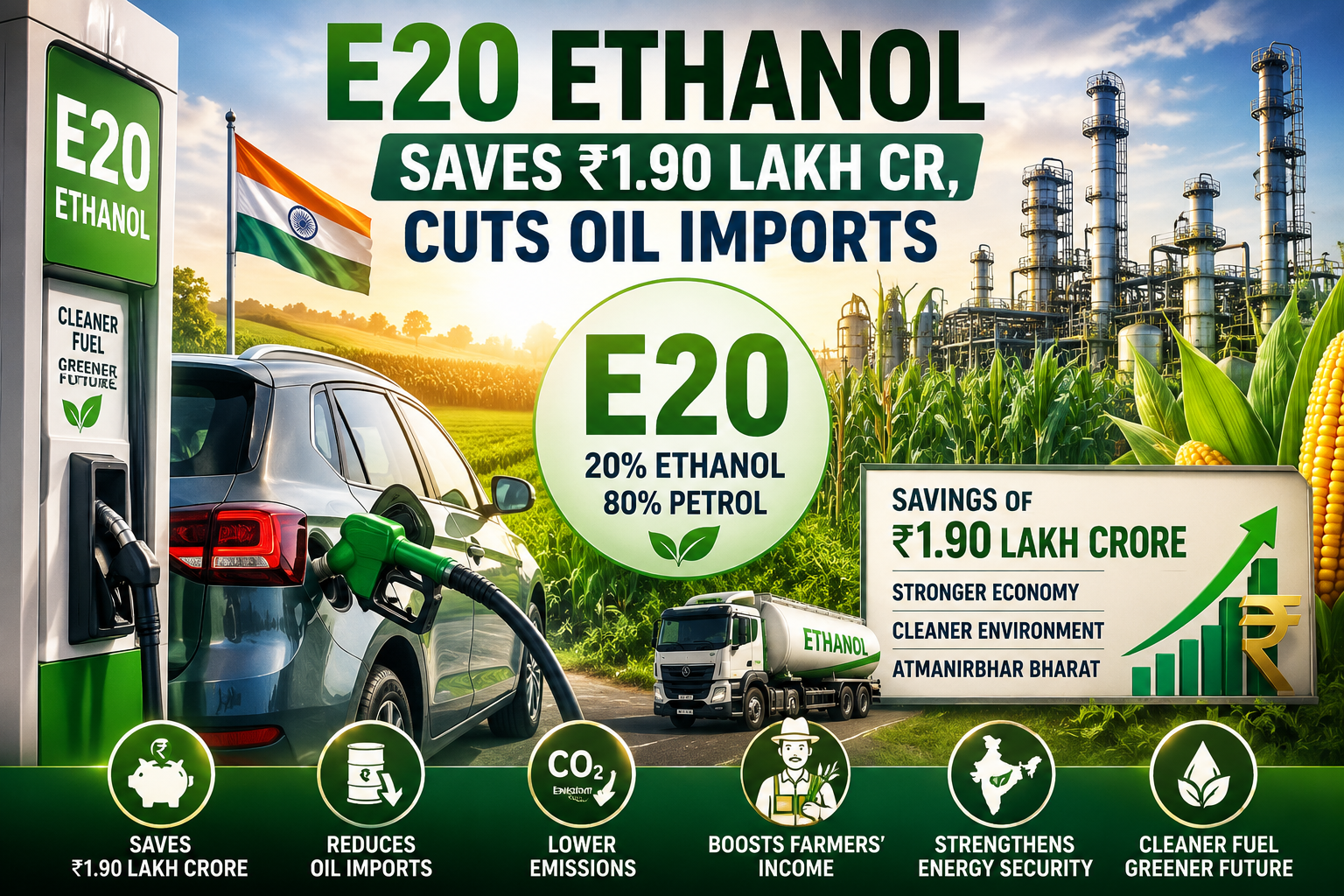
E20 Ethanol Saves ₹1.90 Lakh Cr, Cuts Oil Imports: India’s Green Fuel Revolution Gains Momentum
E20 Ethanol Saves ₹1.90 Lakh Cr, Cuts Oil Imports
India’s ambitious ethanol blending programme has reached a historic milestone, giving significant economic and environmental benefits to the country. According to the government sources, the E20 ethanol initiative blending program, not only saves nearly ₹1.90 Lakh Crore by reducing crude oil imports but also cutting carbon emissions and improving farmers income.
This achievement represents one of the India’s biggest clean energy transitions in recent decades. By replacing a big portion of imported fossil fuels with domestically produced ethanol, India is reducing its dependence on fossil fuels imported from international oil markets while strengthening rural agriculture and promoting sustainable development.
India is the world’s third-largest oil importer, India spends huge amounts of dollars every year on purchasing crude oil from overseas. When increase price in global crude oil directly impacts inflation, transportation costs, and the country’s trade deficit. The rapid expansion of E20 ethanol blending is designed to address these challenges through a home – grown renewable fuel solution.
Key Highlights
- India targets nationwide 20% ethanol blending (E20)
- Also introduced E85 blending program in recent days.
- Estimated savings of ₹1.90 lakh crore through reduced oil imports.
- Significant reduction in greenhouse gas emissions.
- Higher demand for sugarcane, maize, and grain-based ethanol.
- Lower foreign exchange outflow.
- Strong boost to India’s energy security.
- Supports India’s Net Zero emissions target by 2070.
- Reduces dependency on volatile global crude oil prices.
- Creates new investments in biofuel infrastructure.
- Produces new job opportunities.
What is E20 Ethanol Fuel?
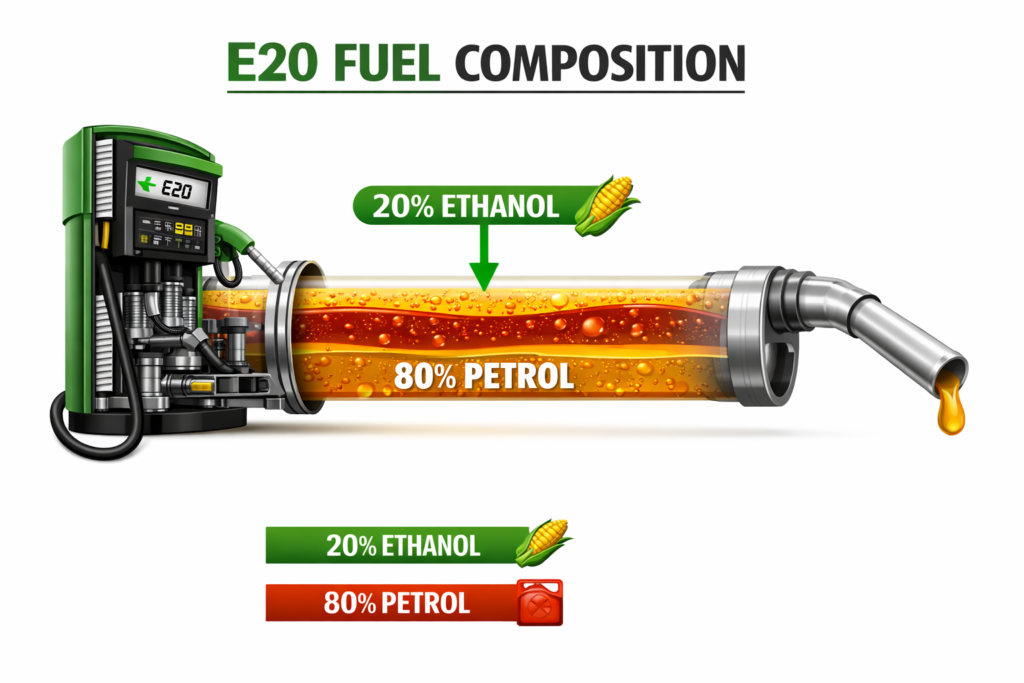
E20 refers to the blended with 20% ethanol and 80% Petrol or Conventional gasoline. Etahnol is an alcohol-based renewable fuel primarily produced from agricultural products such as:
- Sugarcane Juice
- Sugarcane molasses
- Damaged food grains
- Maize
- Rice
- Other biomass sources
Unlike fossil fuels, ethanol is renewable because crops can be grown repeatedly, making it a cleaner alternative for transportation.
India has gradually increased blending over the past decade, moving from less than 2% blending to nearly 20% and recently introduced E85 in selected regions before expanding nationwide.
Why India Introduced the E20 Programme
India imports nearly 85% of its crude oil requirements. This dependence creates several economic challenges:
- High import bills
- Exposure to geopolitical tensions
- Currency depreciation risks
- Rising fuel prices
- Inflationary pressures
The government launched the Ethanol Blended Petrol (EBP) Programme to tackle these issues by encouraging domestic ethanol production and reducing reliance on imported crude oil.
The initiative aligns with India’s broader goals of achieving energy independence while supporting sustainable economic growth.
How E20 Ethanol Saves ₹1.90 Lakh Cr
One of the biggest advantages of the E20 programme is its potential to substantially reduce India’s crude oil import bill.
Every litre of ethanol blended into petrol replaces imported petroleum products. As ethanol production increases domestically, the country purchases less crude oil from international markets.
Economic experts estimate that nationwide implementation of E20 could save approximately ₹1.90 lakh crore in foreign exchange over time, depending on international crude prices and blending volumes.
These savings arise from:
- Reduced crude oil imports
- Lower foreign exchange expenditure
- Better trade balance
- Reduced exposure to oil price volatility
- Increased domestic fuel production
For an economy that imports hundreds of billions of dollars worth of energy annually, such savings can significantly strengthen fiscal stability.
A Major Boost to India’s Energy Security
Energy security has become one of the most important strategic priorities for India.
Global events—including geopolitical conflicts, supply chain disruptions, and oil production cuts—have repeatedly demonstrated the risks of relying heavily on imported energy.
Expanding ethanol production within India helps create a more diversified fuel supply.
Instead of depending almost entirely on imported crude oil, India can increasingly rely on fuel produced by its own farmers and biofuel industries.
This diversification improves resilience against global energy shocks and enhances long-term national security.
Reducing Crude Oil Imports
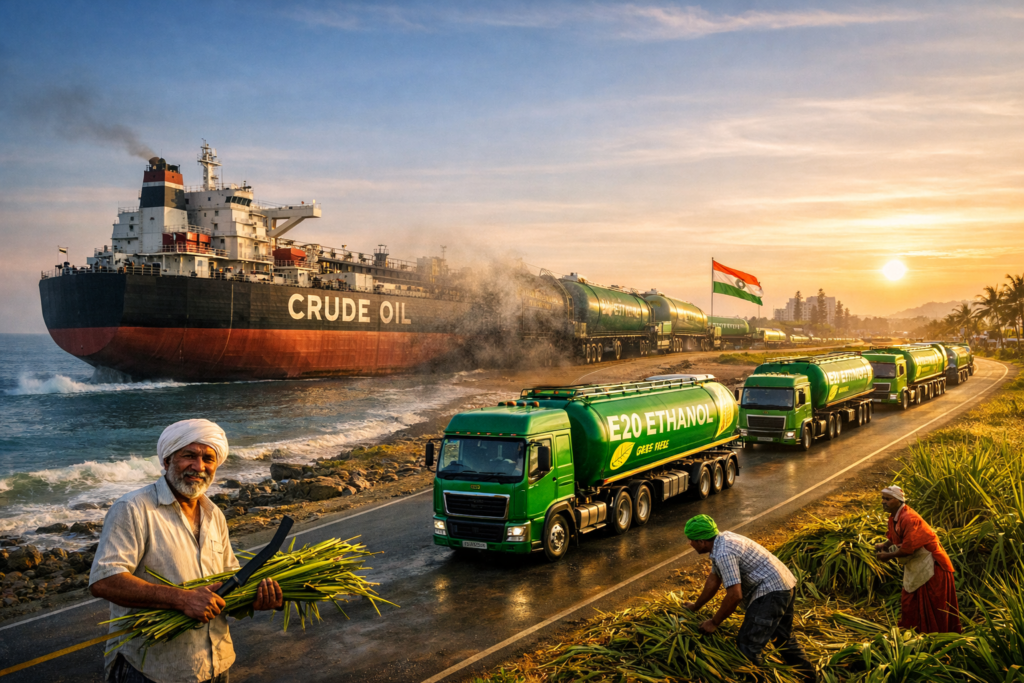
Crude oil imports account for one of India’s largest import expenditures.
Higher international crude prices often result in:
- Costlier petrol and diesel
- Higher transportation costs
- Increased inflation
- Rising logistics expenses
- Pressure on the Indian Rupee
E20 blending directly offsets part of this dependence by replacing a portion of petrol consumption with domestically produced renewable ethanol.
Even a small percentage reduction in imported petroleum translates into billions of dollars in savings annually.
Environmental Benefits of E20 Ethanol
The benefits extend well beyond economics.
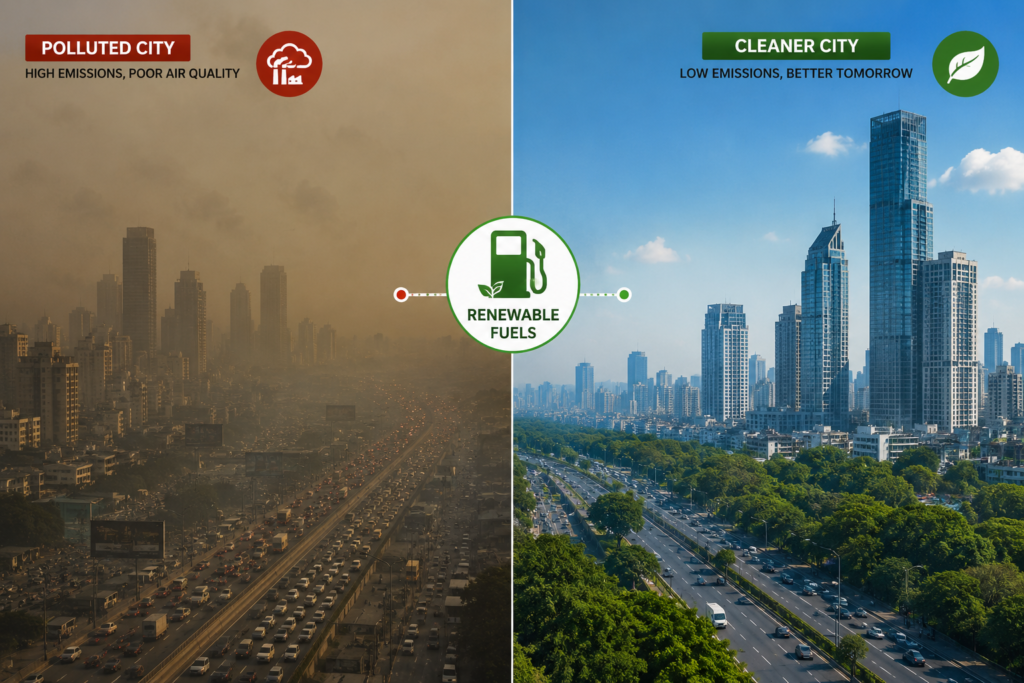
Ethanol burns cleaner than conventional petrol and produces lower lifecycle greenhouse gas emissions.
Major environmental advantages include:
- Reduced carbon dioxide emissions
- Lower carbon monoxide emissions
- Cleaner combustion
- Reduced particulate pollution
- Improved urban air quality
The E20 programme also supports India’s commitments under international climate agreements and contributes toward achieving the country’s Net Zero target by 2070.
How the E20 Ethanol Programme Benefits Indian Farmers
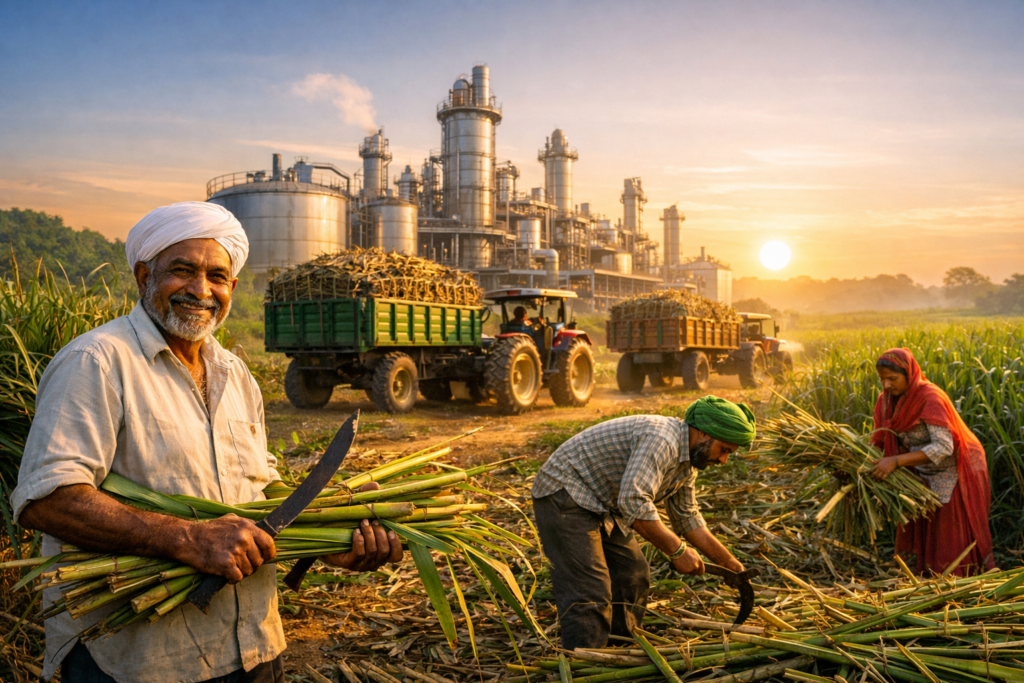
One of the most transformative aspects of the E20 ethanol programme is its direct impact on India’s agricultural economy. For decades, Indian farmers have struggled with fluctuating crop prices, delayed payments, and limited market opportunities. Ethanol production has created an additional and more stable demand for agricultural produce, particularly sugarcane and grains.
The government’s ethanol blending policy has enabled sugar mills and distilleries to purchase more feedstock from farmers, providing them with another revenue stream beyond traditional food markets.
Key benefits for farmers include:
- Higher and more stable demand for sugarcane.
- Increased procurement of maize and damaged food grains.
- Improved cash flow due to better payment cycles.
- Reduced dependence on volatile commodity prices.
- New employment opportunities in ethanol plants and logistics.
The expansion of ethanol production is also encouraging crop diversification. Farmers in several states are increasingly cultivating maize and other ethanol feedstocks, helping reduce overdependence on a single crop while improving agricultural sustainability.
Sugar Industry Gets a New Growth Engine
For many years, India’s sugar industry faced recurring challenges such as surplus production, falling sugar prices, and mounting dues owed to farmers.
The ethanol programme has changed this equation significantly.
Instead of converting all sugarcane into sugar, mills now have the flexibility to divert sugarcane juice and B-heavy molasses for ethanol production. This helps:
- Reduce excess sugar stocks.
- Improve the financial health of sugar mills.
- Generate higher-value products.
- Enable faster payments to farmers.
- Create a more balanced sugar market.
As ethanol demand rises, many sugar mills are investing in modern distillation facilities, making the industry more resilient and diversified.
Grain-Based Ethanol is Expanding Rapidly
Initially, India’s ethanol programme relied heavily on sugarcane. However, the government has expanded the feedstock base to include grains, making ethanol production more balanced and less dependent on one crop.
Major grain sources now include:
- Maize
- Broken rice
- Damaged food grains
- Surplus rice approved for ethanol production
This diversification reduces pressure on sugarcane-producing regions while creating opportunities for farmers across multiple states.
It also strengthens supply security by ensuring ethanol production can continue even if one particular crop experiences lower yields due to weather conditions.
Massive Investments in Biofuel Infrastructure
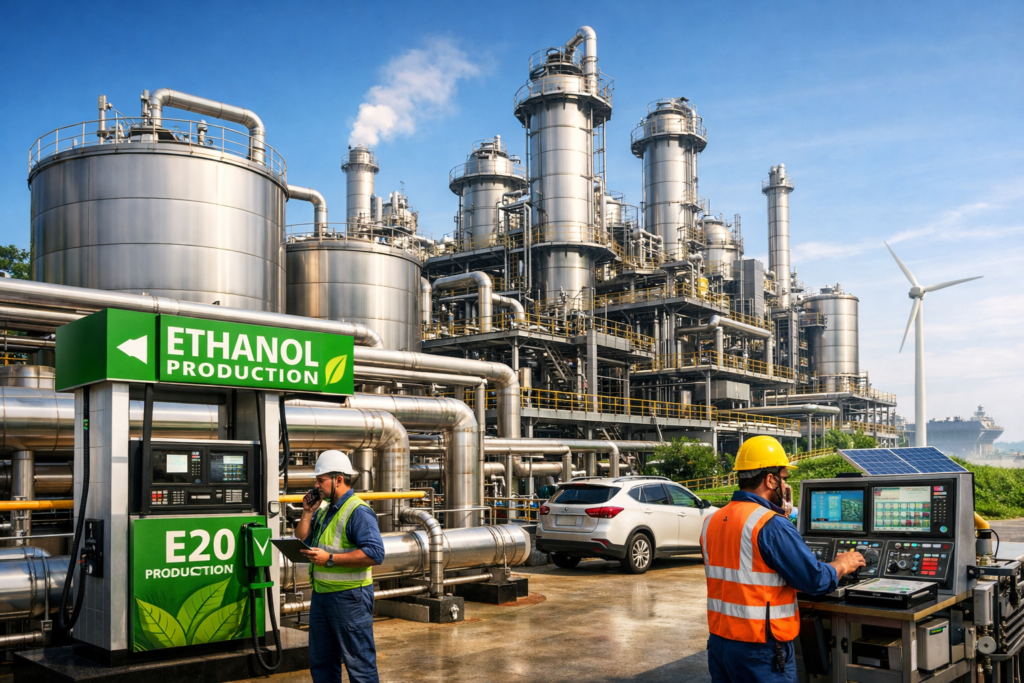
India’s ethanol mission has triggered large-scale investments across the biofuel value chain.
These investments include:
- New ethanol distilleries.
- Capacity expansion at existing plants.
- Storage terminals.
- Fuel blending infrastructure.
- Transportation and logistics networks.
- Research and development facilities.
Public sector oil marketing companies have also upgraded fuel depots and distribution systems to support nationwide E20 availability.
Private companies are investing heavily in modern ethanol plants, helping increase domestic production capacity and creating thousands of skilled and semi-skilled jobs.
Automobile Industry Ready for the E20 Transition
One of the biggest concerns during the early stages of ethanol blending was vehicle compatibility.
Automobile manufacturers have since adapted by developing engines designed to run efficiently on E20 fuel.
Several manufacturers now produce:
- E20-compatible passenger cars.
- Motorcycles.
- Commercial vehicles.
- Flexible engine technologies.
The Society of Indian Automobile Manufacturers (SIAM) and major vehicle companies have worked closely with the government to ensure a smooth transition.
Consumers purchasing newer vehicles are increasingly receiving models capable of operating safely on E20 petrol.
Are Existing Vehicles Compatible with E20?
Vehicle compatibility depends on the manufacturing year and engine design.
Generally:
Older Vehicles
Some older vehicles may experience:
- Reduced fuel efficiency.
- Wear on rubber components if not designed for higher ethanol blends.
- Minor compatibility concerns.
New Vehicles
Most recently manufactured petrol vehicles are designed or calibrated to operate with E20 fuel.
Vehicle owners should always refer to the manufacturer’s recommendations before using higher ethanol blends.
Environmental Impact Beyond Lower Carbon Emissions
The environmental benefits of ethanol extend beyond greenhouse gas reductions.
Additional advantages include:
Cleaner Air
Ethanol combustion produces fewer harmful pollutants, contributing to improved urban air quality.
Renewable Fuel Source
Unlike fossil fuels, ethanol is produced from renewable agricultural resources that can be replenished every growing season.
Lower Toxic Emissions
Blended fuels reduce emissions of several pollutants associated with conventional petrol combustion.
Circular Economy
Agricultural waste and by-products can be utilized in ethanol production, reducing waste while generating additional economic value.
Strengthening India’s Foreign Exchange Position
India spends a substantial amount of foreign currency on importing crude oil.
Reducing oil imports through domestic ethanol production helps:
- Save valuable foreign exchange.
- Improve the current account balance.
- Reduce vulnerability to exchange rate fluctuations.
- Strengthen macroeconomic stability.
Lower import dependence also gives policymakers greater flexibility in managing external economic shocks.
Economic Ripple Effects Across Multiple Sectors
The ethanol programme stimulates growth beyond agriculture and energy.
Beneficiary sectors include:
- Engineering and manufacturing.
- Construction.
- Chemical industries.
- Transportation.
- Storage and warehousing.
- Rural infrastructure.
- Financial services.
As new ethanol plants are established, local economies benefit from increased employment, improved infrastructure, and higher business activity.
Challenges Facing the E20 Programme
While the programme has achieved remarkable progress, several challenges remain.
1. Feedstock Availability
Maintaining a consistent supply of sugarcane and grains without affecting food security requires careful planning.
2. Water Consumption
Sugarcane cultivation is water-intensive.
Expanding ethanol production must be balanced with sustainable water management practices and greater use of alternative feedstocks.
3. Infrastructure Gaps
Although blending infrastructure has expanded rapidly, continued investments are needed in:
- Storage facilities.
- Transportation.
- Distribution networks.
- Retail fuel stations.
4. Consumer Awareness
Many consumers remain unfamiliar with E20 fuel.
Educational campaigns are essential to explain:
- Vehicle compatibility.
- Fuel efficiency.
- Environmental benefits.
- Long-term savings.
5. Regional Production Imbalances
Ethanol production is concentrated in certain states.
Expanding production capacity across more regions will improve supply chain efficiency and reduce transportation costs.
Government Policies Driving Ethanol Growth
The success of the E20 programme has been supported by a range of policy measures, including:
- Ethanol Blended Petrol (EBP) Programme.
- Long-term ethanol procurement agreements.
- Financial assistance for new distilleries.
- Interest subvention schemes.
- Faster environmental clearances for eligible projects.
- Promotion of multiple feedstocks.
- Roadmap for nationwide E20 availability.
These initiatives have provided confidence to investors while accelerating the development of India’s biofuel ecosystem.
India Emerges as a Global Biofuel Leader
Several countries, including Brazil and the United States, have long incorporated ethanol into transportation fuels. India is now rapidly joining this group by scaling up blending infrastructure, encouraging domestic production, and integrating biofuels into its long-term energy strategy.
Unlike many countries that rely on a single feedstock, India’s diversified approach—using sugarcane, maize, and surplus grains—offers greater flexibility and resilience. If current momentum continues, India could become one of the world’s largest producers and consumers of ethanol-blended fuel, supporting both energy security and rural development.
Expert Analysis: Why the E20 Ethanol Programme Matters
India’s E20 programme is more than just a fuel policy—it represents a strategic shift in the country’s approach to energy, agriculture, and economic resilience.
For decades, India’s transport sector relied heavily on imported crude oil. Global events such as geopolitical conflicts, OPEC+ production cuts, and supply-chain disruptions have repeatedly shown how vulnerable oil-importing nations can be to external shocks. Rising crude prices increase fuel costs, widen the trade deficit, and put pressure on inflation.
By replacing a portion of petrol with domestically produced ethanol, India is reducing these vulnerabilities while creating value within its own economy. Every litre of ethanol blended into petrol supports domestic industries, generates rural employment, and reduces the need for imported fossil fuels.
The programme also reflects a balanced policy approach by linking clean energy goals with rural development. Instead of treating environmental sustainability and economic growth as competing priorities, the E20 initiative attempts to achieve both simultaneously.
Impact on Consumers
Although the E20 programme is primarily designed to strengthen India’s energy security, consumers also stand to benefit over the long term.
Potential consumer benefits include:
- Improved national energy security.
- Reduced exposure to sharp global fuel price fluctuations.
- Cleaner-burning fuel with lower emissions.
- Greater availability of domestically produced fuel.
- Support for India’s transition toward greener transportation.
Consumers with E20-compatible vehicles are expected to experience minimal operational differences when using the blended fuel, provided they follow the vehicle manufacturer’s recommendations.
Opportunities Ahead
The E20 initiative opens several long-term opportunities for India.
1. Expansion of Biofuel Production
As demand grows, more investments are likely in ethanol distilleries, advanced biofuel technologies, and integrated biorefineries.
2. Rural Economic Development
New ethanol facilities can generate employment in farming, transportation, engineering, and plant operations, boosting economic activity in rural areas.
3. Technology and Innovation
Research into second-generation (2G) ethanol—produced from agricultural residues such as rice straw and crop waste—could further improve sustainability while reducing stubble burning.
4. Export Potential
If domestic production capacity continues to grow efficiently, India may eventually emerge as a technology and knowledge partner for countries looking to expand their own biofuel programmes.
Risks That Need Continued Attention
While the programme has significant potential, policymakers must continue addressing key challenges:
- Ensuring ethanol production does not affect food security.
- Promoting water-efficient agricultural practices.
- Expanding feedstock diversity beyond sugarcane.
- Building adequate storage and transportation infrastructure.
- Increasing public awareness of E20-compatible vehicles.
- Encouraging research into advanced biofuels and sustainable production methods.
Balanced implementation will be essential to maximize benefits while minimizing unintended consequences.
Future Outlook
The E20 programme is expected to play an increasingly important role in India’s long-term energy strategy.
Future priorities are likely to include:
- Higher ethanol production capacity.
- Wider adoption of second-generation ethanol.
- Increased use of agricultural waste for biofuel.
- Continued modernization of fuel distribution infrastructure.
- Greater investment in research and innovation.
- Closer collaboration between government, farmers, oil companies, and automobile manufacturers.
If these efforts continue successfully, ethanol blending could become one of the defining pillars of India’s transition toward a cleaner, more self-reliant energy future.
Conclusion
India’s E20 ethanol initiative marks a significant milestone in the country’s journey toward energy independence, economic resilience, and environmental sustainability.
The projected savings of ₹1.90 lakh crore through reduced crude oil imports underscore the programme’s potential to strengthen India’s economy while lowering dependence on international energy markets. At the same time, the initiative supports farmers by creating additional demand for agricultural produce, encourages investment in biofuel infrastructure, and contributes to cleaner air through lower emissions.
Challenges such as feedstock availability, water management, infrastructure expansion, and consumer awareness remain important. However, with continued policy support, technological innovation, and collaboration among stakeholders, the E20 programme is well positioned to become a cornerstone of India’s clean energy transition.
As the nation moves toward greater energy self-reliance and its long-term climate goals, ethanol blending is expected to remain a key driver of sustainable growth, rural prosperity, and national energy security.
Frequently Asked Questions (FAQs)
1. What is E20 fuel?
E20 is a blend consisting of 20% ethanol and 80% petrol.
2. Why is India promoting E20 ethanol?
To reduce crude oil imports, improve energy security, lower emissions, and support farmers.
3. How much money can India save through E20?
Government estimates indicate potential savings of around ₹1.90 lakh crore by reducing oil imports.
4. Does E20 reduce pollution?
Yes. Ethanol burns cleaner than conventional petrol and helps reduce greenhouse gas emissions.
5. Is E20 renewable?
Yes. Ethanol is produced from renewable agricultural feedstocks.
6. Which crops are used to produce ethanol?
Sugarcane, maize, damaged food grains, broken rice, and other approved biomass sources.
7. Will E20 reduce fuel imports?
Yes. Blending ethanol with petrol reduces the amount of imported petroleum required.
8. Is E20 safe for vehicles?
Most newer petrol vehicles are designed or calibrated to use E20 fuel. Owners should consult the manufacturer’s recommendations.
9. How does E20 benefit farmers?
It creates additional demand for crops used in ethanol production, helping improve farm incomes and market stability.
10. What are the biggest challenges?
Feedstock availability, water use, infrastructure expansion, and public awareness.
MY VIEW:
“As per My opinion, blending in petrol, definitely not only reduces fossil fuel dependency but also reduces carbon emissions. E20 blending reduces dependency on fossil fuel imports from global market which indirectly saves billions of dollars. Also it directly impacts on inflation, transportation costs and many other. And recently government introduces 85% blending which significantly reduces use of fossile fuels and India can become energy independent and can export enery to other countries in future.“
Sources – DD NEWS, DD INDIA