
Ethanol Transition in India: 5 Powerful Shifts Ahead
India’s energy landscape is undergoing a historic transformation. As the world’s third-largest oil consumer, the country has long relied on imported crude oil to meet its transportation and industrial needs. However, rising fuel costs, energy security concerns, environmental challenges, and ambitious climate goals are driving a major shift toward alternative fuels.
At the center of this transformation lies the Ethanol Transition in India: 5 Powerful Shifts Ahead. Ethanol, a renewable biofuel primarily produced from sugarcane, maize, and agricultural residues, is rapidly becoming a cornerstone of India’s strategy to reduce dependence on fossil fuels.
Over the past few years, the government has accelerated ethanol blending targets, encouraged domestic production, and promoted flex-fuel vehicles. These efforts are creating significant opportunities for farmers, industries, consumers, and the broader economy.
In this comprehensive analysis, we explore the Ethanol Transition in India: 5 Powerful Shifts Ahead, examining how ethanol is reshaping India’s transportation sector, strengthening energy security, and supporting sustainable development.

Understanding Ethanol and Its Importance
Before exploring the Ethanol Transition in India: 5 Powerful Shifts Ahead, it is important to understand what ethanol is and why it matters.
Ethanol is an alcohol-based renewable fuel produced through the fermentation of plant materials such as:
- Sugarcane juice
- Molasses
- Corn (maize)
- Damaged food grains
- Agricultural residues
When blended with petrol, ethanol can reduce emissions and lower the consumption of imported fossil fuels.
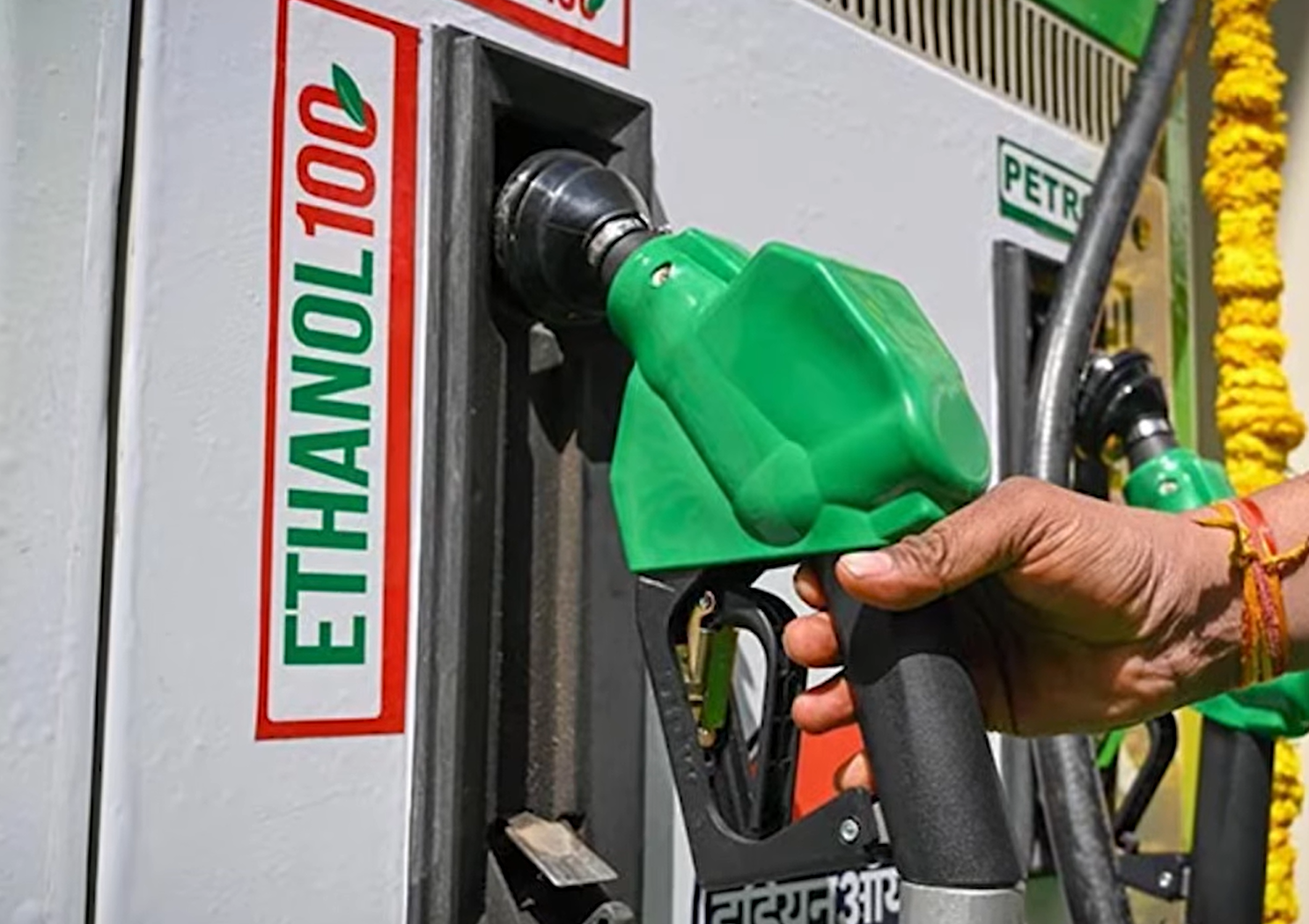
The Indian government has aggressively promoted ethanol blending under the Ethanol Blended Petrol (EBP) Programme.
The objective is clear:
- Reduce oil imports
- Lower carbon emissions
- Support farmers
- Enhance energy security
| Key Advantage | How It Benefits India |
|---|---|
| Stronger Energy Independence | Decreases dependence on imported petroleum and enhances fuel self-sufficiency. |
| Improved Fuel Cost Resilience | Helps shield the economy from global crude oil price fluctuations and inflationary pressures. |
| Lower Carbon Footprint | Reduces greenhouse gas emissions and supports India’s climate commitments. |
| Higher Rural Prosperity | Creates additional income opportunities for farmers through increased demand for biofuel feedstocks. |
| Expansion of the Biofuel Ecosystem | Encourages growth in ethanol production, distillation facilities, logistics networks, and allied industries. |
India’s Ethanol Journey So Far
India’s ethanol blending program has witnessed remarkable progress.
A decade ago, ethanol blending levels remained relatively low due to production constraints and infrastructure limitations.
Today, India has emerged as one of the fastest-growing ethanol markets globally.
Key achievements include:
- Rapid increase in ethanol production capacity
- Expansion of biofuel infrastructure
- Improved policy support
- Strong private-sector participation
- Faster adoption of flex-fuel technologies
The success achieved so far sets the foundation for the Ethanol Transition in India: 5 Powerful Shifts Ahead.
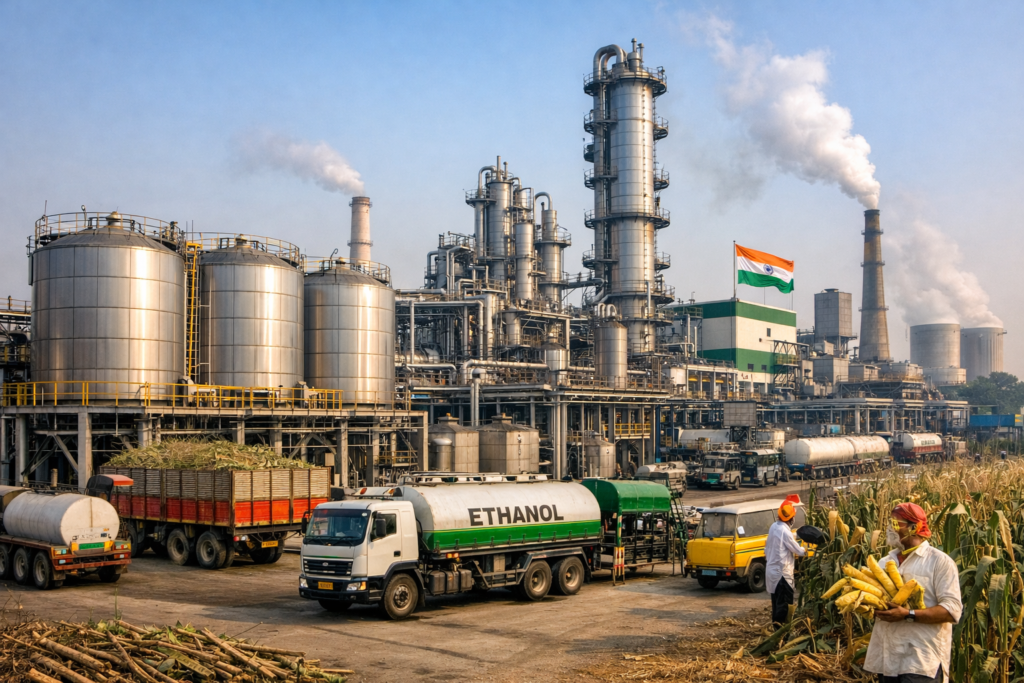
Ethanol Transition in India: 5 Powerful Shifts Ahead
The next decade could witness transformational changes driven by ethanol adoption.
Let’s explore the five most important shifts.
1. Reduced Dependence on Imported Crude Oil
One of the most significant aspects of the Ethanol Transition in India: 5 Powerful Shifts Ahead is the potential reduction in crude oil imports.
India imports a substantial portion of its petroleum requirements from overseas markets.
This creates vulnerabilities such as:
- Price volatility
- Geopolitical risks
- Supply disruptions
- Trade deficits
Greater ethanol blending can replace a portion of petrol consumption with domestically produced fuel.
Benefits include:
Enhanced Energy Security
Domestic fuel production reduces exposure to international market fluctuations.
Lower Import Bills
Reduced oil imports can save billions of dollars annually.
Stronger Economic Stability
A smaller energy import burden improves fiscal resilience.
As blending targets continue rising, ethanol could become a strategic pillar of India’s energy security framework.
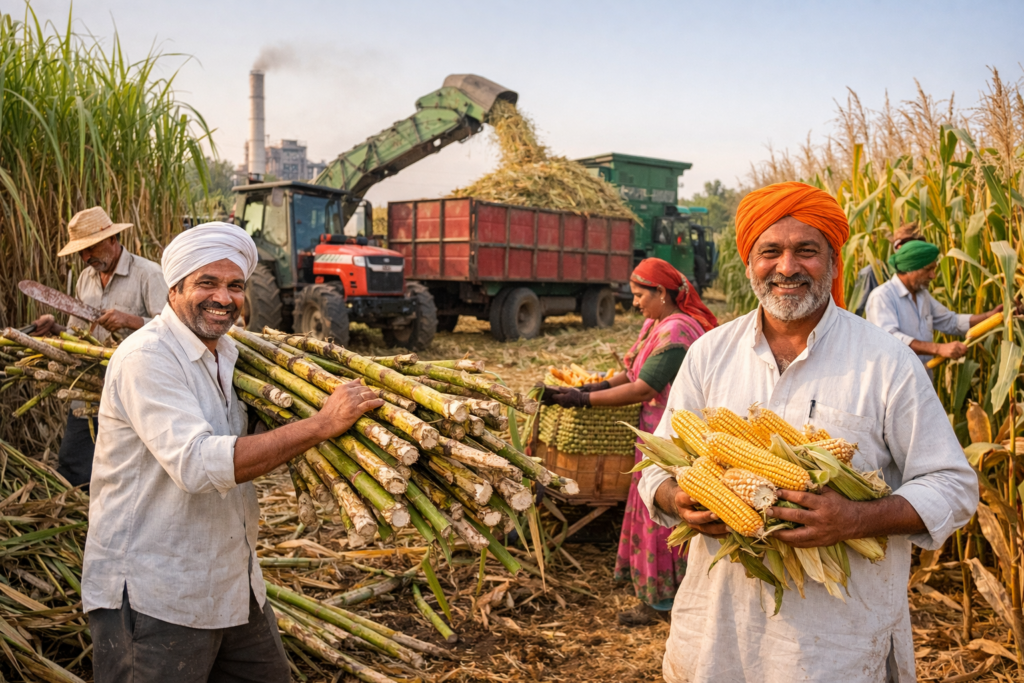
2. Major Growth Opportunities for Farmers
Another important dimension of the Ethanol Transition in India: 5 Powerful Shifts Ahead is its impact on rural India.
Ethanol production creates new demand for agricultural products.
Farmers can benefit through:
- Increased crop demand
- Better price realization
- Additional income sources
- Diversified agricultural markets
Sugarcane Sector Benefits
Sugar mills can produce ethanol from sugarcane juice and molasses.
This helps:
- Reduce sugar surpluses
- Improve mill profitability
- Ensure timely farmer payments
Maize Production Expansion
Growing ethanol demand is encouraging maize cultivation across multiple states.
This diversification creates fresh opportunities for agricultural growth.
3. Faster Adoption of Flex-Fuel Vehicles
The automotive sector is expected to play a crucial role in the Ethanol Transition in India: 5 Powerful Shifts Ahead.
Flex-fuel vehicles are specifically designed to run on varying ethanol-petrol blends.
These vehicles can use:
- E20 fuel
- E85 fuel
- Higher ethanol blends
Advantages for Consumers
- Lower fuel costs
- Reduced emissions
- Greater fuel flexibility
Advantages for Manufacturers
- New market opportunities
- Technological innovation
- Future-ready product portfolios
Major automakers are already exploring flex-fuel technologies tailored for Indian conditions.
This trend could significantly accelerate ethanol adoption.
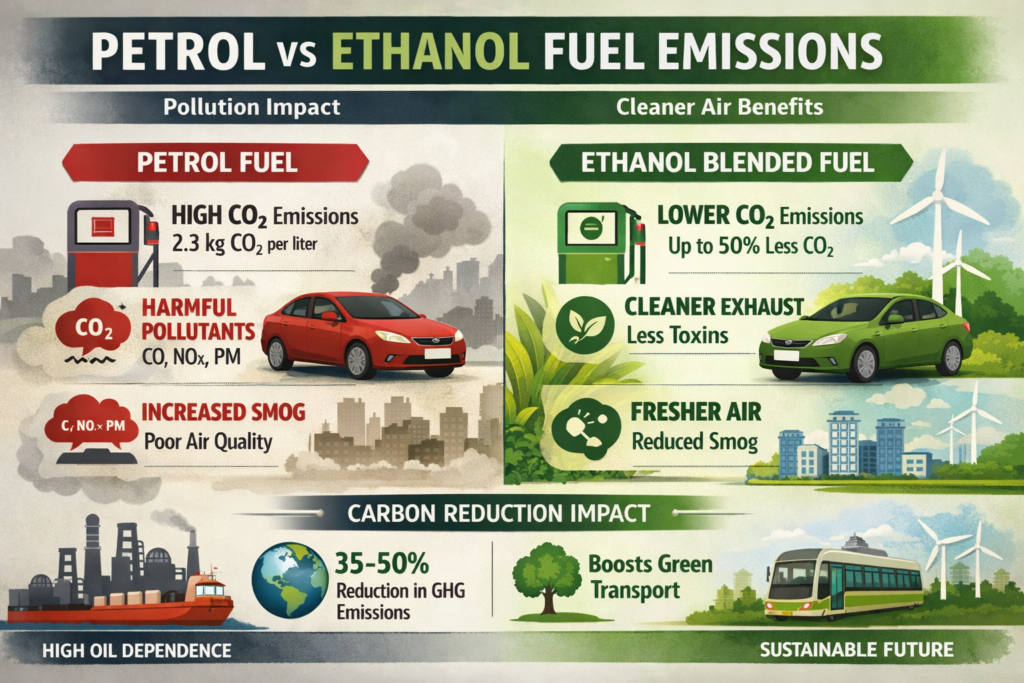
4. Cleaner Transportation and Lower Emissions
Environmental sustainability remains a key driver behind the Ethanol Transition in India: 5 Powerful Shifts Ahead.
Transportation contributes significantly to urban pollution and greenhouse gas emissions.
Ethanol blending helps address these challenges.
Lower Carbon Emissions
Ethanol is derived from renewable biological sources.
Its lifecycle emissions are generally lower than conventional fossil fuels.
Improved Air Quality
Higher ethanol content can reduce harmful vehicle emissions.
Benefits include:
- Cleaner urban air
- Reduced particulate pollution
- Better public health outcomes
Support for Climate Goals
India has ambitious commitments related to sustainability and climate action.
Ethanol adoption complements these objectives.
5. Expansion of India’s Biofuel Economy
Perhaps the most transformative aspect of the Ethanol Transition in India: 5 Powerful Shifts Ahead is the emergence of a large-scale biofuel ecosystem.
Growing ethanol demand stimulates investments across multiple sectors.
Areas of Growth
- Ethanol production plants
- Storage facilities
- Transportation networks
- Research and development
- Advanced biofuel technologies
Job Creation
The expanding biofuel industry generates employment opportunities in:
- Agriculture
- Manufacturing
- Logistics
- Engineering
- Research
Industrial Development
New investments strengthen regional economies and industrial clusters.
This multiplier effect extends beyond transportation and energy sectors.
Challenges Facing Ethanol Expansion
While the outlook remains positive, several challenges require attention.
Feedstock Availability
Sustainable supply of raw materials remains essential.
Water Consumption
Sugarcane cultivation can be water-intensive.
Improved agricultural practices are necessary.
Infrastructure Development
Storage, distribution, and blending infrastructure must continue expanding.
Vehicle Compatibility
Transitioning to higher ethanol blends requires compatible vehicle technologies.
Addressing these challenges will determine the long-term success of India’s ethanol strategy.
Government Policies Driving the Transition
Government support remains the backbone of the Ethanol Transition in India: 5 Powerful Shifts Ahead.
Key policy measures include:
Ethanol Blending Programme
Encouraging higher ethanol content in petrol.
Biofuel Promotion Policies
Providing incentives for ethanol production.
Investment Support
Facilitating expansion of production capacity.
Research Initiatives
Advancing next-generation biofuel technologies.
Such policies have accelerated industry confidence and private investment.
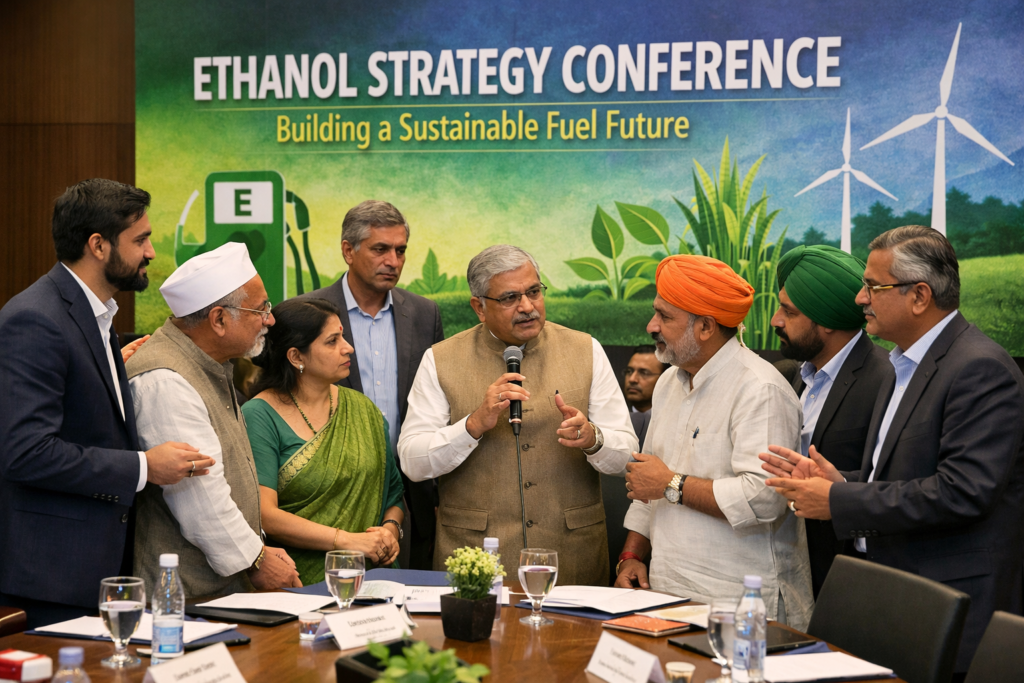
Economic Benefits of Ethanol Adoption
The economic advantages extend across multiple sectors.
Reduced Foreign Exchange Outflow
Lower crude imports conserve valuable foreign currency.
Rural Economic Growth
Agricultural communities gain new income opportunities.
Industrial Expansion
Biofuel investments stimulate manufacturing activity.
Energy Diversification
A broader fuel mix strengthens national resilience.
Together, these benefits make ethanol an attractive long-term strategy.
How Ethanol Fits Into India’s Green Mobility Vision
India is pursuing multiple pathways toward cleaner transportation.
These include:
- Electric vehicles
- Hydrogen fuel technologies
- CNG mobility
- Ethanol-based fuels
- Advanced biofuels
Rather than competing, these technologies often complement one another.
Ethanol can play a particularly important role in segments where electrification remains challenging.
The Ethanol Transition in India: 5 Powerful Shifts Ahead demonstrates how renewable fuels can coexist with emerging mobility technologies.
Future Outlook
The coming decade may represent the most significant phase of ethanol expansion in India’s history.
Several developments are expected:
- Higher blending levels
- Increased production capacity
- More flex-fuel vehicles
- Expanded feedstock diversity
- Stronger private-sector participation
As technology advances and infrastructure improves, ethanol could become a mainstream transportation fuel across India.
The Ethanol Transition in India: 5 Powerful Shifts Ahead is not merely an energy policy initiative—it is a broader economic, environmental, and industrial transformation.
Conclusion
The Ethanol Transition in India: 5 Powerful Shifts Ahead represents a crucial step toward a cleaner, more self-reliant, and sustainable energy future. By reducing crude oil imports, supporting farmers, promoting cleaner transportation, accelerating flex-fuel adoption, and expanding the biofuel economy, ethanol is reshaping India’s energy landscape.
While challenges remain, strong policy support, growing industry investment, and technological innovation position ethanol as a key pillar of India’s future mobility strategy. As the nation moves toward greater energy independence and environmental sustainability, ethanol is likely to play an increasingly important role in powering India’s growth story.
Frequently Asked Questions (FAQs)
What is ethanol fuel?
Ethanol is a renewable biofuel produced from crops such as sugarcane, maize, and agricultural residues. It is commonly blended with petrol.
Why is ethanol important for India?
Ethanol helps reduce oil imports, lowers emissions, supports farmers, and strengthens energy security.
What are flex-fuel vehicles?
Flex-fuel vehicles can operate on varying blends of ethanol and petrol, including higher ethanol concentrations.
Does ethanol reduce pollution?
Yes. Ethanol blending can lower certain vehicle emissions and contribute to cleaner air quality.
How does ethanol benefit farmers?
Growing demand for feedstocks such as sugarcane and maize creates additional market opportunities and income sources.
What is the future of ethanol in India?
India is expected to increase ethanol blending levels, expand production capacity, and encourage wider adoption of flex-fuel vehicles over the coming years.